Department of Pathology, College of Korean Medicine, Dong-eui University, Busan 47227, Republic of Korea.
Department of Biochemistry, College of Korean Medicine, Dong-eui University, Busan 47227, Republic of Korea.
Molecules. 2024 Jan 25;29(3):597. doi: 10.3390/molecules29030597.
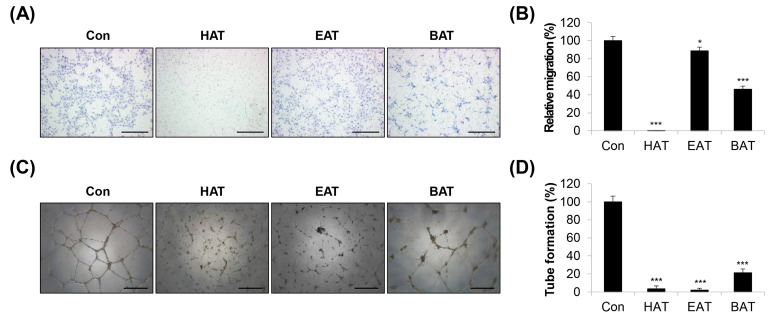
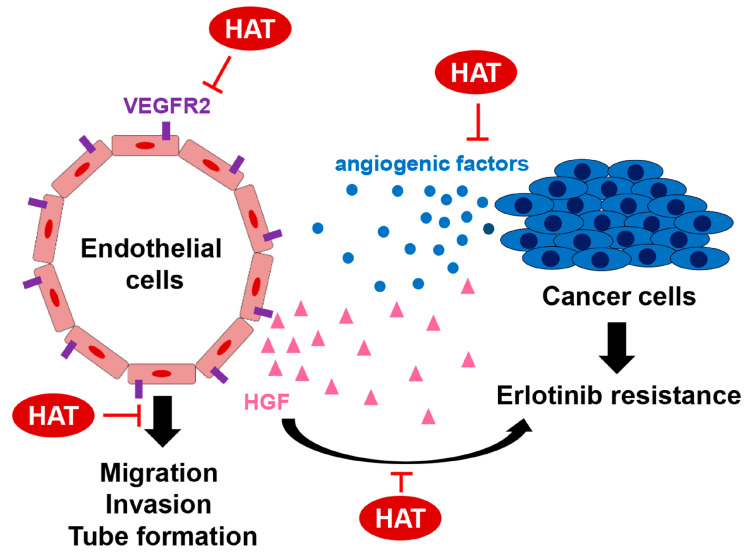
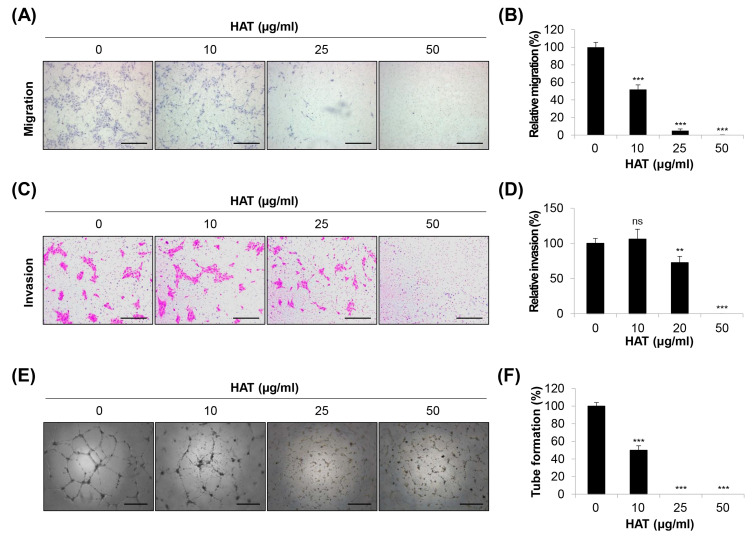
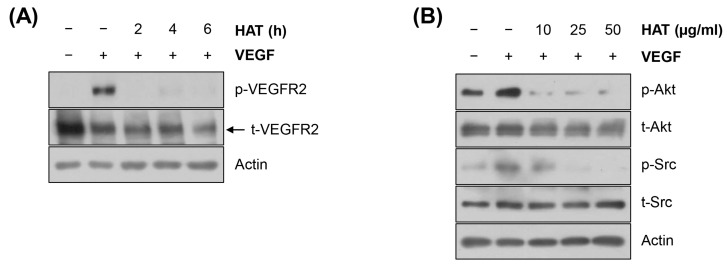
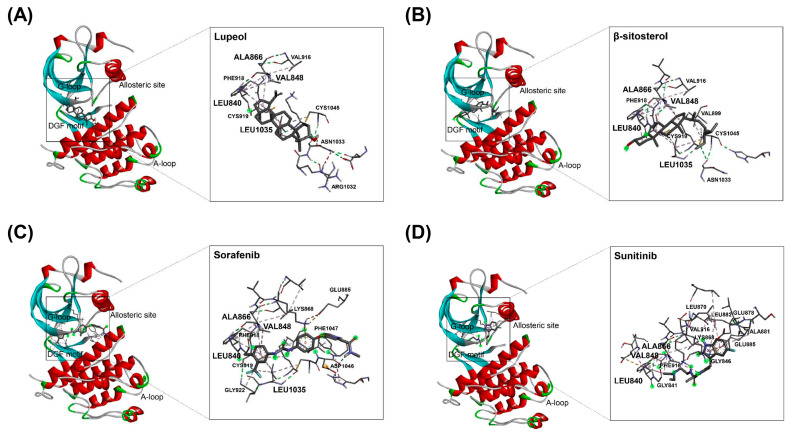
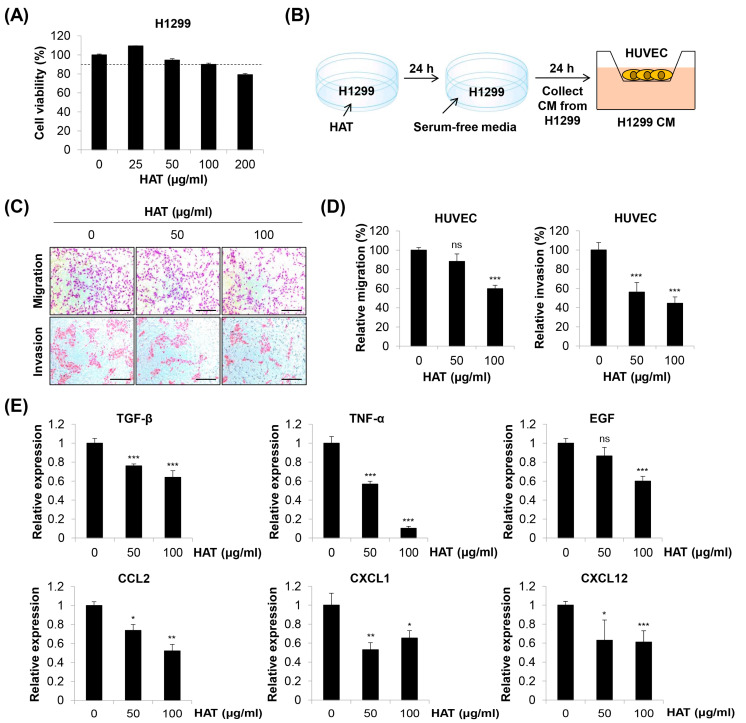
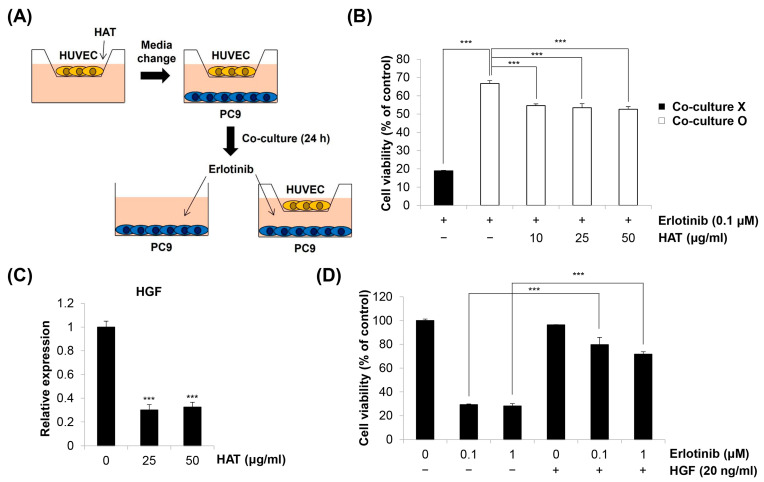
The aim of this study was to investigate the anti-angiogenic effects of the hexane fraction of var. root extract (HAT) and its influence on the development of erlotinib resistance in human lung cancer cells. HAT significantly reduced the migration, invasion, and tube formation of human umbilical vein endothelial cells (HUVECs). The phosphorylation levels of vascular endothelial growth factor receptor 2 (VEGFR2) and its downstream molecules were decreased via HAT, indicating its anti-angiogenic potential in endothelial cells (ECs). A docking analysis demonstrated that β-sitosterol and lupeol, representative components of HAT, exhibit a high affinity for binding to VEGFR2. In addition, conditioned media from HAT-pretreated H1299 human lung cancer cells attenuated cancer-cell-induced chemotaxis of HUVECs, which was attributed to the decreased expression of angiogenic and chemotactic factors in H1299 cells. Interestingly, co-culture of erlotinib-sensitive PC9 human lung cancer cells with HUVECs induced erlotinib resistance in PC9 cells. However, co-culture with HAT-pretreated HUVECs partially restored the sensitivity of PC9 cells to erlotinib. HAT inhibited the development of erlotinib resistance by attenuating hepatocyte growth factor (HGF) production by ECs. Taken together, our results demonstrate that HAT exerts its anticancer effects by regulating the crosstalk between ECs and lung cancer cells.
本研究旨在探讨 var. 根提取物的己烷部分(HAT)的抗血管生成作用及其对人肺癌细胞对厄洛替尼耐药性发展的影响。HAT 显著抑制人脐静脉内皮细胞(HUVEC)的迁移、侵袭和管形成。HAT 通过降低血管内皮生长因子受体 2(VEGFR2)及其下游分子的磷酸化水平,显示其在血管内皮细胞(ECs)中的抗血管生成潜力。对接分析表明,HAT 的代表性成分β-谷甾醇和羽扇豆醇与 VEGFR2 具有高亲和力。此外,HAT 预处理的 H1299 人肺癌细胞的条件培养基减弱了癌细胞诱导的 HUVEC 趋化作用,这归因于 H1299 细胞中血管生成和趋化因子表达的降低。有趣的是,与 HUVEC 共培养厄洛替尼敏感的 PC9 人肺癌细胞诱导 PC9 细胞对厄洛替尼产生耐药性。然而,与 HAT 预处理的 HUVEC 共培养部分恢复了 PC9 细胞对厄洛替尼的敏感性。HAT 通过抑制 ECs 产生肝细胞生长因子(HGF)来抑制厄洛替尼耐药的发展。总之,我们的研究结果表明,HAT 通过调节 ECs 和肺癌细胞之间的串扰发挥其抗癌作用。