Division of Gastroenterology, Hepatology, and Nutrition, The Children's Hospital of Philadelphia, Philadelphia, Pennsylvania.
Department of Biomedical and Health Informatics, The Children's Hospital of Philadelphia, Philadelphia, Pennsylvania.
Cell Mol Gastroenterol Hepatol. 2024;17(6):923-937. doi: 10.1016/j.jcmgh.2024.01.025. Epub 2024 Feb 9.
BACKGROUND & AIMS: Epithelial disruption in eosinophilic esophagitis (EoE) encompasses both impaired differentiation and diminished barrier integrity. We have shown that lysyl oxidase (LOX), a collagen cross-linking enzyme, is up-regulated in the esophageal epithelium in EoE. However, the functional roles of LOX in the esophageal epithelium remains unknown.
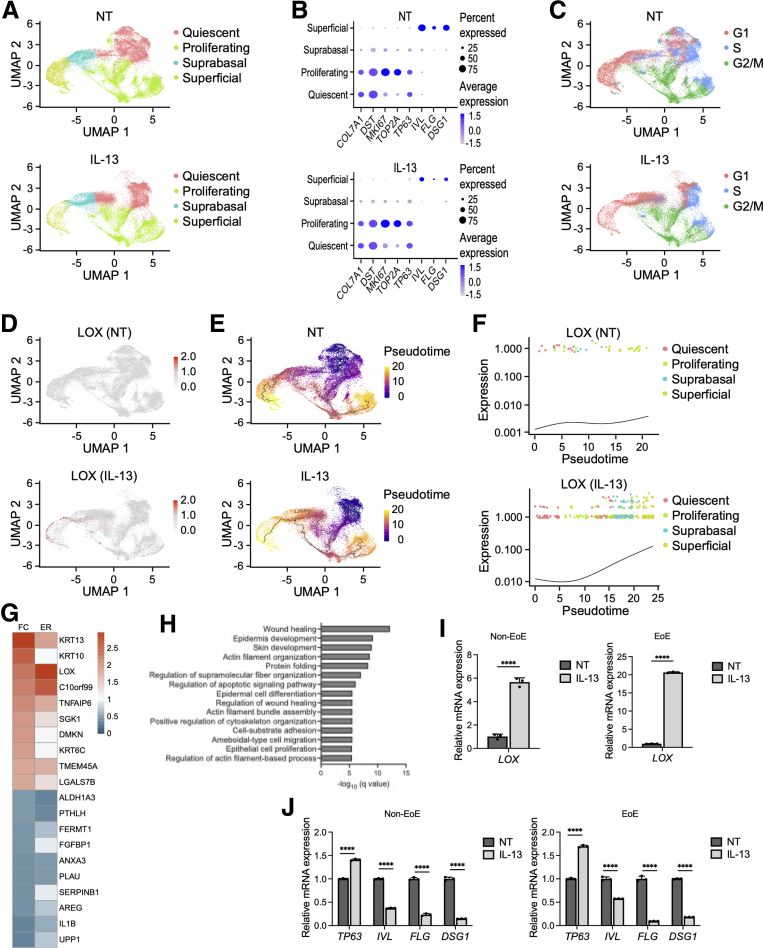
We investigated roles for LOX in the human esophageal epithelium using 3-dimensional organoid and air-liquid interface cultures stimulated with interleukin (IL)13 to recapitulate the EoE inflammatory milieu, followed by single-cell RNA sequencing, quantitative reverse-transcription polymerase chain reaction, Western blot, histology, and functional analyses of barrier integrity.
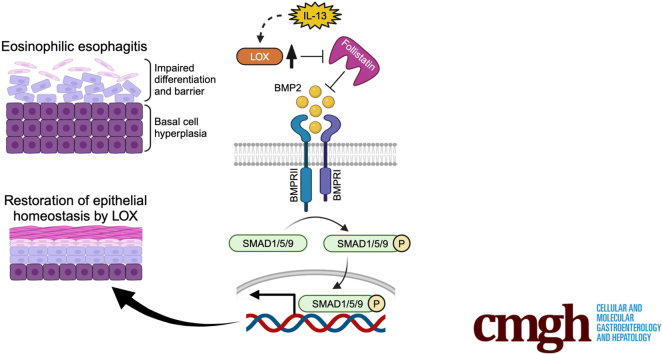
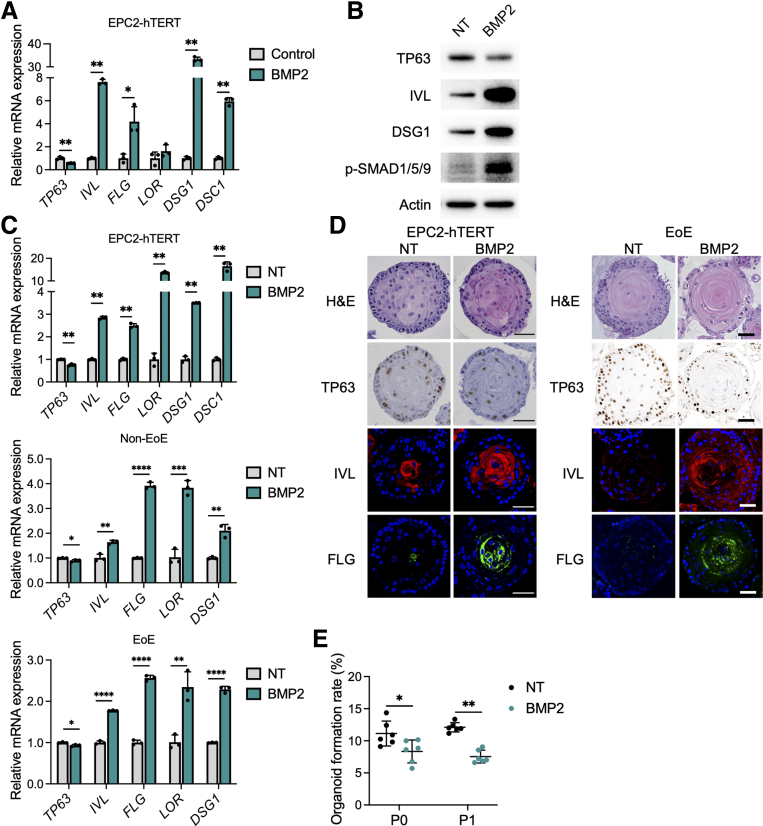
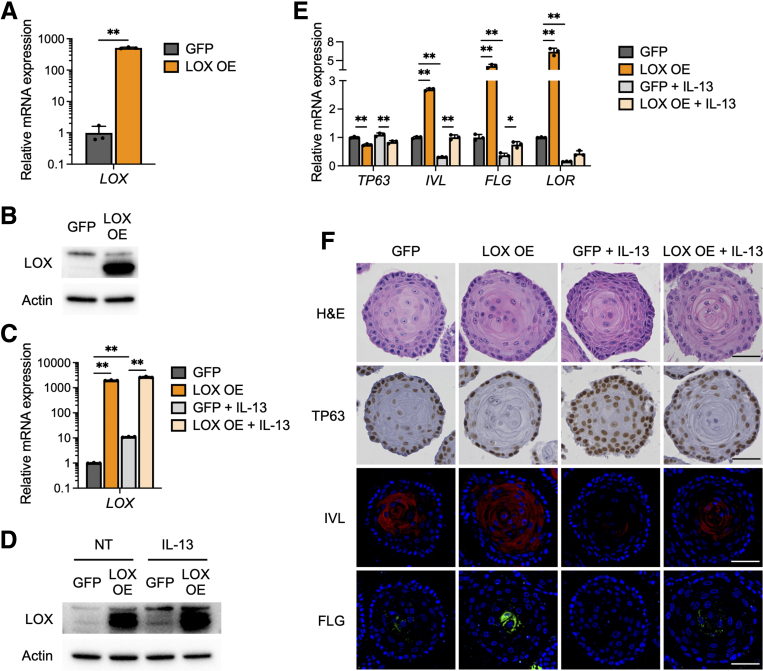
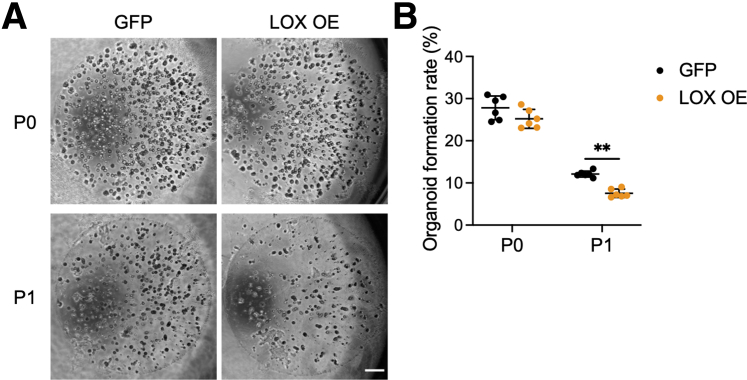
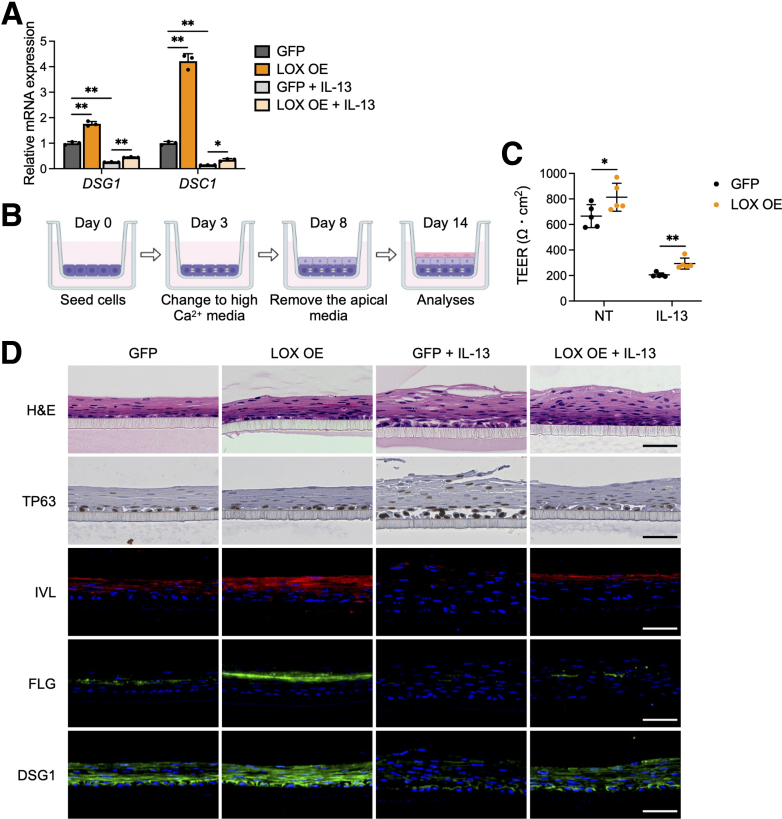
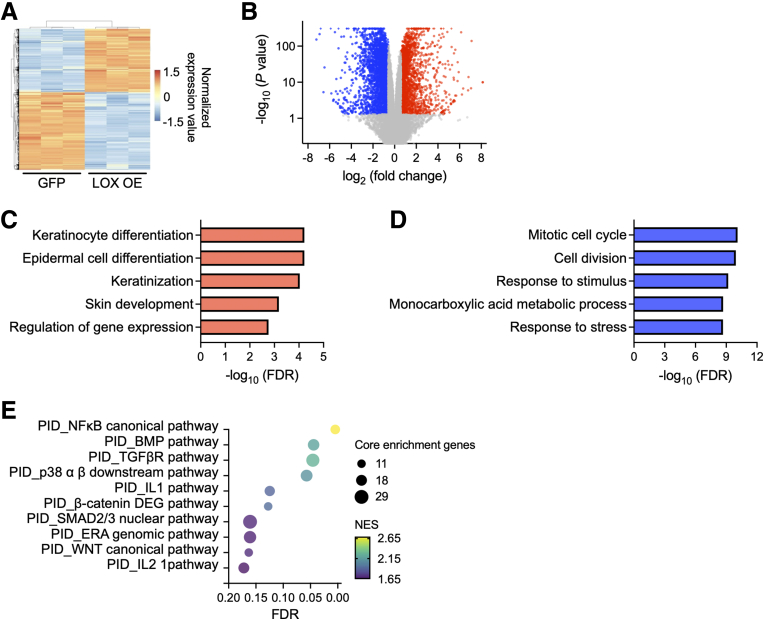
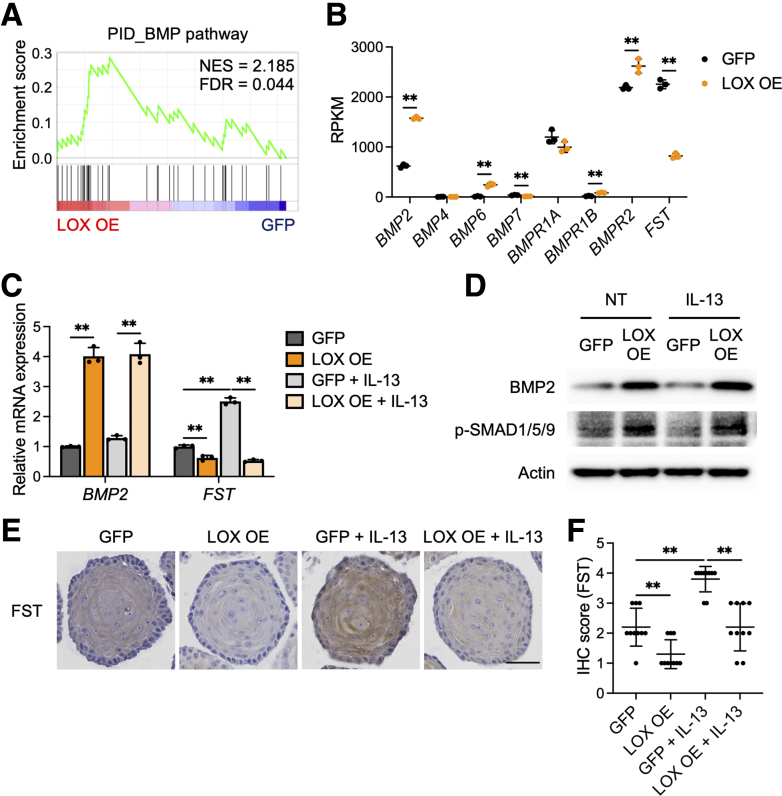
Single-cell RNA sequencing analysis on patient-derived organoids revealed that LOX was induced by IL13 in differentiated cells. LOX-overexpressing organoids showed suppressed basal and up-regulated differentiation markers. In addition, LOX overexpression enhanced junctional protein genes and transepithelial electrical resistance. LOX overexpression restored the impaired differentiation and barrier function, including in the setting of IL13 stimulation. Transcriptome analyses on LOX-overexpressing organoids identified an enriched bone morphogenetic protein (BMP) signaling pathway compared with wild-type organoids. In particular, LOX overexpression increased BMP2 and decreased the BMP antagonist follistatin. Finally, we found that BMP2 treatment restored the balance of basal and differentiated cells.
Our data support a model whereby LOX exhibits noncanonical roles as a signaling molecule important for epithelial homeostasis in the setting of inflammation via activation of the BMP pathway in the esophagus. The LOX/BMP axis may be integral in esophageal epithelial differentiation and a promising target for future therapies.
嗜酸性粒细胞性食管炎(EoE)中的上皮破坏包括分化受损和屏障完整性降低。我们已经表明,赖氨酰氧化酶(LOX),一种胶原蛋白交联酶,在 EoE 的食管上皮中上调。然而,LOX 在食管上皮中的功能作用尚不清楚。
我们使用 3 维类器官和空气-液体界面培养物,用白细胞介素(IL)13 刺激来模拟 EoE 的炎症环境,研究 LOX 在人食管上皮中的作用,随后进行单细胞 RNA 测序、定量逆转录聚合酶链反应、Western blot、组织学和屏障完整性的功能分析。
对患者来源的类器官的单细胞 RNA 测序分析表明,IL13 诱导 LOX 在分化细胞中表达。LOX 过表达的类器官显示出基础表达受抑制和分化标记物上调。此外,LOX 过表达增强了连接蛋白基因和跨上皮电阻。LOX 过表达恢复了受损的分化和屏障功能,包括在 IL13 刺激的情况下。与野生型类器官相比,LOX 过表达类器官的转录组分析确定了一个富含骨形态发生蛋白(BMP)信号通路。特别是,LOX 过表达增加了 BMP2 并降低了 BMP 拮抗剂滤泡抑制素。最后,我们发现 BMP2 处理恢复了基础细胞和分化细胞之间的平衡。
我们的数据支持这样一种模型,即 LOX 通过激活食管中的 BMP 途径作为一种重要的信号分子,在炎症环境中表现出非典型的作用,对上皮稳态具有重要作用。LOX/BMP 轴可能是食管上皮分化的重要组成部分,是未来治疗的有希望的靶点。