Goyal Sonal, Kumar Ajit, Goyal Divakar, Attar Pradeep, Bhandari Baibhav, Purohit Gaurav, Mahiswar Aditya Pal, Gupta Shiwam
Department of Anaesthesiology, MGM Medical College and Hospital, Kamothe, Navi Mumbai, Maharashtra, India.
Department of Anaesthesiology, AIIMS Rishikesh, Uttarakhand, India.
Indian J Anaesth. 2023 Dec;67(12):1036-1050. doi: 10.4103/ija.ija_439_23. Epub 2023 Dec 13.
Neurolytic splanchnic nerve block (NSNB) is practised in intractable abdominal pain secondary to intra-abdominal malignancies. This review evaluated the efficacy of NSNB.
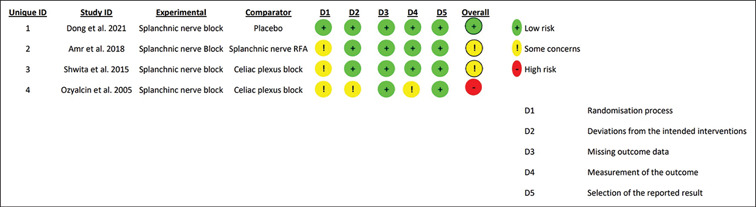
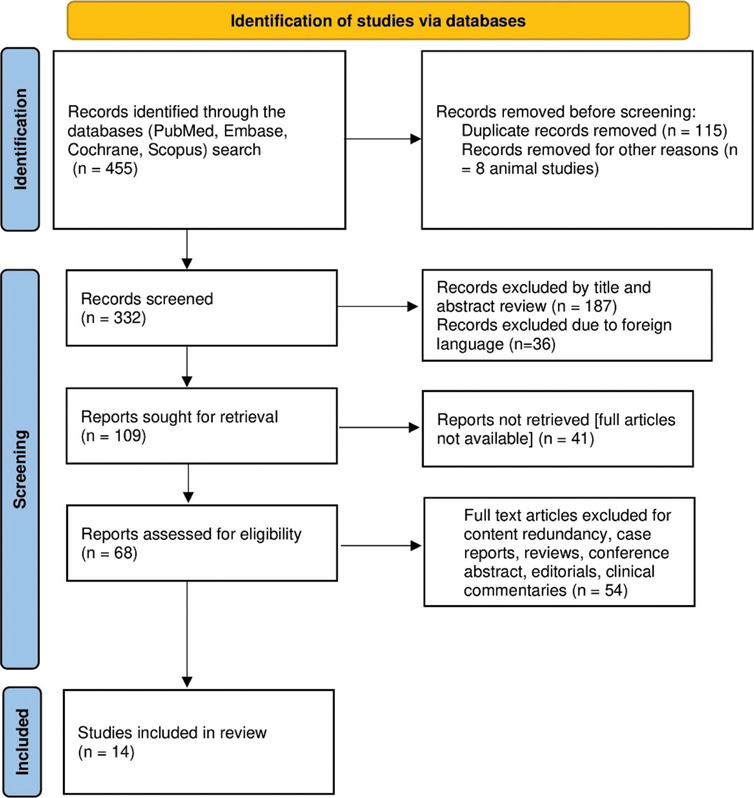
PubMed, Embase, Scopus, and Cochrane databases were searched for articles published from January 2001 to October 2023. Two independent reviewers extracted the data from the included studies. The quality of randomised controlled trials (RCTs) was assessed using the revised Cochrane risk-of-bias tool (RoB 2), and the Newcastle-Ottawa scale was used for cohort studies.
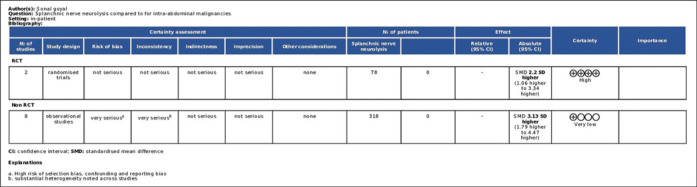
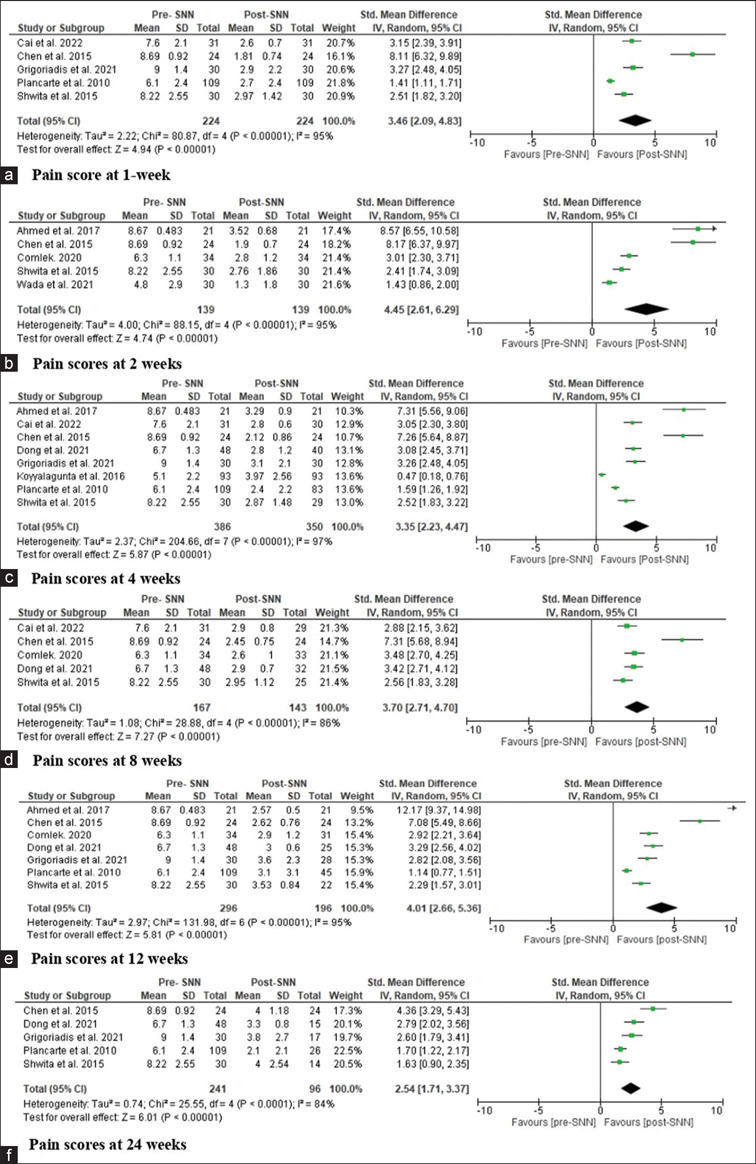
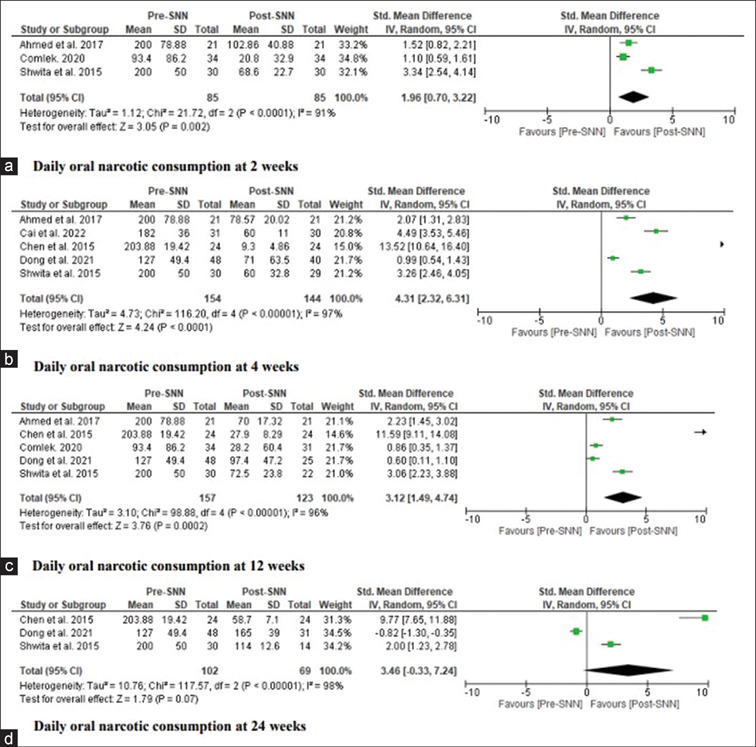
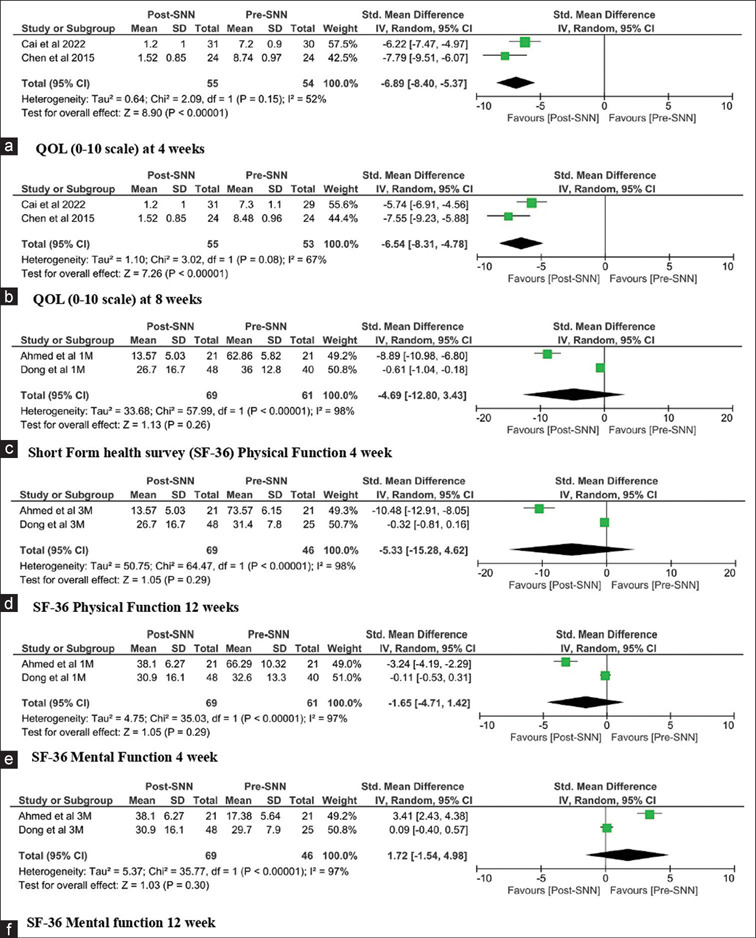
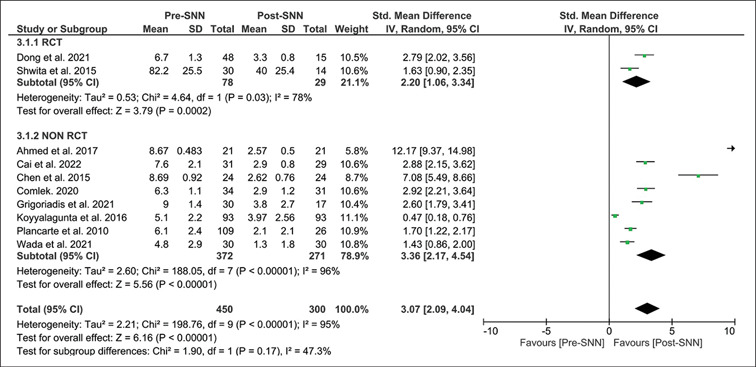
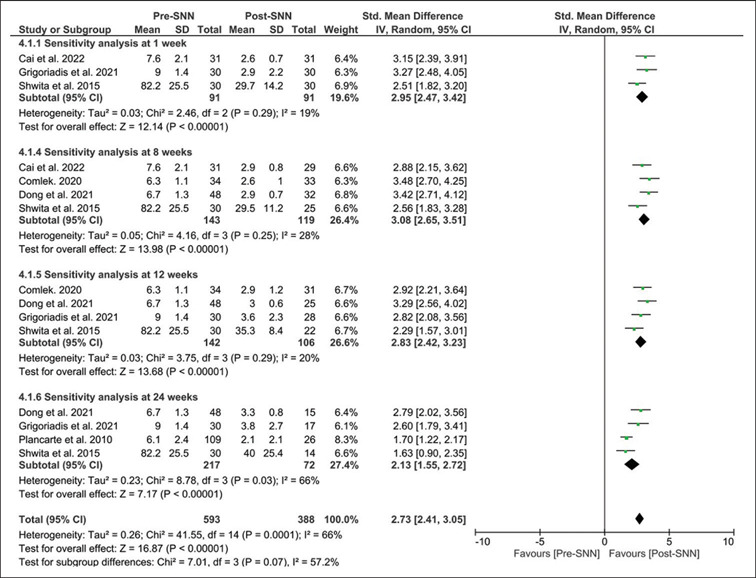
Fourteen articles (4 RCTs, 3 non-randomised prospective, and 7 retrospectives) were included. Ten articles were quantitatively assessed and demonstrated significant pain relief at 1 week (standardised mean difference (SMD): 3.46 [2.09, 4.83], < 0.001, I = 95%), 2 weeks (SMD: 4.45 [2.61, 6.29], < 0.001, I = 95%), 4 weeks (SMD: 3.35 [2.23, 4.47], < 0.001, I = 97%), 8 weeks (SMD: 3.7 [2.71, 4.7], < 0.001, I = 86%), 12 weeks (SMD: 4.01 [2.66, 5.36], < 0.001, I = 95%), and 24 weeks (SMD: 2.54 [1.71,3.37], < 0.001, I = 84%). Daily narcotic consumption and quality of life (QOL) significantly improved post neurolysis, but survival rates showed controversial results. Significant heterogeneity was reported, and sub-group analysis revealed a moderate level of variability [I = 47.3%] pertaining to study design as a source of heterogeneity. The Grading of Recommendations, Assessment, Development and Evaluation (GRADE) Pro GDT recommendation for the primary objective was 'high' for the analysis of RCTs and 'very low' evidence quality for observational studies. Only transient minor complications were reported.
NSNB appears to be an efficacious technique that provides substantial pain relief, reduces opioid consumption, and ameliorates QOL.
内脏神经松解阻滞(NSNB)用于治疗腹腔内恶性肿瘤继发的顽固性腹痛。本综述评估了NSNB的疗效。
检索了PubMed、Embase、Scopus和Cochrane数据库中2001年1月至2023年10月发表的文章。两名独立 reviewers 从纳入的研究中提取数据。使用修订后的Cochrane偏倚风险工具(RoB 2)评估随机对照试验(RCT)的质量,队列研究使用纽卡斯尔-渥太华量表。
纳入14篇文章(4项RCT、3项非随机前瞻性研究和7项回顾性研究)。10篇文章进行了定量评估,结果显示在1周(标准化均数差(SMD):3.46 [2.09, 4.83],P < 0.001,I² = 95%)、2周(SMD:4.45 [2.61, 6.29],P < 0.001,I² = 95%)、4周(SMD:3.35 [2.23, 4.47],P < 0.001,I² = 97%)、8周(SMD:3.7 [2.71, 4.7],P < 0.001,I² = 86%)、12周(SMD:4.01 [2.66, 5.36],P < 0.001,I² = 95%)和24周(SMD:2.54 [1.71, 3.37],P < 0.