Translational Medicine & Clinical Pharmacology, Boehringer Ingelheim Pharma GmbH & Co. KG, Biberach, Germany.
Genomics and Immunoregulation, Life & Medical Sciences (LIMES) Institute, University of Bonn, Bonn, Germany.
Front Immunol. 2024 Jan 29;15:1325090. doi: 10.3389/fimmu.2024.1325090. eCollection 2024.
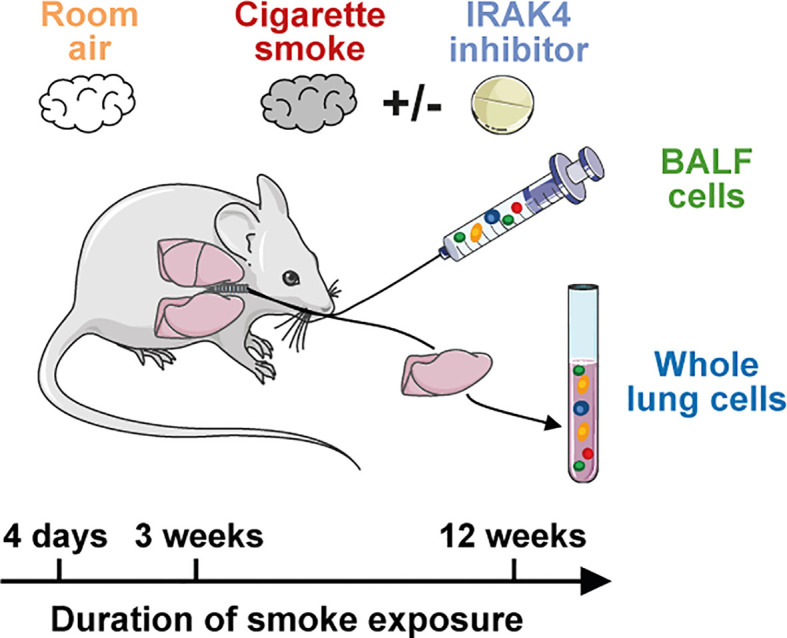
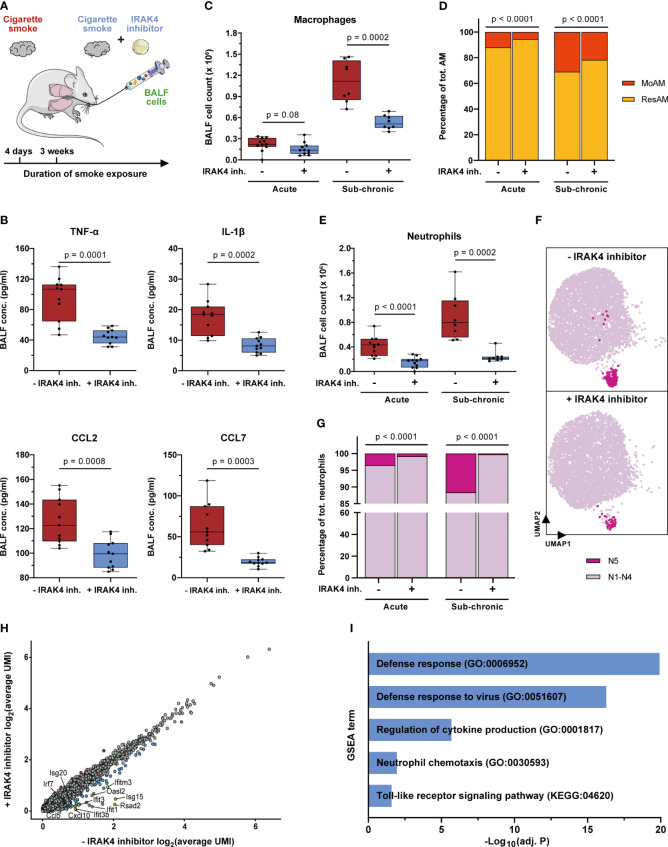
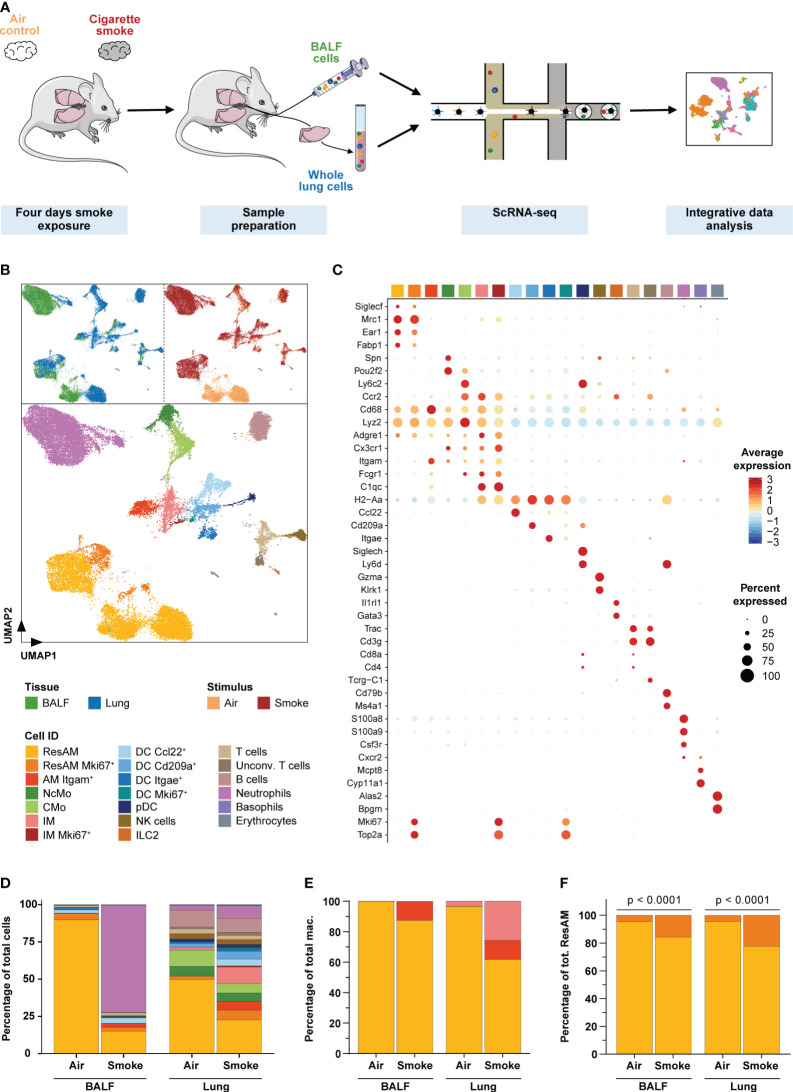
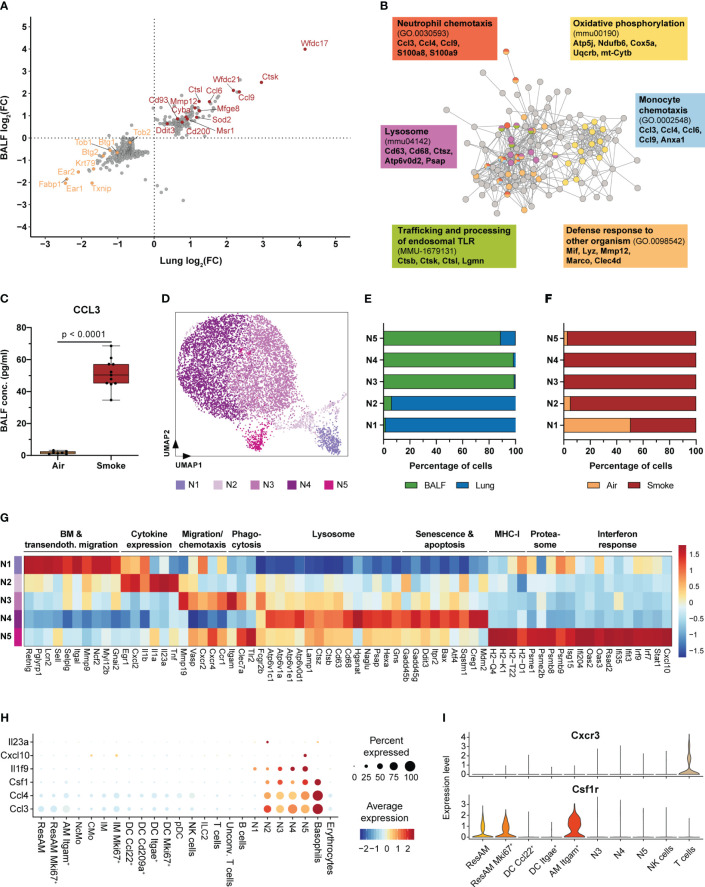
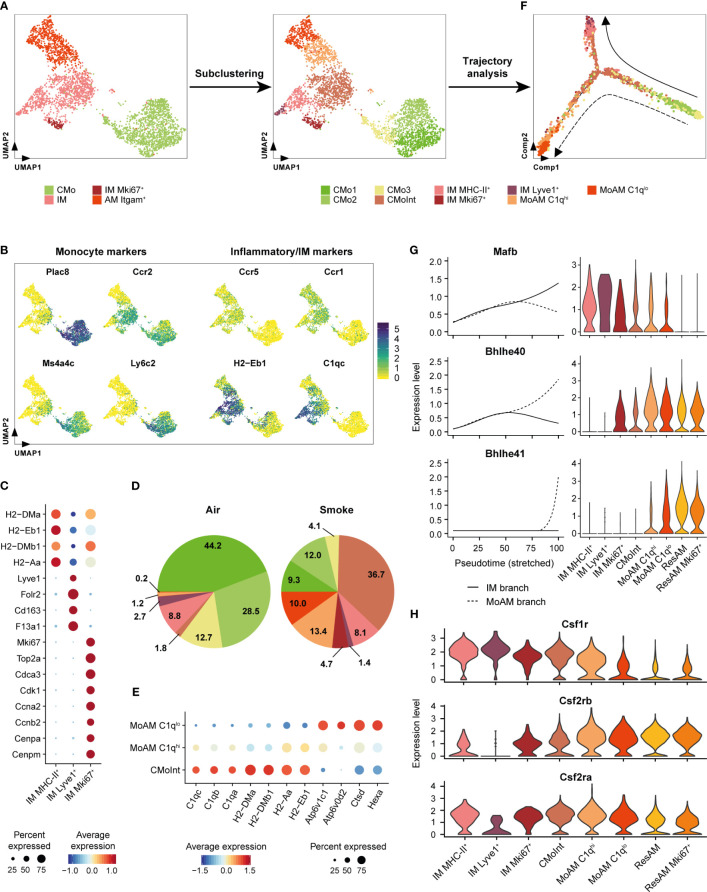
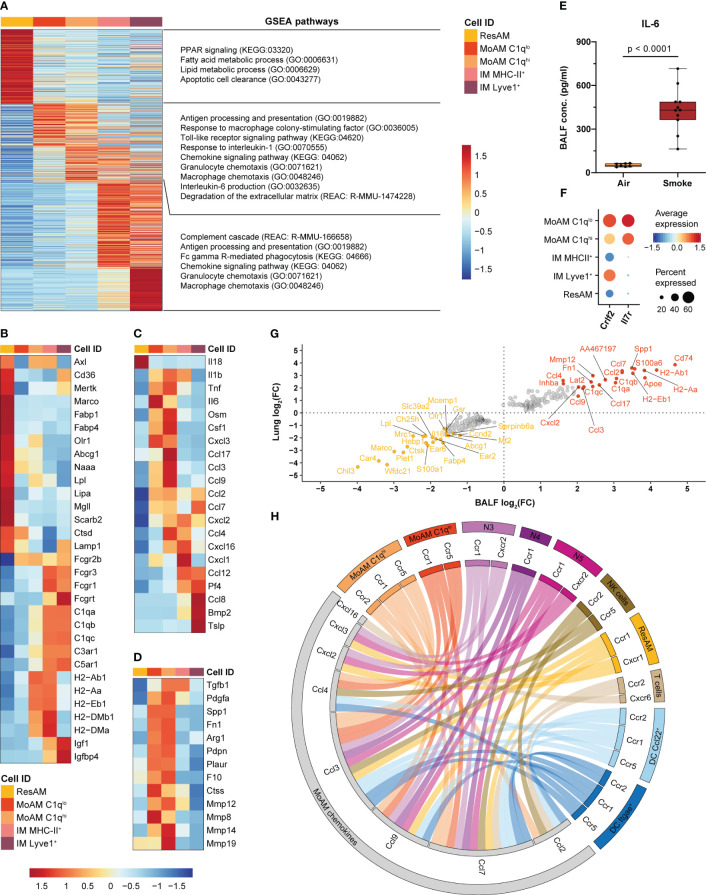
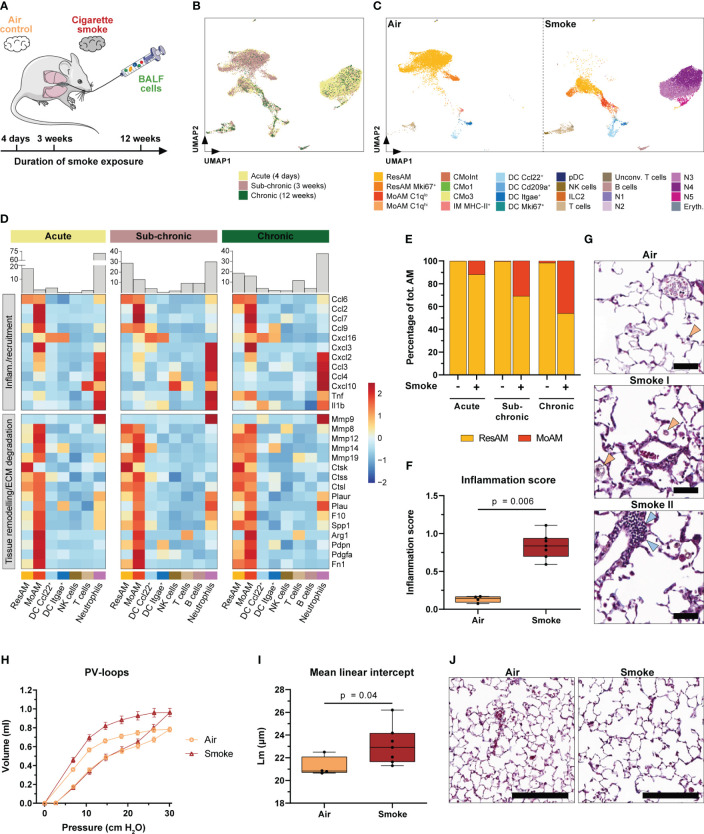
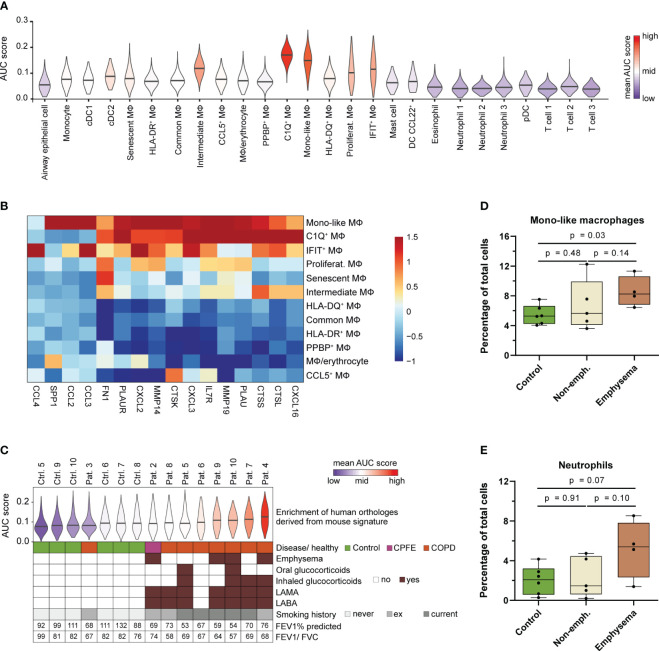
Smoking is a leading risk factor of chronic obstructive pulmonary disease (COPD), that is characterized by chronic lung inflammation, tissue remodeling and emphysema. Although inflammation is critical to COPD pathogenesis, the cellular and molecular basis underlying smoking-induced lung inflammation and pathology remains unclear. Using murine smoke models and single-cell RNA-sequencing, we show that smoking establishes a self-amplifying inflammatory loop characterized by an influx of molecularly heterogeneous neutrophil subsets and excessive recruitment of monocyte-derived alveolar macrophages (MoAM). In contrast to tissue-resident AM, MoAM are absent in homeostasis and characterized by a pro-inflammatory gene signature. Moreover, MoAM represent 46% of AM in emphysematous mice and express markers causally linked to emphysema. We also demonstrate the presence of pro-inflammatory and tissue remodeling associated MoAM orthologs in humans that are significantly increased in emphysematous COPD patients. Inhibition of the IRAK4 kinase depletes a rare inflammatory neutrophil subset, diminishes MoAM recruitment, and alleviates inflammation in the lung of cigarette smoke-exposed mice. This study extends our understanding of the molecular signaling circuits and cellular dynamics in smoking-induced lung inflammation and pathology, highlights the functional consequence of monocyte and neutrophil recruitment, identifies MoAM as key drivers of the inflammatory process, and supports their contribution to pathological tissue remodeling.
吸烟是慢性阻塞性肺疾病(COPD)的主要危险因素,其特征为慢性肺部炎症、组织重塑和肺气肿。尽管炎症对 COPD 的发病机制至关重要,但吸烟引起的肺部炎症和病理学的细胞和分子基础仍不清楚。我们使用鼠类吸烟模型和单细胞 RNA 测序,表明吸烟建立了一个自我放大的炎症循环,其特点是分子异质性的中性粒细胞亚群的涌入和单核细胞衍生的肺泡巨噬细胞(MoAM)的过度募集。与组织驻留的 AM 不同,MoAM 在稳态中不存在,其特征是促炎基因特征。此外,MoAM 在肺气肿小鼠中占 AM 的 46%,并表达与肺气肿相关的标志物。我们还证明了在人类中存在促炎和组织重塑相关的 MoAM 同源物,在肺气肿 COPD 患者中显著增加。IRAK4 激酶的抑制会耗尽一种罕见的炎症性中性粒细胞亚群,减少 MoAM 的募集,并减轻吸烟暴露的小鼠肺部的炎症。这项研究扩展了我们对吸烟引起的肺部炎症和病理学中分子信号通路和细胞动态的理解,强调了单核细胞和中性粒细胞募集的功能后果,将 MoAM 确定为炎症过程的关键驱动因素,并支持它们对病理性组织重塑的贡献。