Department of Pathology and Matrix Biology, Graduate School of Medicine, Mie University, 2-174 Edobashi, Tsu, Mie, 514-0001, Japan.
Pathology Division, Mie University School of Medicine, 2-174 Edobashi, Tsu, Mie, 514-0001, Japan.
EMBO J. 2024 Mar;43(5):868-885. doi: 10.1038/s44318-024-00045-0. Epub 2024 Feb 14.
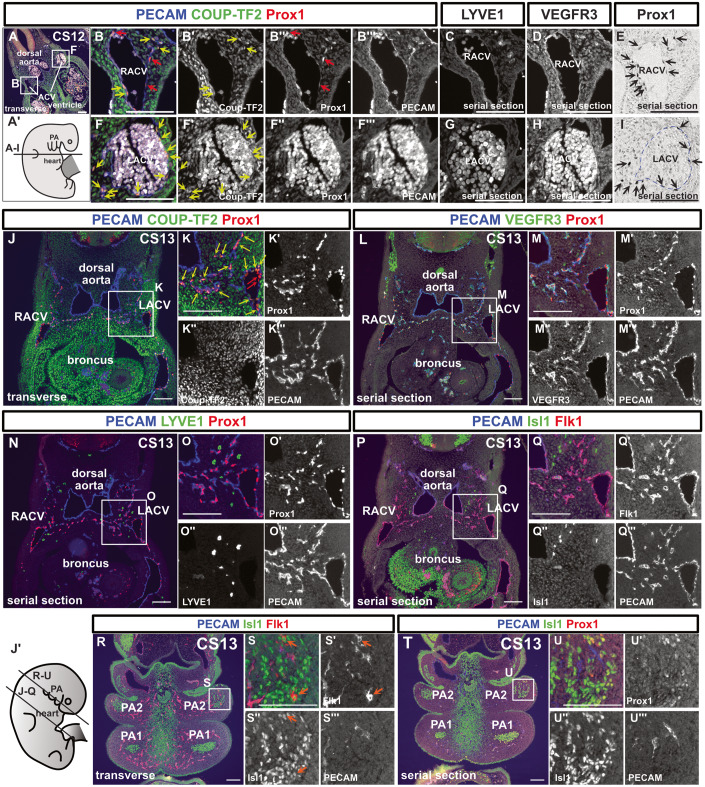
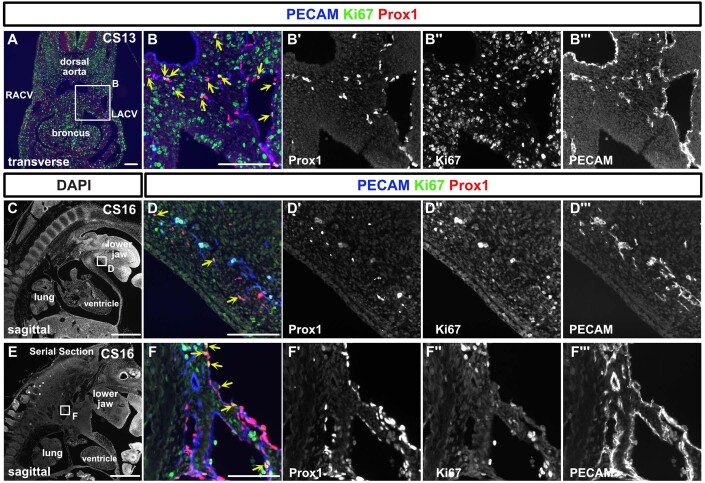
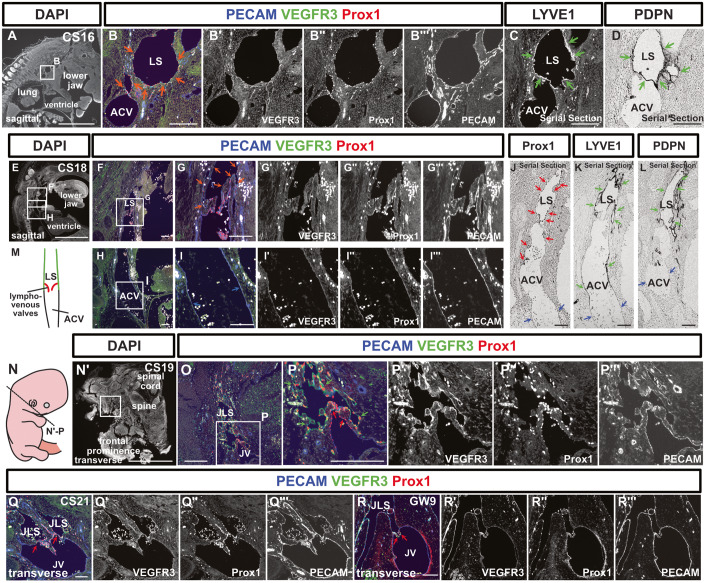
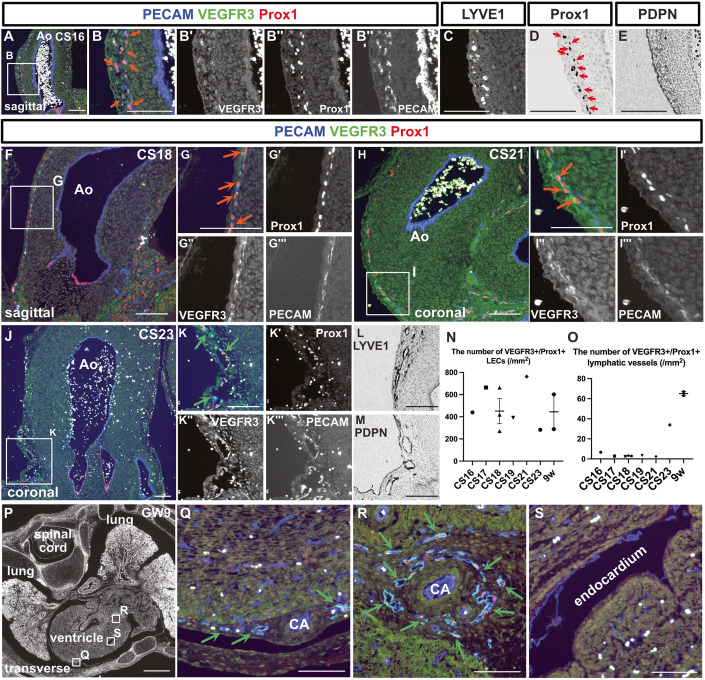
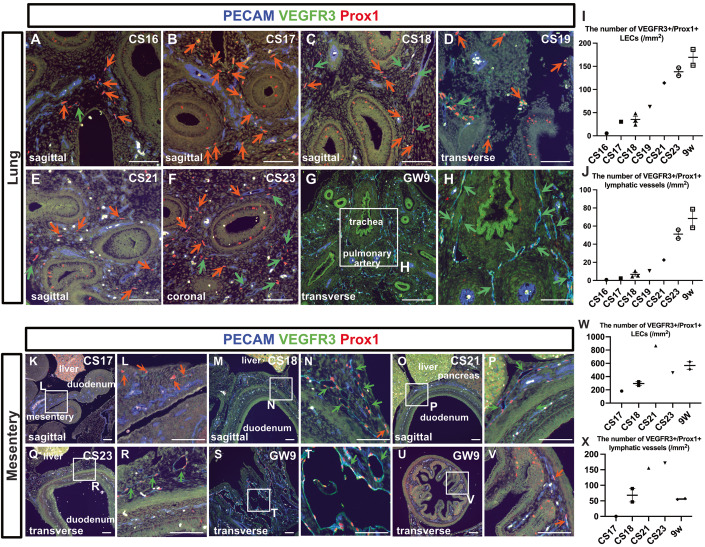
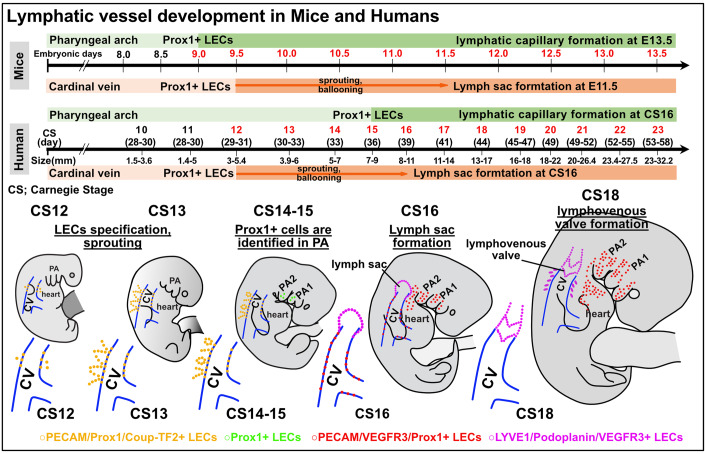
Lymphatic vessel development studies in mice and zebrafish models have demonstrated that lymphatic endothelial cells (LECs) predominantly differentiate from venous endothelial cells via the expression of the transcription factor Prox1. However, LECs can also be generated from undifferentiated mesoderm, suggesting potential diversity in their precursor cell origins depending on the organ or anatomical location. Despite these advances, recapitulating human lymphatic malformations in animal models has been difficult, and considering lymphatic vasculature function varies widely between species, analysis of development directly in humans is needed. Here, we examined early lymphatic development in humans by analyzing the histology of 31 embryos and three 9-week-old fetuses. We found that human embryonic cardinal veins, which converged to form initial lymph sacs, produce Prox1-expressing LECs. Furthermore, we describe the lymphatic vessel development in various organs and observe organ-specific differences. These characterizations of the early development of human lymphatic vessels should help to better understand the evolution and phylogenetic relationships of lymphatic systems, and their roles in human disease.
淋巴血管发育研究在小鼠和斑马鱼模型中表明,淋巴内皮细胞(LEC)主要通过转录因子 Prox1 的表达从静脉内皮细胞分化而来。然而,LEC 也可以从未分化的中胚层产生,这表明它们的前体细胞起源可能因器官或解剖位置的不同而存在多样性。尽管取得了这些进展,但在动物模型中重现人类淋巴管畸形仍然具有挑战性,并且考虑到淋巴血管系统在物种之间的功能差异很大,因此需要直接在人类中进行发育分析。在这里,我们通过分析 31 个胚胎和三个 9 周大胎儿的组织学,研究了人类早期的淋巴发育。我们发现,汇聚形成初始淋巴囊的人胚胎心大静脉产生表达 Prox1 的 LEC。此外,我们描述了各种器官中的淋巴管发育,并观察到器官特异性差异。这些对人类淋巴血管早期发育的描述应该有助于更好地理解淋巴系统的进化和系统发生关系,以及它们在人类疾病中的作用。