Kim Seong-Heun, Hind Charlotte K, Fernandes Guilherme F S, Wu Jingyue, Semenya Dorothy, Clifford Melanie, Marsh Caleb, Anselmi Silvia, Mason A James, Bruce Kenneth D, Sutton J Mark, Castagnolo Daniele
Department of Chemistry, University College London, 20 Gordon Street, London WC1H 0AJ, United Kingdom.
Institute of Pharmaceutical Science, School of Cancer & Pharmaceutical Science, King's College London, 150 Stamford Street, London SE1 9NH, United Kingdom.
ACS Med Chem Lett. 2024 Jan 9;15(2):239-249. doi: 10.1021/acsmedchemlett.3c00460. eCollection 2024 Feb 8.
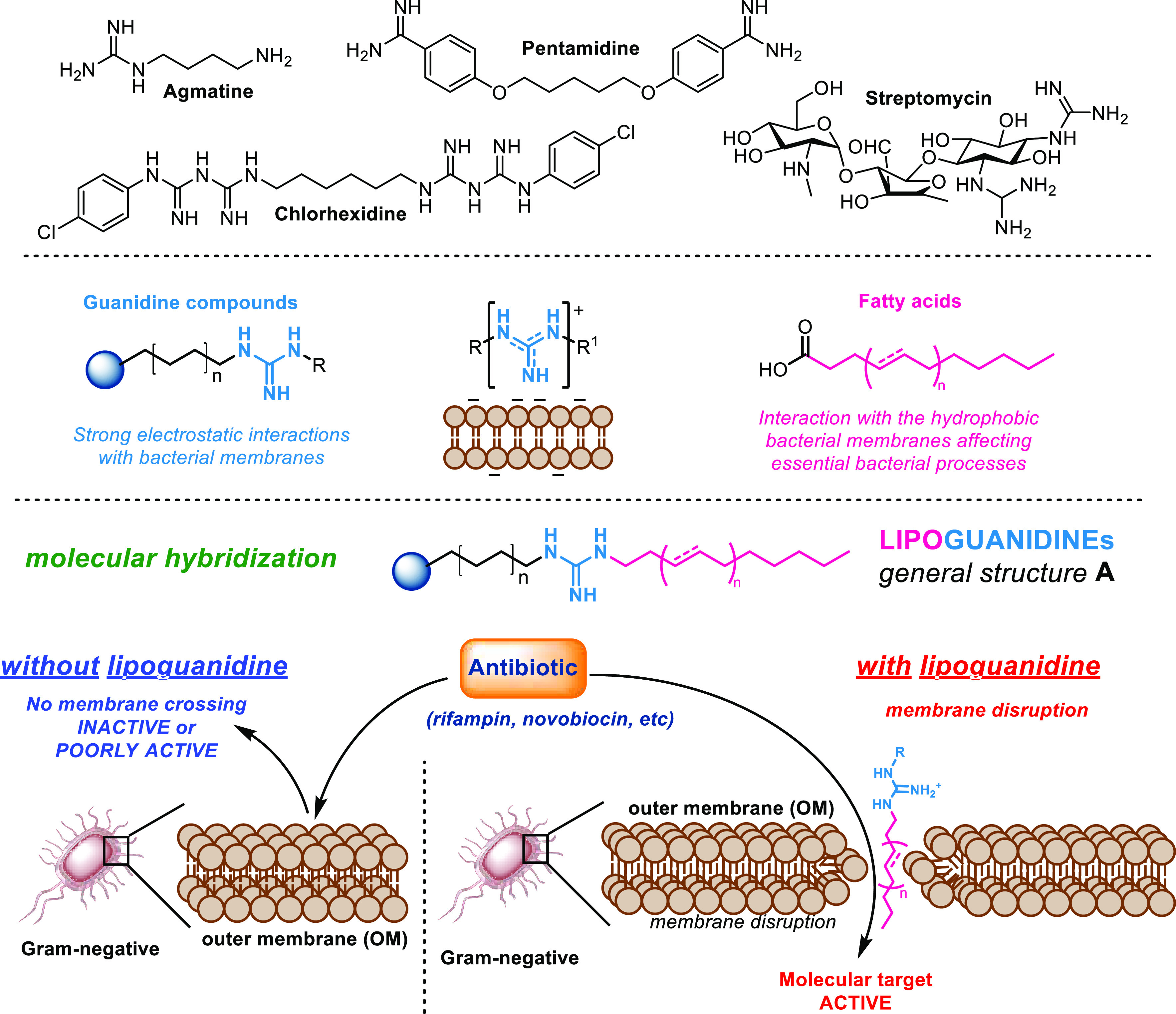
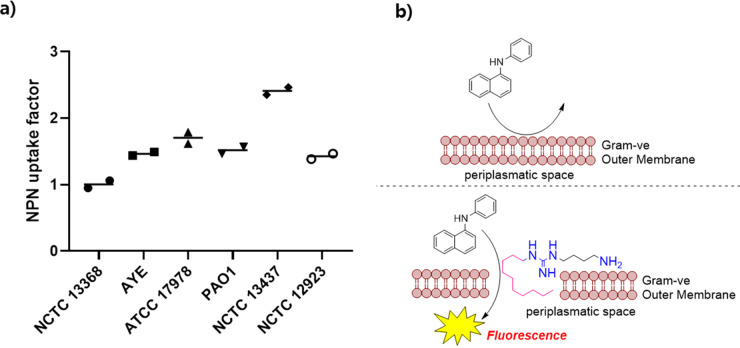
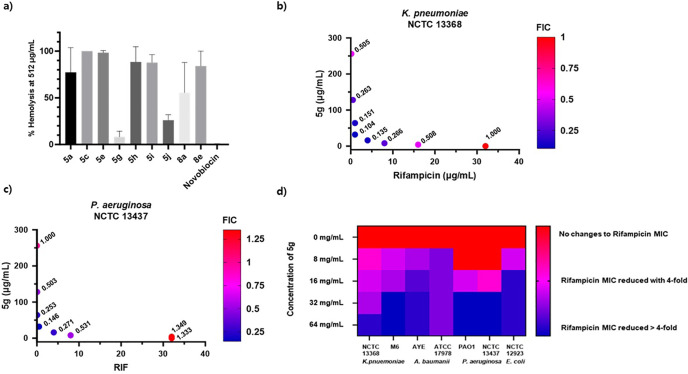
A new class of amphiphilic molecules, the lipoguanidines, designed as hybrids of guanidine and fatty acid compounds, has been synthesized and developed. The new molecules present both a guanidine polar head and a lipophilic tail that allow them to disrupt bacterial membranes and to sensitize Gram-negative bacteria to the action of the narrow-spectrum antibiotics rifampicin and novobiocin. The lipoguanidine sensitizes , , , and to rifampicin, thereby reducing the antibiotic minimum inhibitory concentrations (MIC) up to 256-fold. Similarly, is able to potentiate novobiocin up to 64-fold, thereby showing a broad spectrum of antibiotic potentiating activity. Toxicity and mechanism studies revealed the potential of to work synergistically with rifampicin through the disruption of bacterial membranes without affecting eukaryotic cells.
一类新型的两亲性分子——脂胍,被设计为胍和脂肪酸化合物的杂化物,已经被合成和研发出来。这些新分子同时具有一个胍极性头部和一个亲脂性尾部,这使得它们能够破坏细菌膜,并使革兰氏阴性菌对窄谱抗生素利福平和新生霉素的作用敏感。脂胍使金黄色葡萄球菌、表皮葡萄球菌、枯草芽孢杆菌和大肠杆菌对利福平敏感,从而将抗生素最低抑菌浓度(MIC)降低多达256倍。同样,脂胍能够将新生霉素的效力增强多达64倍,从而显示出广泛的抗生素增效活性。毒性和作用机制研究表明,脂胍有潜力通过破坏细菌膜与利福平协同作用,而不影响真核细胞。