Centre for Neuroimaging, Cognition and Genomics, School of Biological and Chemical Sciences, University of Galway, Galway, Ireland.
Department of Biology, Maynooth University, Maynooth, Ireland.
Genes Brain Behav. 2024 Feb;23(1):e12885. doi: 10.1111/gbb.12885.
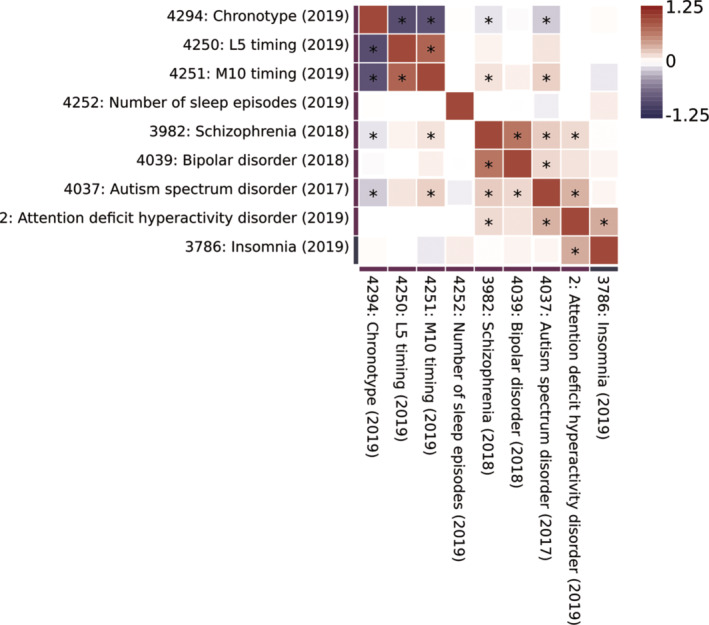
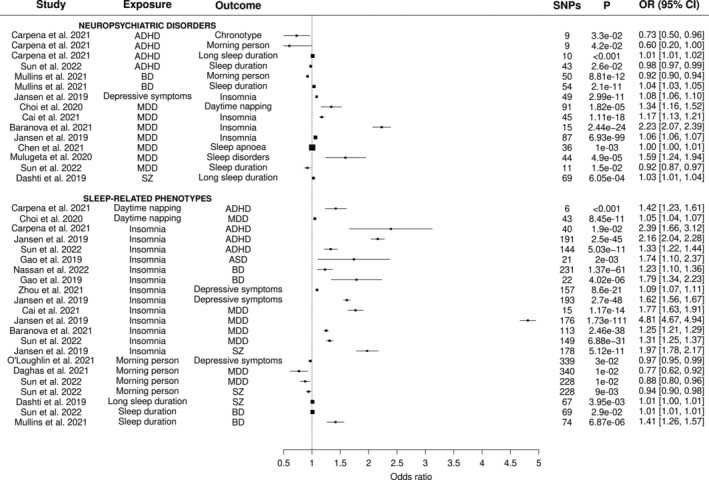
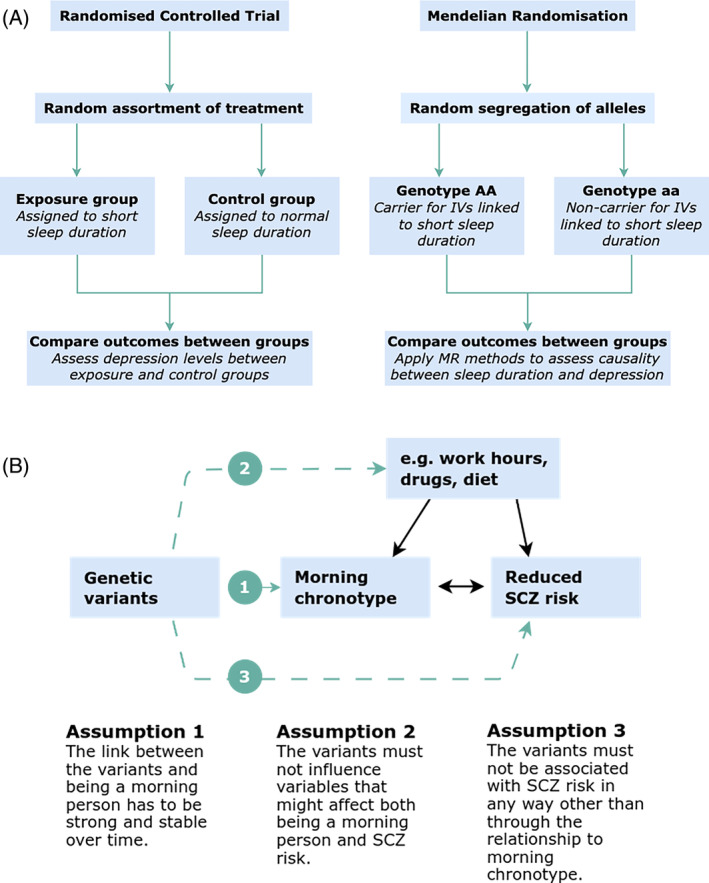
Genome-wide association studies (GWAS) have been important for characterizing the genetic component and enhancing our understanding of the biological aetiology of both neuropsychiatric disorders and sleep-related phenotypes such as chronotype, which is our preference for morning or evening time. Mendelian randomization (MR) is a post-GWAS analysis that is used to infer causal relationships between potential risk factors and outcomes. MR uses genetic variants as instrumental variants for exposures to study the effect on outcomes. This review details the main results from GWAS of neuropsychiatric disorders and sleep-related phenotypes, and the application of MR to investigate their bidirectional relationship. The main results from MR studies of neuropsychiatric disorders and sleep-related phenotypes are summarized. These MR studies have identified 37 causal relationships between neuropsychiatric disorders and sleep-related phenotypes. MR studies identified evidence of a causal role for five neuropsychiatric disorders and symptoms (attention deficit hyperactivity disorder, bipolar disorder, depressive symptoms, major depressive disorder and schizophrenia) on sleep-related phenotypes and evidence of a causal role for five sleep-related phenotypes (daytime napping, insomnia, morning person, long sleep duration and sleep duration) on risk for neuropsychiatric disorders. These MR results show a bidirectional relationship between neuropsychiatric disorders and sleep-related phenotypes and identify potential risk factors for follow-up studies.
全基因组关联研究(GWAS)对于描述遗传成分和增进我们对神经精神障碍以及睡眠相关表型(如生物钟,即我们对早晨或晚上时间的偏好)的生物学病因的理解非常重要。孟德尔随机化(MR)是 GWAS 后的一种分析方法,用于推断潜在风险因素与结果之间的因果关系。MR 使用遗传变异作为暴露的工具变量来研究对结果的影响。本综述详细介绍了神经精神障碍和睡眠相关表型的 GWAS 的主要结果,以及应用 MR 来研究它们之间的双向关系。总结了神经精神障碍和睡眠相关表型的 MR 研究的主要结果。这些 MR 研究确定了 37 种神经精神障碍和睡眠相关表型之间的因果关系。MR 研究表明,五种神经精神障碍和症状(注意缺陷多动障碍、双相情感障碍、抑郁症状、重度抑郁症和精神分裂症)对睡眠相关表型有因果作用,而五种睡眠相关表型(白天小睡、失眠、早起者、睡眠时间长和睡眠时间)对神经精神障碍的风险有因果作用。这些 MR 结果表明神经精神障碍和睡眠相关表型之间存在双向关系,并确定了潜在的风险因素,供后续研究。