State Key Laboratory of Digital Medical Engineering, School of Biomedical Engineering, Hainan University, Haikou, 570100, China.
Key Laboratory of Brain Health Intelligent Evaluation and Intervention, Ministry of Education, School of Medical Technology, Beijing Institute of Technology, 100081, Beijing, China.
Nat Commun. 2024 Feb 16;15(1):1453. doi: 10.1038/s41467-024-45656-7.
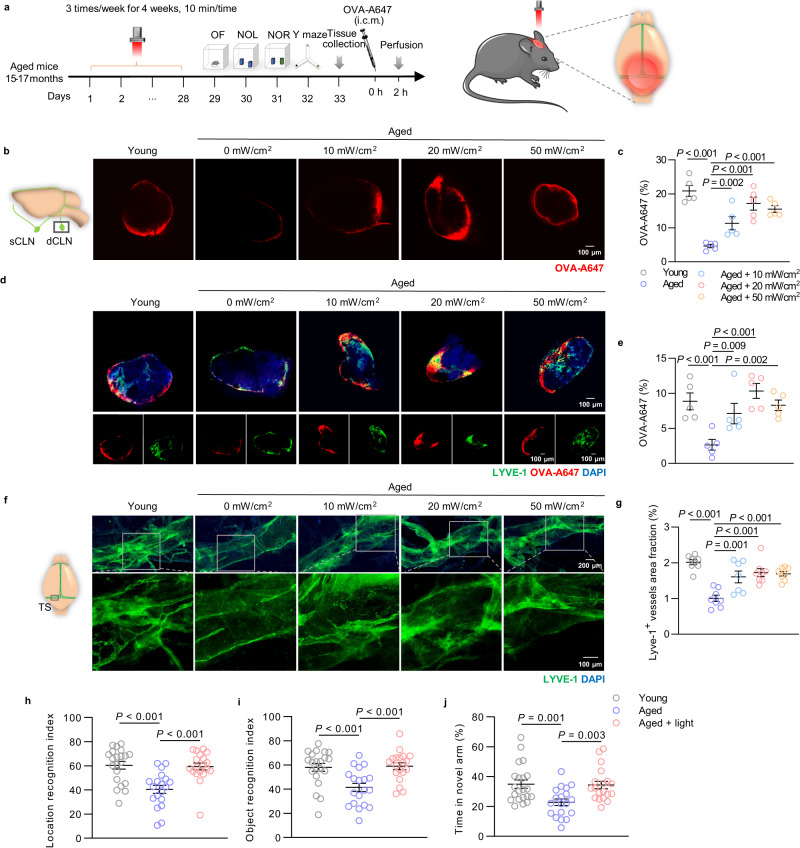
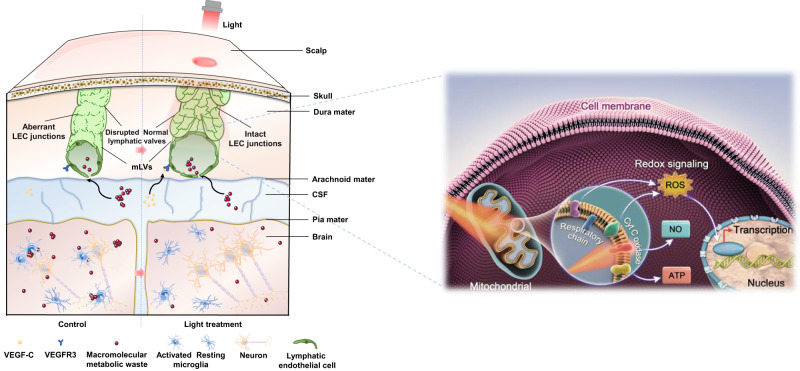
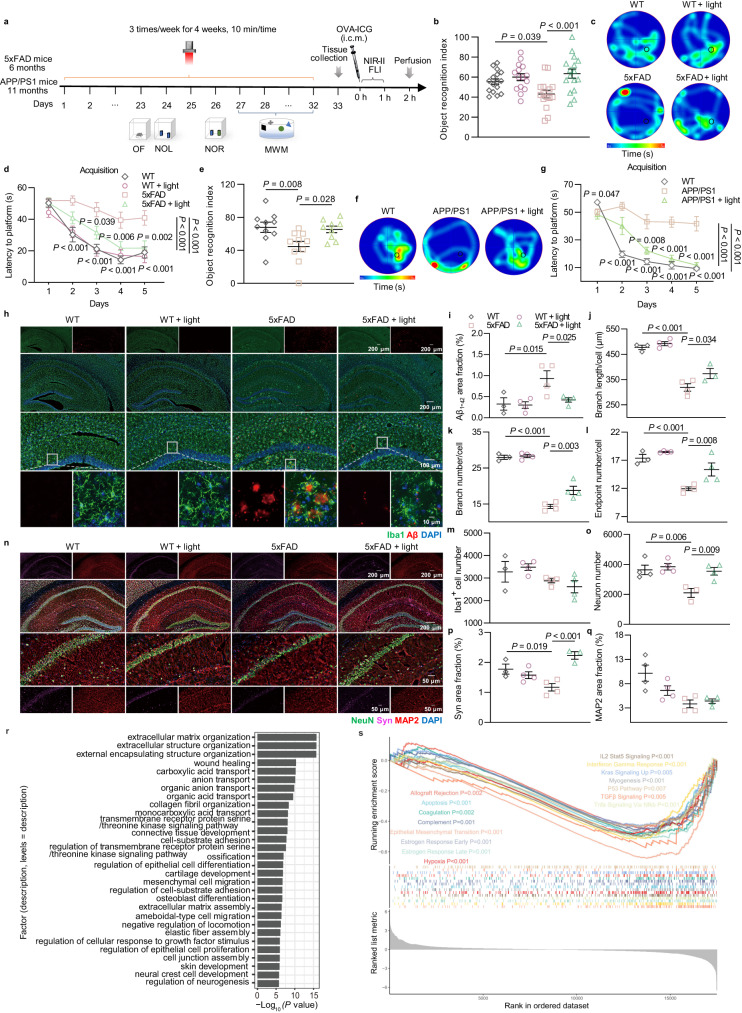
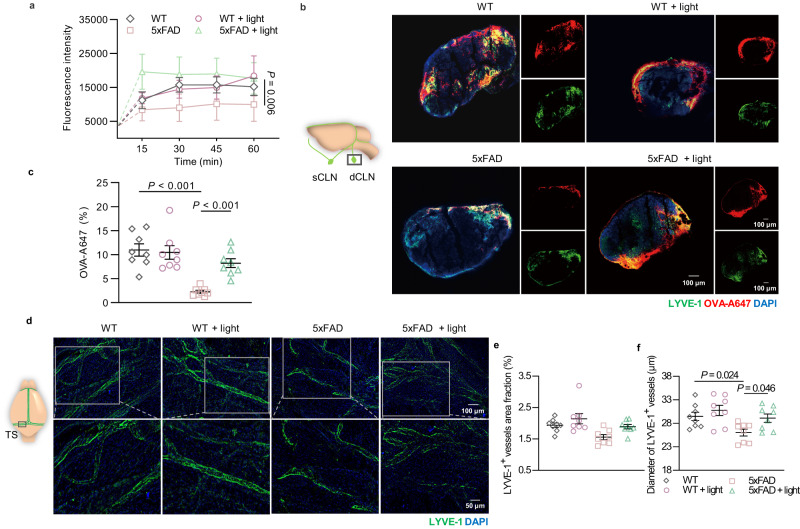
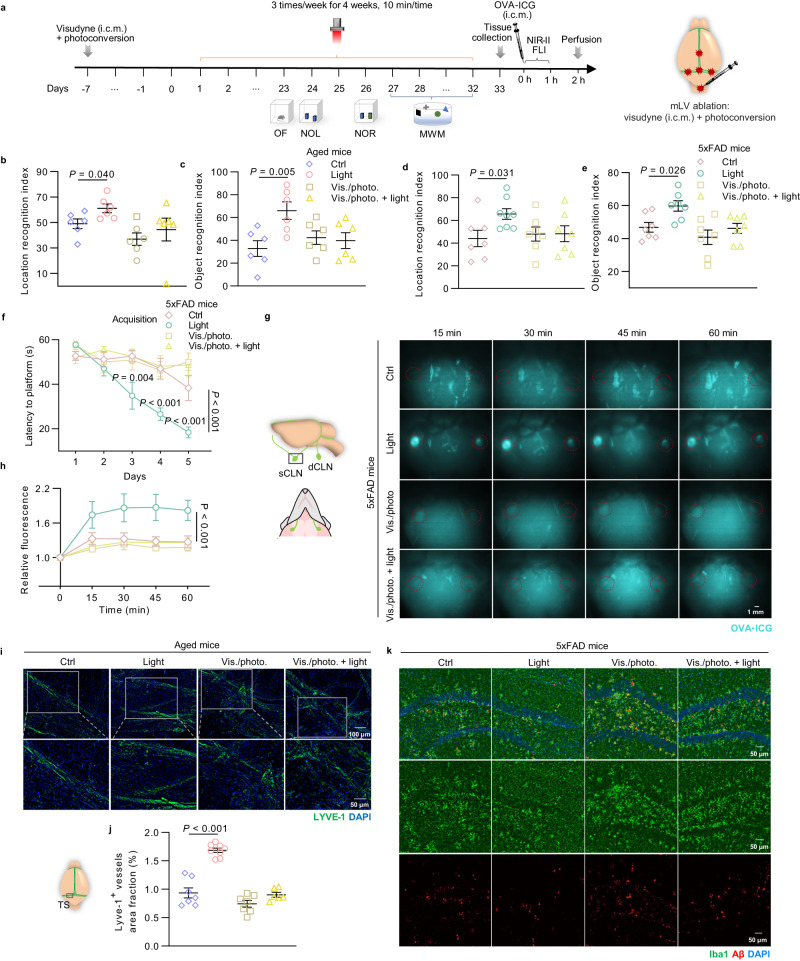
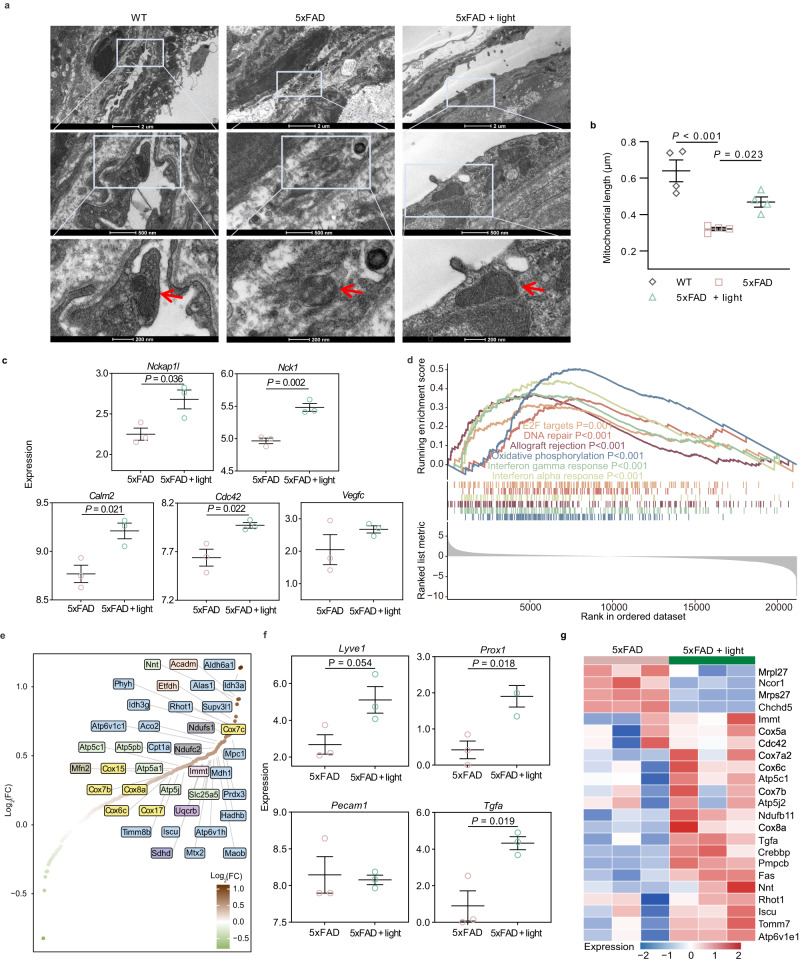
Meningeal lymphatic vessels (mLVs) have been shown to be involved in amyloid beta (Aβ) clearance, which is considered as a potential therapeutic target for Alzheimer's disease (AD). In this study, based on the superficial spatial distribution of mLVs, a near-infrared light is employed to modulate lymphatic drainage, significantly improving cognition of both aged and AD (5xFAD and APP/PS1) mice, and alleviating AD-associated pathology by reducing Aβ deposition, neuroinflammation and neuronal damage. Furthermore, transmission electron microscopy imaging and RNA sequencing data indicate amelioration of mitochondrial metabolism and cellular junction of meningeal lymphatic endothelial cells (mLECs) by light modulation. These studies collectively suggest that near-infrared light treatment can improve cognitive function by strengthening scavenging ability of mLVs through restoring mLEC function. In conclusion, lymphatic drainage potentiation by light promotes pathological remission and cognitive enhancement in aging and AD mouse models, which offers a potential amelioration strategy for neurodegenerative diseases.
脑膜淋巴管 (mLVs) 已被证明参与淀粉样蛋白 β (Aβ) 的清除,这被认为是阿尔茨海默病 (AD) 的潜在治疗靶点。在这项研究中,基于 mLVs 的浅层空间分布,近红外光被用来调节淋巴引流,显著改善了老年和 AD (5xFAD 和 APP/PS1) 小鼠的认知能力,并通过减少 Aβ 沉积、神经炎症和神经元损伤来减轻 AD 相关的病理。此外,透射电子显微镜成像和 RNA 测序数据表明,光调节改善了脑膜淋巴管内皮细胞 (mLEC) 的线粒体代谢和细胞连接。这些研究共同表明,近红外光治疗可以通过恢复 mLEC 功能来增强 mLVs 的清除能力,从而改善认知功能。总之,光增强淋巴引流通过促进衰老和 AD 小鼠模型中的病理缓解和认知增强,为神经退行性疾病提供了一种潜在的改善策略。