College of Science and Engineering, Hamad Bin Khalifa University, Doha, Qatar.
School of Electronics Engineering and Computer Science, Queen Mary University of London, London, UK.
Appl Psychophysiol Biofeedback. 2024 Jun;49(2):219-231. doi: 10.1007/s10484-024-09624-7. Epub 2024 Feb 16.
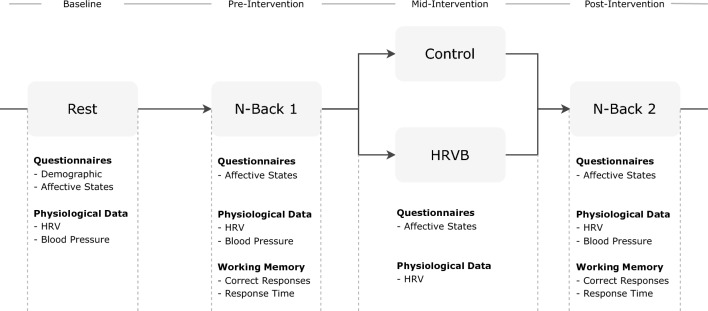
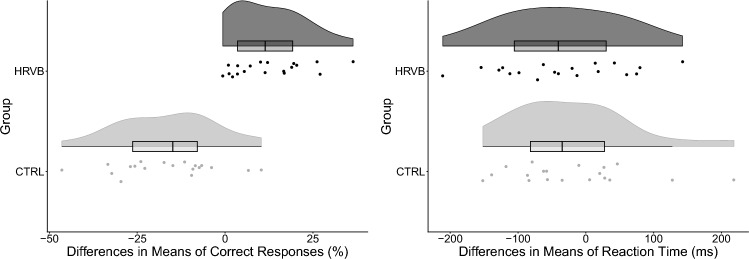
Drawing upon the well-documented impact of long-term heart rate variability biofeedback (HRVB) on psychophysiological responses, this study seeks to explore the short-term effects arising from a single HRVB session during and after paced breathing exercise. The research aligns with the neurovisceral integration model, emphasizing the link between heart rate variability (HRV) levels and cognitive performance. Therefore, a randomized controlled trial employing a between-subjects design was conducted with 38 participants. Each participant was assigned to either the paced breathing intervention group or the spontaneous breathing control group. The study assessed various parameters such as cardiac vagal tone, evaluated through vagally mediated HRV measures, and working memory, measured using the N-back task. Additionally, participants' affective states were assessed through self-reported questionnaires, specifically targeting attentiveness, fatigue, and serenity. The results notably reveal enhancements in the working memory task and an elevated state of relaxation and attention following the HRVB session, as evidenced by higher averages of correct responses, serenity and attentiveness scores. However, the findings suggest that this observed improvement is not influenced by changes in cardiac vagal tone, as assessed using a simple mediation analysis. In conclusion, this study presents promising insights into the impact of a single HRVB session, laying the foundation for future research advancements in this domain.
本研究旨在探讨在进行 paced breathing 练习期间和之后单次心率变异性生物反馈 (HRVB) 对心理生理反应的短期影响。该研究基于长期心率变异性生物反馈对心理生理反应的已有充分记录的影响,并遵循神经内脏整合模型,强调心率变异性 (HRV) 水平与认知表现之间的联系。因此,采用了随机对照试验和被试间设计,共纳入了 38 名参与者。每位参与者被分配到 paced breathing 干预组或自主呼吸对照组。研究评估了各种参数,如心脏迷走神经张力,通过迷走神经介导的 HRV 测量进行评估,以及工作记忆,使用 N-back 任务进行测量。此外,通过自我报告的问卷评估参与者的情感状态,专门针对注意力、疲劳和宁静进行评估。研究结果显著表明,在 HRVB 后,工作记忆任务和放松与注意力状态得到了提高,表现为正确反应、宁静和注意力得分的平均值更高。然而,简单的中介分析表明,这种观察到的改善不受心脏迷走神经张力变化的影响。总之,本研究为单次 HRVB 后产生的影响提供了有前景的见解,为该领域的未来研究进展奠定了基础。