Department of Pediatrics I (Neonatology, Pediatric Intensive Care, Pediatric Neurology, and Pediatric Infectious Diseases), University Hospital Essen, University of Duisburg-Essen, Essen, Germany.
German Reference Laboratory for Streptococci, Department of Medical Microbiology, University Hospital RWTH Aachen, Aachen, Germany.
Infection. 2024 Jun;52(3):1099-1111. doi: 10.1007/s15010-023-02165-x. Epub 2024 Feb 16.
In late 2022, a surge of severe S. pyogenes infections was reported in several European countries. This study assessed hospitalizations and disease severity of community-acquired bacterial infections with S. pyogenes, S. pneumoniae, N. meningitidis, and H. influenzae among children in North Rhine-Westphalia (NRW), Germany, during the last quarter of 2022 compared to long-term incidences.
Hospital cases due to bacterial infections between October and December 2022 were collected in a multicenter study (MC) from 59/62 (95%) children's hospitals in NRW and combined with surveillance data (2016-2023) from the national reference laboratories for streptococci, N. meningitidis, and H. influenzae. Overall and pathogen-specific incidence rates (IR) from January 2016 to March 2023 were estimated via capture-recapture analyses. Expected annual deaths from the studied pathogens were calculated from national death cause statistics.
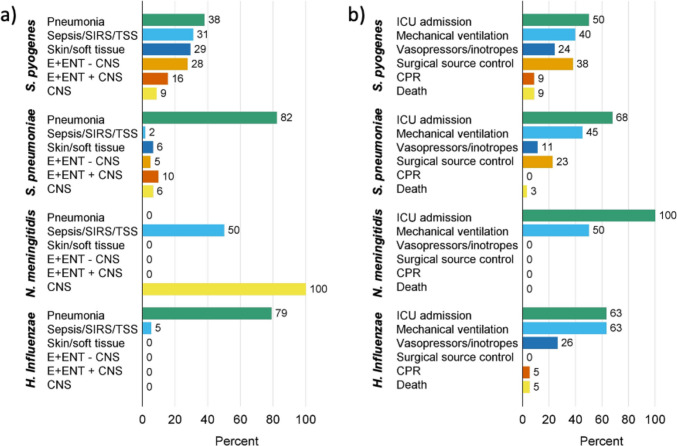
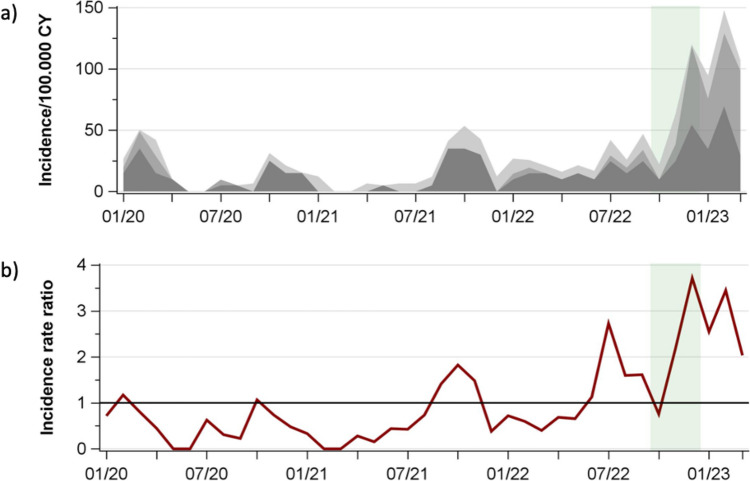
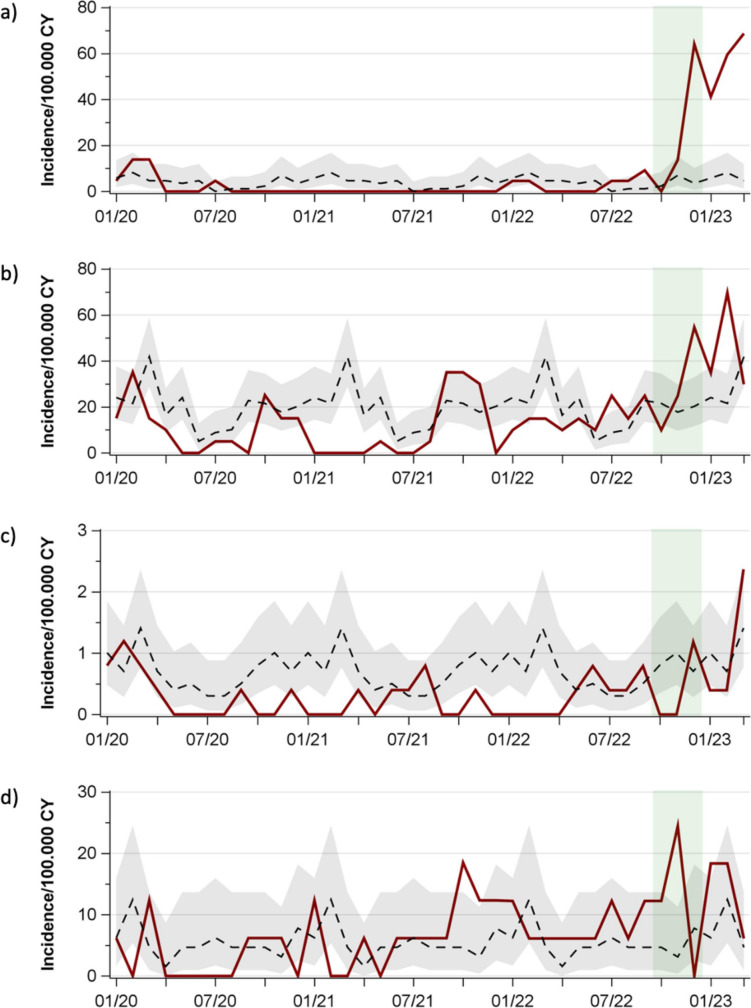
In the MC study, 153 cases with high overall disease severity were reported with pneumonia being most common (59%, n = 91). IRs of bacterial infections declined at the beginning of the COVID-19 pandemic and massively surged to unprecedented levels in late 2022 and early 2023 (overall hospitalizations 3.5-fold), with S. pyogenes and S. pneumoniae as main drivers (18-fold and threefold). Observed deaths during the study period exceeded the expected number for the entire year in NRW by far (7 vs. 0.9).
The unprecedented peak of bacterial infections and deaths in late 2022 and early 2023 was caused mainly by S. pyogenes and S. pneumoniae. Improved precautionary measures are needed to attenuate future outbreaks.
2022 年末,几个欧洲国家报告了严重的酿脓链球菌感染激增。本研究评估了 2022 年第四季度德国北莱茵-威斯特法伦州(NRW)与长期发病率相比,社区获得性酿脓链球菌、肺炎链球菌、脑膜炎奈瑟菌和流感嗜血杆菌引起的细菌性感染住院和疾病严重程度。
在一项多中心研究(MC)中,从 NRW 的 59/62 家(95%)儿童医院收集了 2022 年 10 月至 12 月期间因细菌感染住院的病例,并与全国链球菌、脑膜炎奈瑟菌和流感嗜血杆菌参考实验室的监测数据(2016-2023 年)相结合。通过捕获-再捕获分析估计了 2016 年 1 月至 2023 年 3 月的总体和病原体特异性发病率(IR)。从全国死因统计数据中计算了研究病原体的预期年死亡人数。
在 MC 研究中,报告了 153 例病情严重程度高的病例,最常见的是肺炎(59%,n=91)。细菌性感染的发病率在 COVID-19 大流行开始时下降,然后在 2022 年末和 2023 年初大幅飙升至前所未有的水平(总住院人数增加了 3.5 倍),主要由酿脓链球菌和肺炎链球菌驱动(增加了 18 倍和 3 倍)。在研究期间观察到的死亡人数远远超过了 NRW 全年的预期人数(7 比 0.9)。
2022 年末和 2023 年初细菌性感染和死亡的空前高峰主要由酿脓链球菌和肺炎链球菌引起。需要采取改进的预防措施来减轻未来的疫情爆发。