Zuo Jun, Ma Shaolin
Department of Plastic Surgery, The First Affiliated Hospital of Xinjiang Medical University, Urumqi, Xinjiang, China.
Heliyon. 2024 Jan 30;10(4):e24985. doi: 10.1016/j.heliyon.2024.e24985. eCollection 2024 Feb 29.
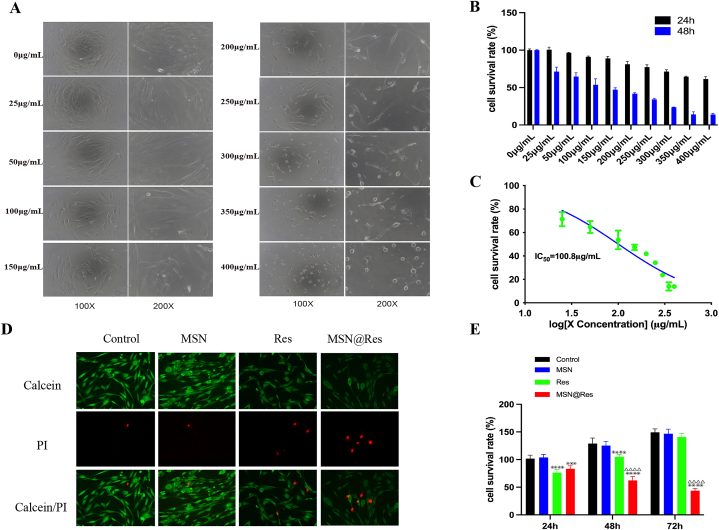
During the regression of hypertrophic scars, autophagy and apoptosis are the main ways of cell death. Recent investigations demonstrated effective inhibition of resveratrol on hypertrophic scar fibroblasts (HSFs). But its therapeutic value is limited by chemical instability and hydrophobicity, as well as the mechanism of its role in regulation of autophagy and apoptosis remains unknown.
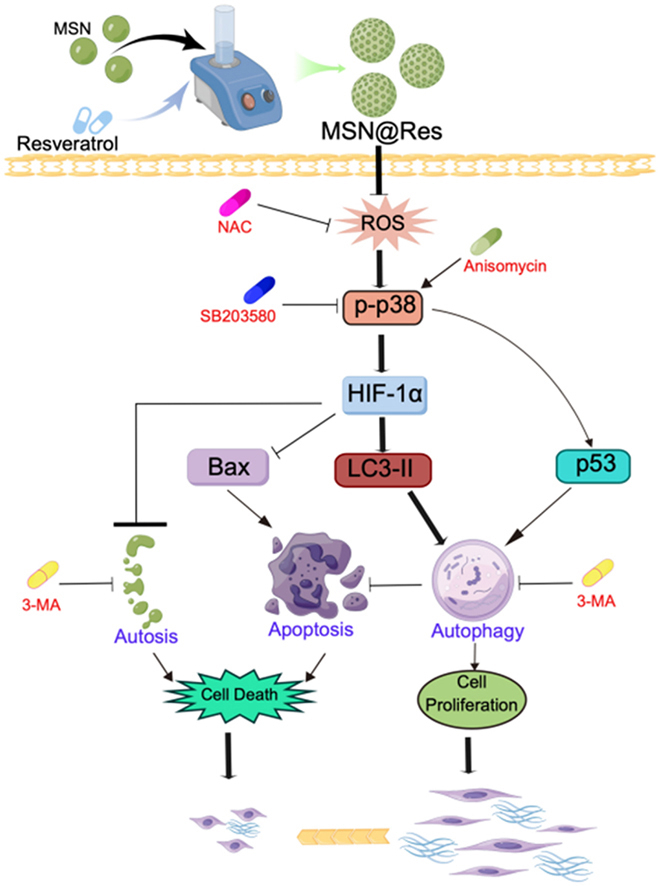
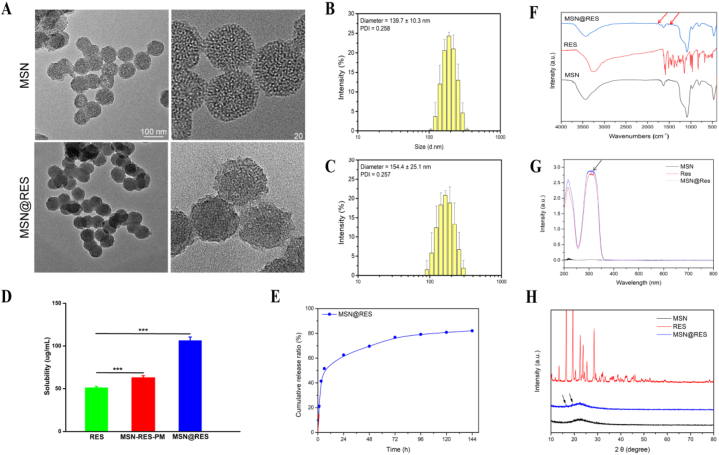
We prepared a mesoporous silica nanoparticle laden with resveratrol (MSN@Res) which can effectively improve the solubility and stability of resveratrol. The purpose of this study was to investigate whether MSN@Res regulate autophagy and apoptosis of HSFs via inhibition of ROS/p38/HIF-1α/p53 signaling axis, as to reveal its pharmacological action and target.
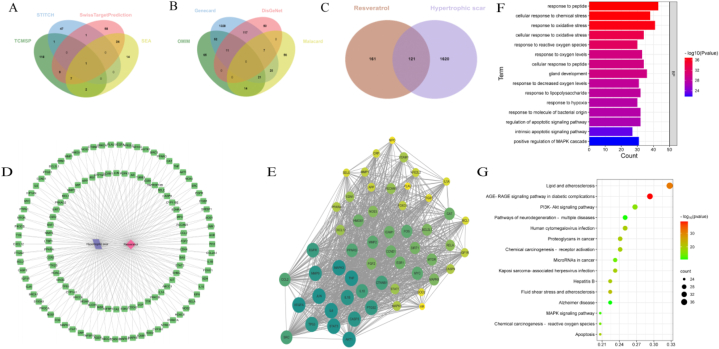
Network pharmacology, molecular docking, and in vitro assays were carried out in this study. An in vitro model of fibroblasts cultivated in hypoxic and ischemic situations was established to simulate the scar in the proliferative phase.
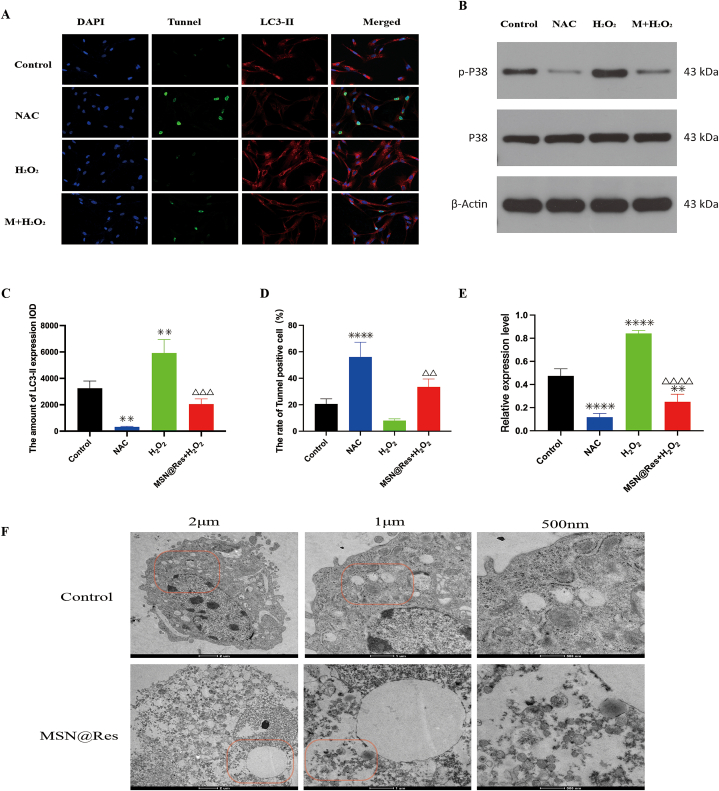
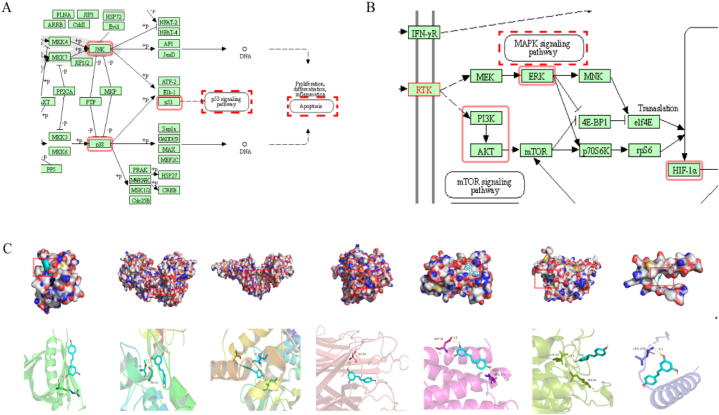
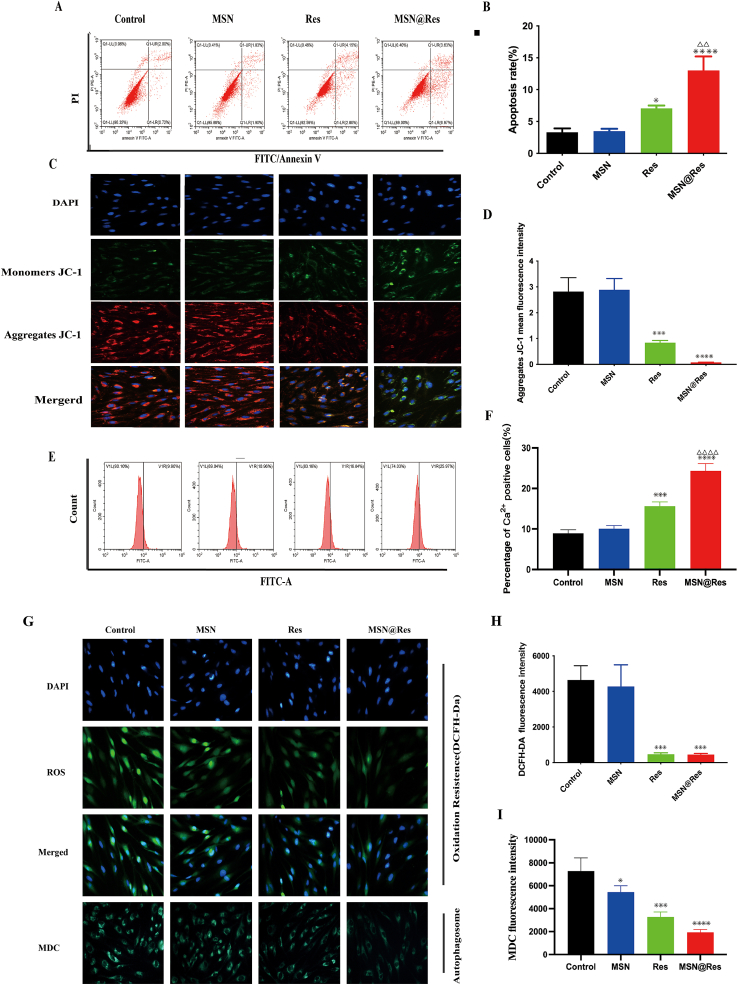
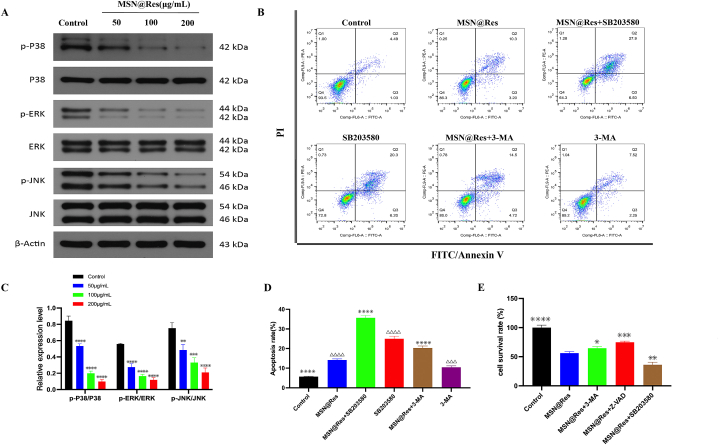
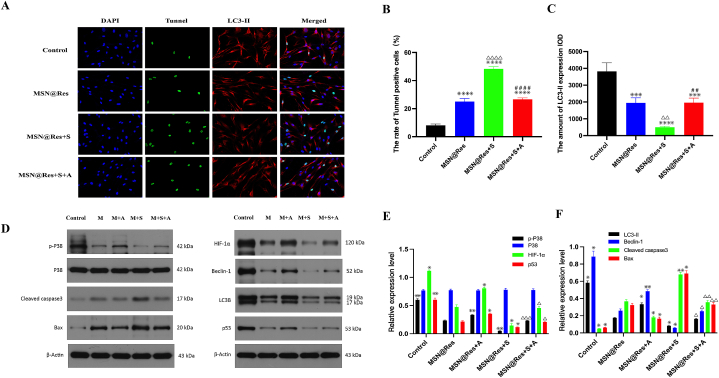
MSN@Res surpresses HSFs by reducing physiological autophagy and inducing apoptosis, autosis may be another cell death involed in this process. According to the network pharmacological analysis and molecular docking, the mechanism by which MSN@Res alleviates hypertrophic scar may be closely related to the MAPK signaling pathway. MSN@Res significantly downregulate the expression of HIF-1α and p53 through the inhibition of ROS induced p38-MAPK phosphorylation with corresponding changes in the expression of autophagy and apoptosis related protein.
MSN@Res is a novel drug delivery system with excellent chemical stability and drug release performance. It can inhibit protective autophagy of fibroblasts in hypoxic environment, and induce the apoptosis and autosis via the ROS -mediated p38-MAPK/HIF-1α/p53 signaling axis.
在增生性瘢痕消退过程中,自噬和凋亡是细胞死亡的主要方式。近期研究表明白藜芦醇对增生性瘢痕成纤维细胞(HSFs)有有效抑制作用。但其治疗价值受化学不稳定性和疏水性限制,且其在自噬和凋亡调控中的作用机制仍不清楚。
我们制备了负载白藜芦醇的介孔二氧化硅纳米颗粒(MSN@Res),其能有效提高白藜芦醇的溶解度和稳定性。本研究旨在探讨MSN@Res是否通过抑制ROS/p38/HIF-1α/p53信号轴来调节HSFs的自噬和凋亡,以揭示其药理作用和靶点。
本研究进行了网络药理学、分子对接和体外实验。建立了缺氧缺血条件下培养的成纤维细胞体外模型以模拟增生期瘢痕。
MSN@Res通过减少生理性自噬和诱导凋亡抑制HSFs,自噬性细胞死亡可能是此过程中涉及的另一种细胞死亡方式。根据网络药理学分析和分子对接,MSN@Res减轻增生性瘢痕的机制可能与MAPK信号通路密切相关。MSN@Res通过抑制ROS诱导的p38-MAPK磷酸化显著下调HIF-1α和p53的表达,同时自噬和凋亡相关蛋白的表达也有相应变化。
MSN@Res是一种具有优异化学稳定性和药物释放性能的新型药物递送系统。它能抑制缺氧环境中成纤维细胞的保护性自噬,并通过ROS介导的p38-MAPK/HIF-1α/p53信号轴诱导凋亡和自噬性细胞死亡。