Park James H, Hothi Parvinder, Lopez Garcia de Lomana Adrian, Pan Min, Calder Rachel, Turkarslan Serdar, Wu Wei-Ju, Lee Hwahyung, Patel Anoop P, Cobbs Charles, Huang Sui, Baliga Nitin S
Institute for Systems Biology, Seattle, WA.
Ivy Center for Advanced Brain Tumor Treatment, Swedish Neuroscience Institute, Seattle, WA.
bioRxiv. 2024 Feb 7:2024.02.02.578510. doi: 10.1101/2024.02.02.578510.
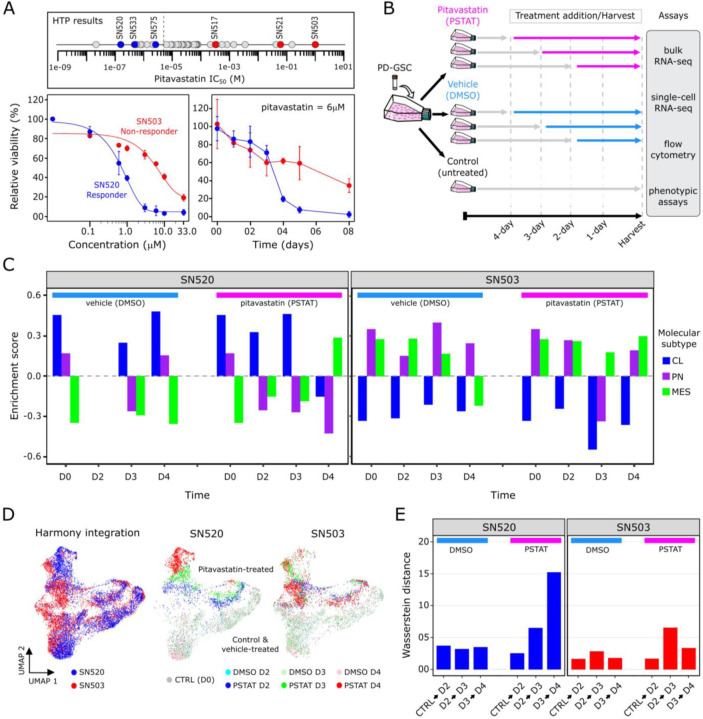
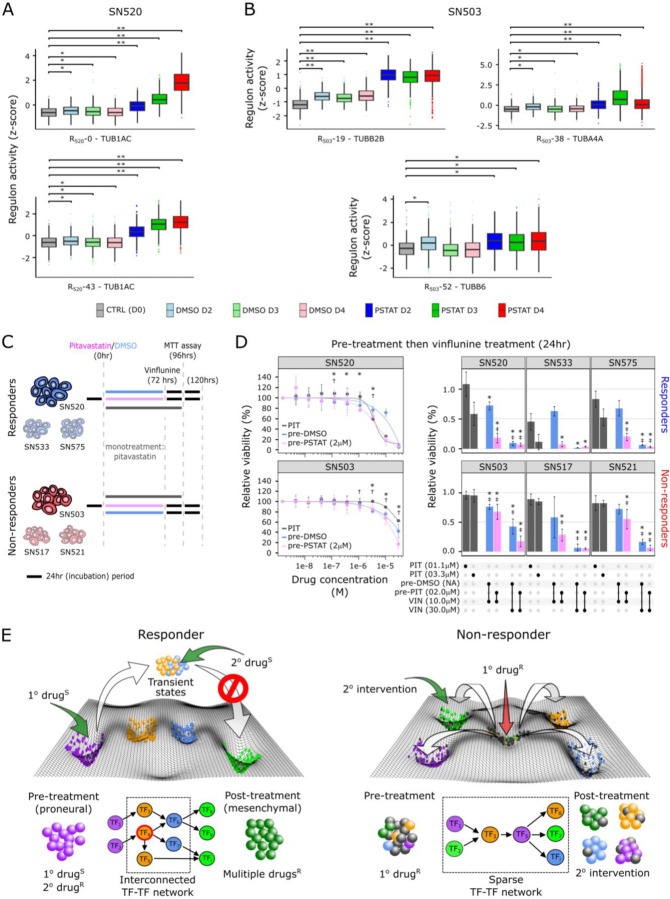
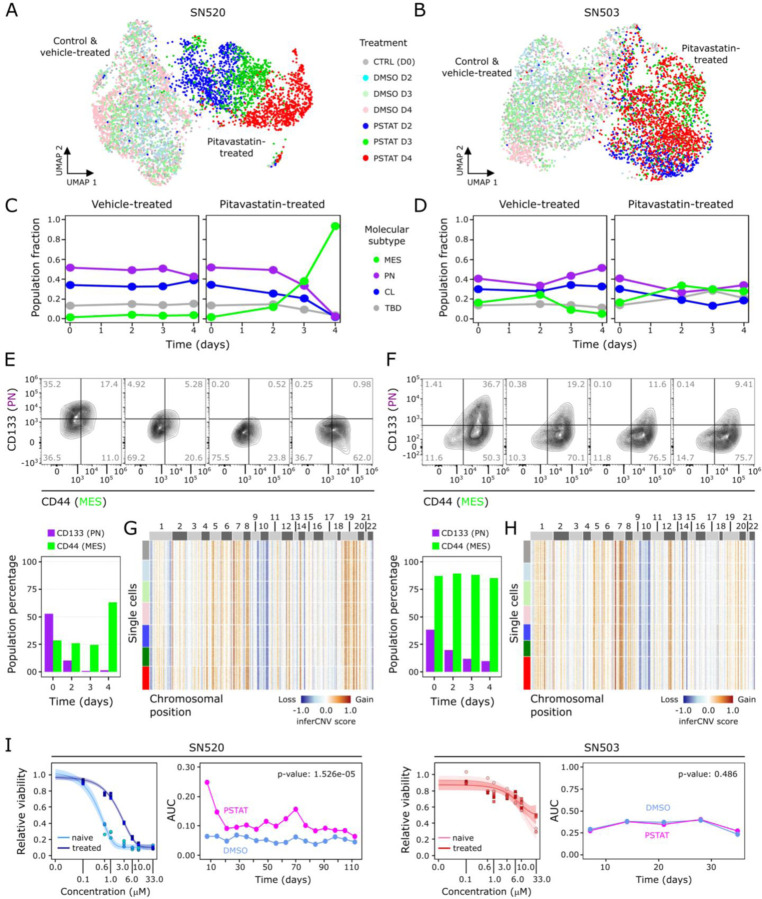
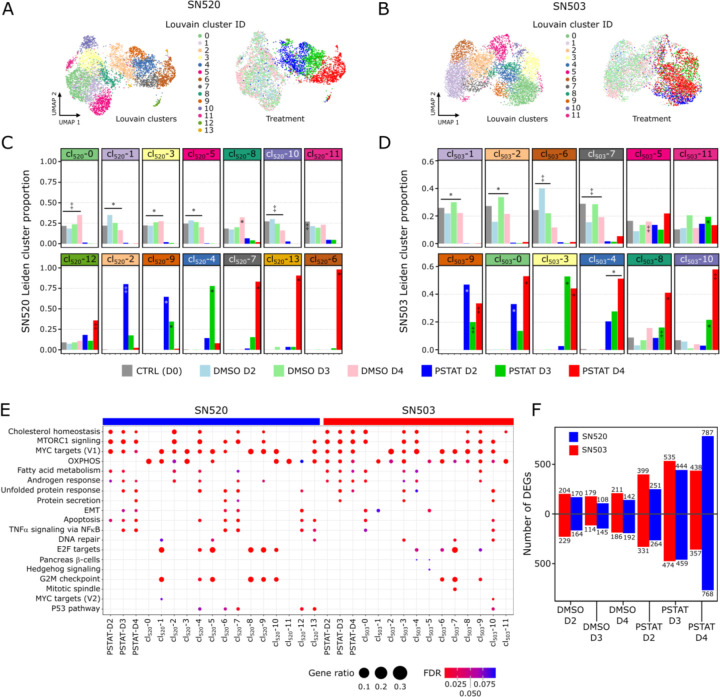
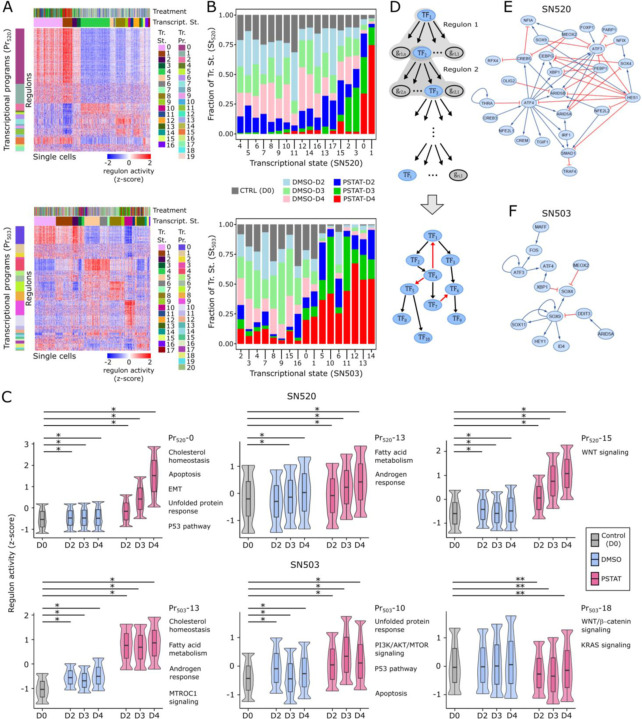
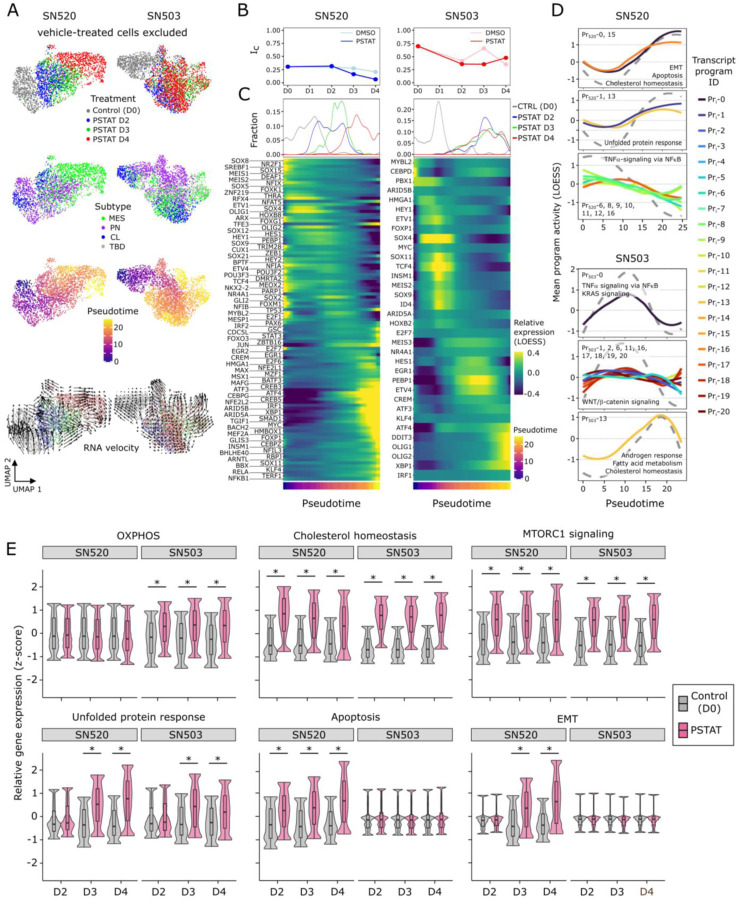
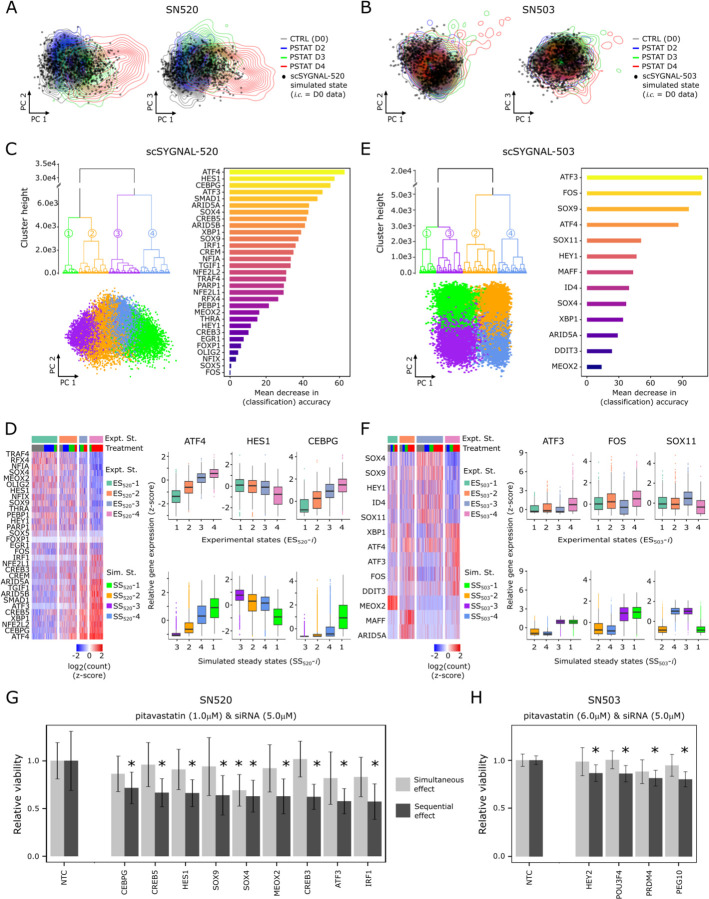
Poor prognosis and drug resistance in glioblastoma (GBM) can result from cellular heterogeneity and treatment-induced shifts in phenotypic states of tumor cells, including dedifferentiation into glioma stem-like cells (GSCs). This rare tumorigenic cell subpopulation resists temozolomide, undergoes proneural-to-mesenchymal transition (PMT) to evade therapy, and drives recurrence. Through inference of transcriptional regulatory networks (TRNs) of patient-derived GSCs (PD-GSCs) at single-cell resolution, we demonstrate how the topology of transcription factor interaction networks drives distinct trajectories of cell state transitions in PD-GSCs resistant or susceptible to cytotoxic drug treatment. By experimentally testing predictions based on TRN simulations, we show that drug treatment drives surviving PD-GSCs along a trajectory of intermediate states, exposing vulnerability to potentiated killing by siRNA or a second drug targeting treatment-induced transcriptional programs governing non-genetic cell plasticity. Our findings demonstrate an approach to uncover TRN topology and use it to rationally predict combinatorial treatments that disrupts acquired resistance in GBM.
胶质母细胞瘤(GBM)的不良预后和耐药性可能源于细胞异质性以及治疗诱导的肿瘤细胞表型状态变化,包括向胶质瘤干细胞样细胞(GSCs)的去分化。这种罕见的致瘤细胞亚群对替莫唑胺耐药,经历神经前体细胞向间充质细胞的转变(PMT)以逃避治疗,并导致复发。通过在单细胞分辨率下推断患者来源的GSCs(PD - GSCs)的转录调控网络(TRNs),我们展示了转录因子相互作用网络的拓扑结构如何驱动对细胞毒性药物治疗耐药或敏感的PD - GSCs中不同的细胞状态转变轨迹。通过基于TRN模拟实验性地测试预测结果,我们发现药物治疗使存活的PD - GSCs沿着中间状态轨迹发展,从而暴露了其对siRNA或第二种靶向治疗诱导的调控非遗传细胞可塑性的转录程序的增强杀伤作用的脆弱性。我们的研究结果展示了一种揭示TRN拓扑结构并利用它合理预测联合治疗方案的方法,该方案可破坏GBM中的获得性耐药。