Kugler Helen L, Taylor Nicholas F, Brusco Natasha K
Clinical Education and Research Institute, Cabrini Health, Australia.
School of Allied health, Human Services and Sport, La Trobe University, Australia.
Heliyon. 2024 Jan 26;10(3):e24937. doi: 10.1016/j.heliyon.2024.e24937. eCollection 2024 Feb 15.
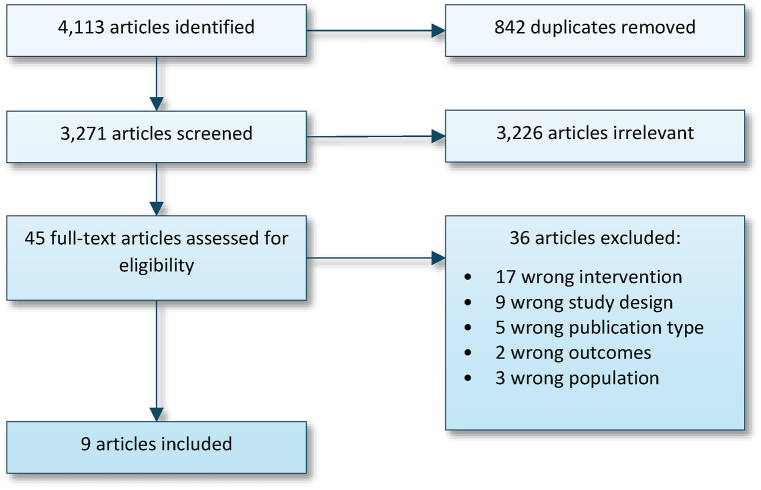
Workplace injuries are a serious issue for the health and social care industry, with the sector accounting for 20 % of all serious claims reported. The aim of this systematic review was to determine whether patient handling training interventions that included instruction on patient transfer techniques are effective in preventing musculoskeletal injuries in healthcare workers. : Electronic databases MEDLINE (Ovid), EMBASE (Ovid), CINAHL (EBSCO) and Health and Safety Science Abstracts (ProQuest) were searched for controlled trials from January 1996-August 2022. Risk of bias was evaluated using the PEDro scale and overall certainty of evidence assessed using the Grading of Recommendations, Assessment, Development and Evaluation for each meta-analysis. A total of nine studies (3903 participants) were included. There is moderate certainty evidence that could not conclude whether patient handling training affects the 12-month incidence of lower back pain (OR = 0.83, 95 % CI [0.59, 1.16]). There is low certainty evidence that patient handing training does not prevent lower back pain in health professionals without pre-existing pain (MD = -0.06, 95 % CI [-0.63, 0.52]) but may reduce lower back pain in those with pre-existing pain (MD = -2.92, 95 % CI [-5.44, -0.41]). The results also suggest that there may be a positive effect of training incorporating risk assessment on musculoskeletal injury rates; however the evidence is of very low certainty. There is low certainty evidence from a single study that training may have a short-term effect on sickness absences.) There is a lack of evidence to support patient handling training when delivered to all healthcare staff. Training in its current form may be an ineffective strategy for reducing musculoskeletal injuries and pain. High quality disinvestment studies or trials incorporating risk assessment strategies are warranted. This review suggests health service managers question the effectiveness of current patient handling training practices and consider evaluating current practices before allocating resources to meet employee risk reduction obligations.
工伤对于健康和社会护理行业而言是一个严重问题,该行业占所有上报的严重索赔的20%。本系统评价的目的是确定包含患者搬运技术指导的患者搬运培训干预措施在预防医护人员肌肉骨骼损伤方面是否有效。检索电子数据库MEDLINE(Ovid)、EMBASE(Ovid)、CINAHL(EBSCO)和健康与安全科学文摘(ProQuest),以查找1996年1月至2022年8月期间的对照试验。使用PEDro量表评估偏倚风险,并对每项荟萃分析使用推荐分级、评估、制定和评价方法评估证据的总体确定性。总共纳入了9项研究(3903名参与者)。有中等确定性的证据无法得出患者搬运培训是否会影响12个月下背痛发病率的结论(比值比=0.83,95%置信区间[0.59,1.16])。有低确定性的证据表明,对于无既往疼痛的卫生专业人员,患者搬运培训不能预防下背痛(平均差=-0.06,95%置信区间[-0.63,0.52]),但可能会降低有既往疼痛者的下背痛(平均差=-2.92,95%置信区间[-5.44,-0.41])。结果还表明,纳入风险评估的培训可能对肌肉骨骼损伤率有积极影响;然而,证据的确定性非常低。一项单一研究有低确定性的证据表明,培训可能对病假有短期影响。缺乏证据支持对所有医护人员进行患者搬运培训。目前形式的培训可能是减少肌肉骨骼损伤和疼痛的无效策略。高质量的撤资研究或纳入风险评估策略的试验是必要的。本评价建议卫生服务管理人员质疑当前患者搬运培训做法的有效性,并在分配资源以履行员工降低风险义务之前考虑评估当前做法。