Kim John S, Sun Yifei, Balte Pallavi, Cushman Mary, Boyle Rebekah, Tracy Russell P, Styer Linda M, Bell Taison D, Anderson Michaela R, Allen Norrina B, Schreiner Pamela J, Bowler Russell P, Schwartz David A, Lee Joyce S, Xanthakis Vanessa, Doyle Margaret F, Regan Elizabeth A, Make Barry J, Kanaya Alka M, Wenzel Sally E, Coresh Josef, Isasi Carmen R, Raffield Laura M, Elkind Mitchell S V, Howard Virginia J, Ortega Victor E, Woodruff Prescott, Cole Shelley A, Henderson Joel M, Mantis Nicholas J, Parker Monica M, Demmer Ryan T, Oelsner Elizabeth C
Department of Medicine, University of Virginia School of Medicine, Charlottesville, VA, USA.
Department of Medicine, Columbia University Vagelos College of Physicians and Surgeons, New York, NY, USA.
Nat Commun. 2024 Feb 19;15(1):1492. doi: 10.1038/s41467-024-45468-9.
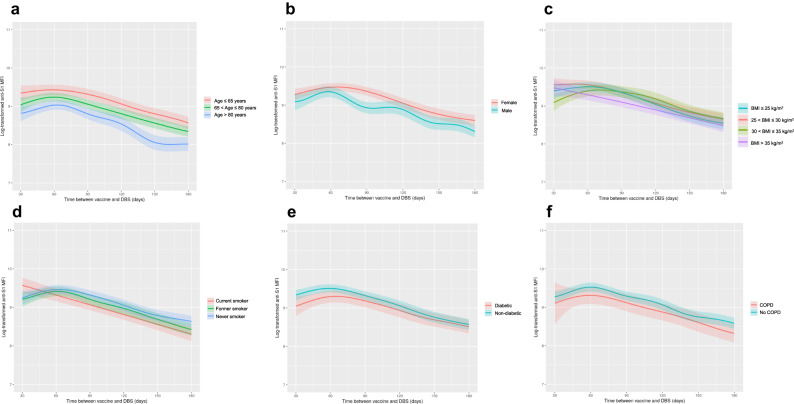
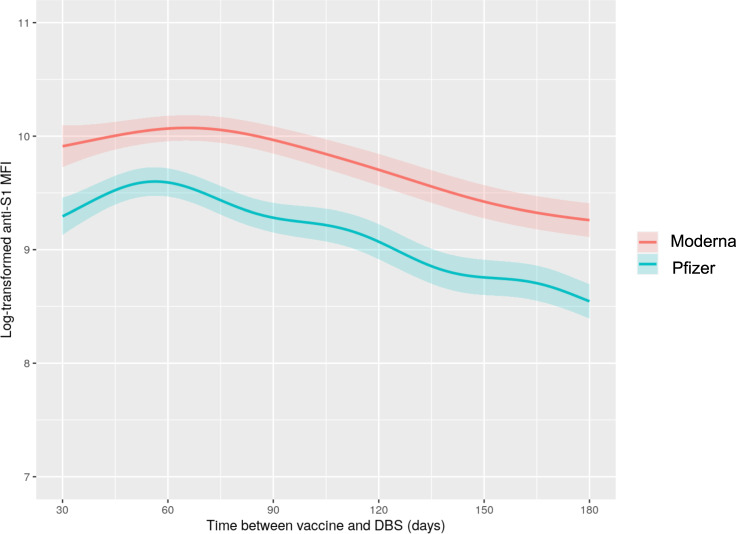
This study investigates correlates of anti-S1 antibody response following COVID-19 vaccination in a U.S. population-based meta-cohort of adults participating in longstanding NIH-funded cohort studies. Anti-S1 antibodies were measured from dried blood spots collected between February 2021-August 2022 using Luminex-based microsphere immunoassays. Of 6245 participants, mean age was 73 years (range, 21-100), 58% were female, and 76% were non-Hispanic White. Nearly 52% of participants received the BNT162b2 vaccine and 48% received the mRNA-1273 vaccine. Lower anti-S1 antibody levels are associated with age of 65 years or older, male sex, higher body mass index, smoking, diabetes, COPD and receipt of BNT16b2 vaccine (vs mRNA-1273). Participants with a prior infection, particularly those with a history of hospitalized illness, have higher anti-S1 antibody levels. These results suggest that adults with certain socio-demographic and clinical characteristics may have less robust antibody responses to COVID-19 vaccination and could be prioritized for more frequent re-vaccination.
本研究调查了参与美国国立卫生研究院长期资助队列研究的成年人群体中,新冠病毒疫苗接种后抗S1抗体反应的相关因素。使用基于Luminex的微球免疫测定法,对2021年2月至2022年8月期间采集的干血斑样本进行抗S1抗体检测。在6245名参与者中,平均年龄为73岁(范围21 - 100岁),58%为女性,76%为非西班牙裔白人。近52%的参与者接种了BNT162b2疫苗,48%的参与者接种了mRNA - 1273疫苗。较低的抗S1抗体水平与65岁及以上年龄、男性、较高的体重指数、吸烟、糖尿病、慢性阻塞性肺疾病以及接种BNT16b2疫苗(相对于mRNA - 1273疫苗)相关。既往感染过新冠病毒的参与者,尤其是有住院病史的参与者,抗S1抗体水平较高。这些结果表明,具有某些社会人口统计学和临床特征的成年人,对新冠病毒疫苗接种的抗体反应可能较弱,可能需要优先进行更频繁的重新接种。