Wang Guanbo, Li Ruiyu, Feng Chen, Li Kefan, Liu Shuai, Fu Qiang
Department of Urology, Shandong Provincial Hospital Affiliated to Shandong First Medical University, Jinan, China.
Department of Urology, Shandong Provincial Hospital, Shandong University, Jinan, China.
Cell Death Discov. 2024 Feb 20;10(1):92. doi: 10.1038/s41420-024-01859-x.
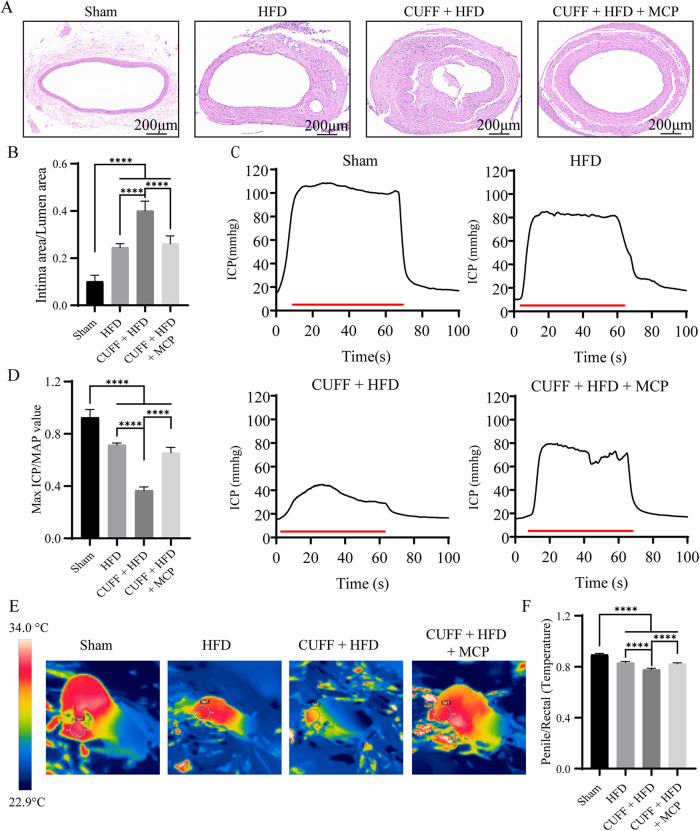
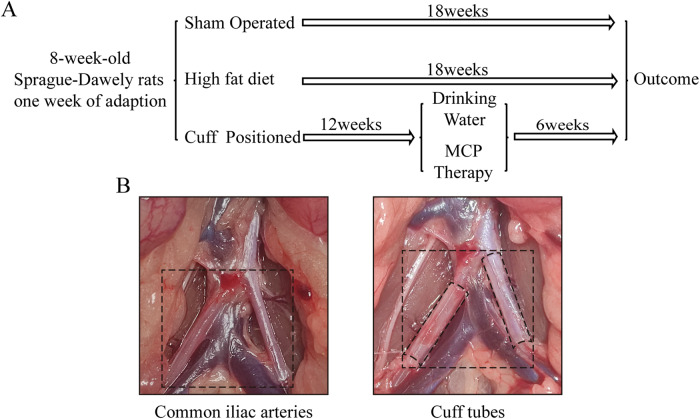
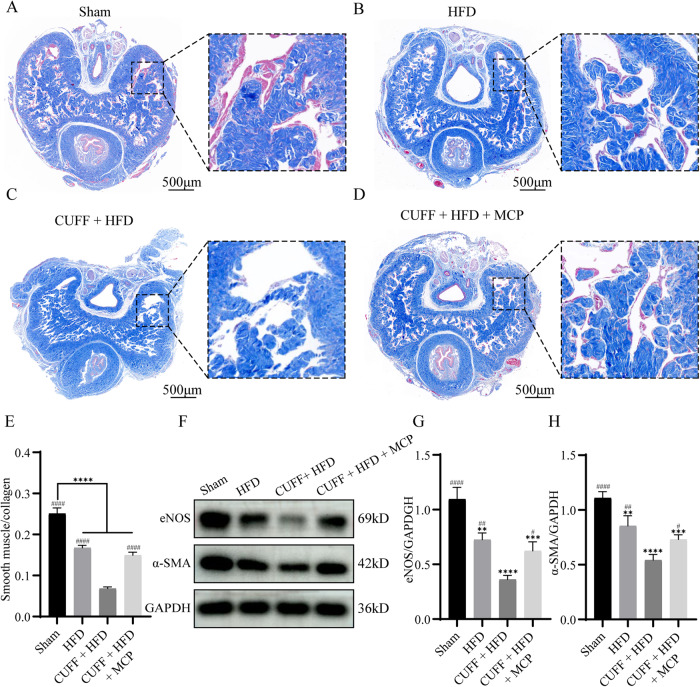
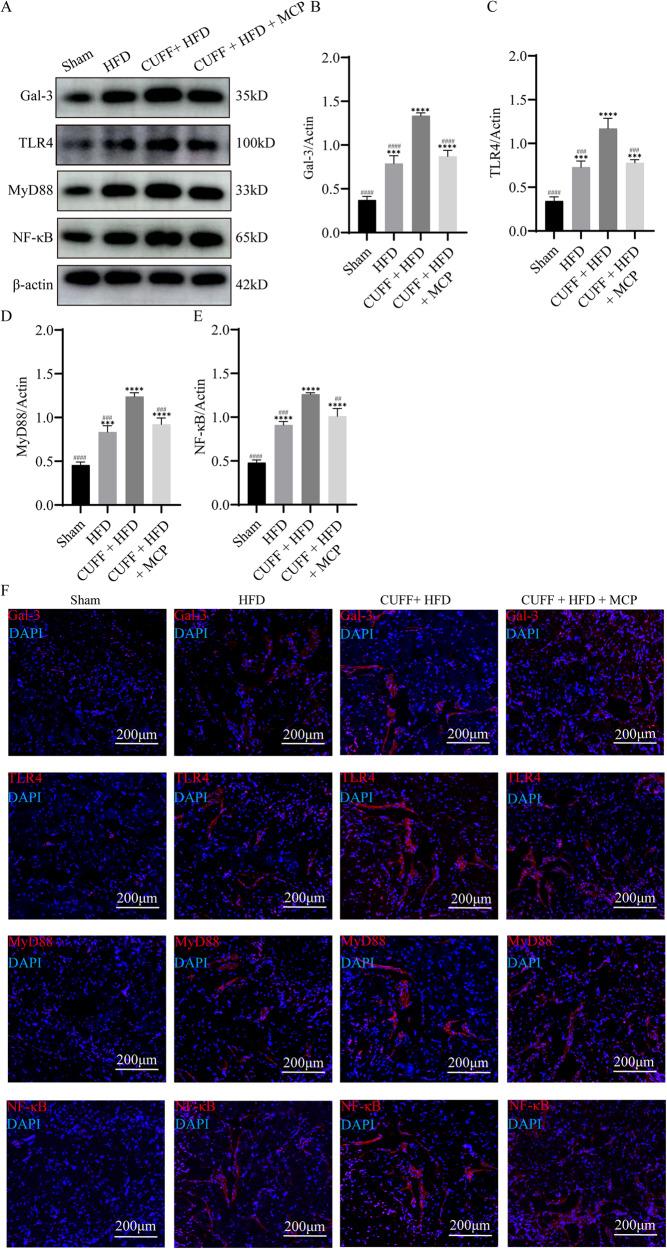
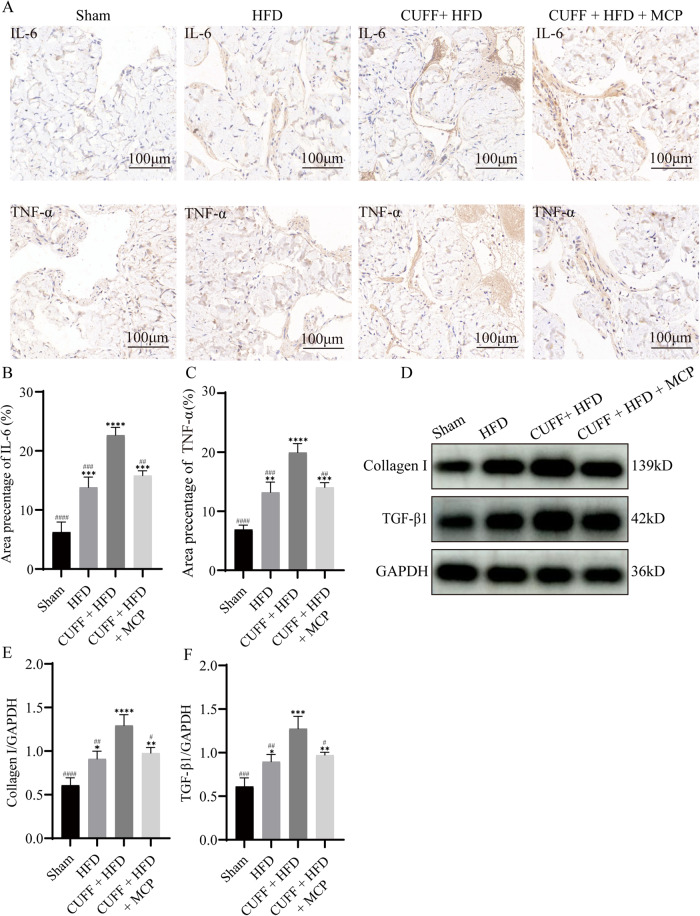
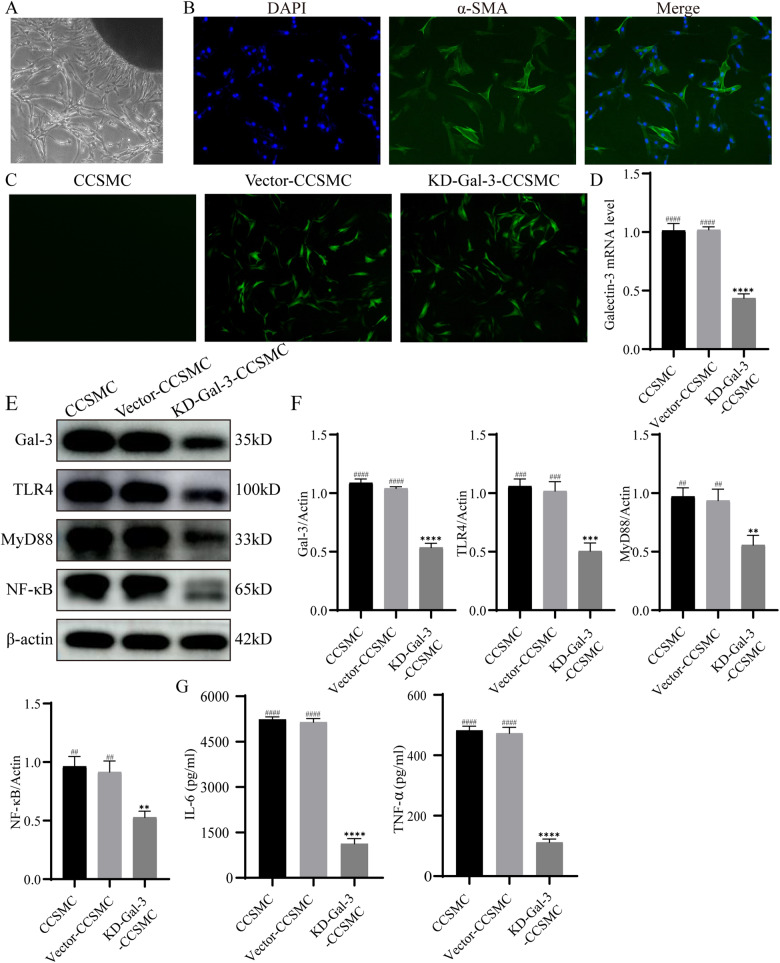
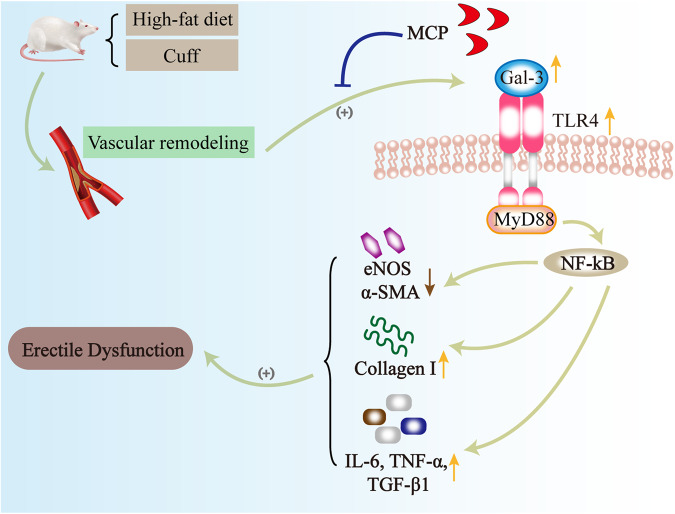
Galectin-3 (Gal-3) is a multifunctional protein that has been linked to fibrosis and inflammation in the cardiovascular system. In this study, we examined the impact of Gal-3 on inflammation and fibrosis in patients with arteriogenic erectile dysfunction (A-ED) and the underlying mechanisms involved. To induce arterial injury, we utilized cuffs on the periaqueductal common iliac arteries of Sprague‒Dawley (SD) rats and administered a high-fat diet to co-induce local atherosclerosis. Our results showed that we successfully developed a novel A-ED model that was validated based on histological evidence. In vivo, the vascular lumen of rats subjected to a high-fat diet and cuff placement exhibited significant narrowing, accompanied by the upregulation of Gal-3, Toll-like receptor 4 (TLR4), and myeloid differentiation primary response protein 88 (MyD88) expression in the penile cavernosa. This led to the activation of nuclear factor kappa B 65 (NF-κB-p65), resulting in reduced intracavernosal pressure, endothelial nitric oxide synthase expression, and smooth muscle content, promoting inflammation and fibrosis. However, treatment with Gal-3 inhibitor-modified citrus pectin (MCP) significantly normalized those effects. In vitro, knocking down Gal-3 led to a significant reduction in TLR4, MyD88, and NF-κB-p65 expression in corpus cavernosum smooth muscle cells (CCSMCs), decreasing inflammation levels. In conclusion, inhibiting Gal-3 may improve A-ED by reducing inflammation, endothelial injury, and fibrosis in the penile corpus cavernosum through the TLR4/MyD88/NF-κB pathway. These findings highlight the potential therapeutic target of Gal-3 in A-ED.
半乳糖凝集素-3(Gal-3)是一种多功能蛋白质,与心血管系统的纤维化和炎症有关。在本研究中,我们研究了Gal-3对动脉源性勃起功能障碍(A-ED)患者炎症和纤维化的影响及其潜在机制。为了诱导动脉损伤,我们在Sprague-Dawley(SD)大鼠的导水管周围髂总动脉上使用袖带,并给予高脂饮食以共同诱导局部动脉粥样硬化。我们的结果表明,我们成功建立了一种基于组织学证据验证的新型A-ED模型。在体内,接受高脂饮食和袖带放置的大鼠血管腔明显狭窄,同时阴茎海绵体内Gal-3、Toll样受体4(TLR4)和髓样分化初级反应蛋白88(MyD88)的表达上调。这导致核因子κB 65(NF-κB-p65)激活,导致海绵体内压降低、内皮型一氧化氮合酶表达减少和平滑肌含量降低,促进炎症和纤维化。然而,用Gal-3抑制剂改性柑橘果胶(MCP)治疗可显著使这些影响恢复正常。在体外,敲低Gal-3可导致海绵体平滑肌细胞(CCSMC)中TLR4、MyD88和NF-κB-p65表达显著降低,炎症水平降低。总之,抑制Gal-3可能通过TLR4/MyD88/NF-κB途径减少阴茎海绵体的炎症、内皮损伤和纤维化,从而改善A-ED。这些发现突出了Gal-3在A-ED中的潜在治疗靶点。