Departments of Pathology & Laboratory Medicine, University of Wisconsin, Madison, Wisconsin, United States of America.
Casey Eye Institute, Oregon Health & Science University, Portland, Oregon, United States of America.
PLoS One. 2024 Feb 23;19(2):e0298802. doi: 10.1371/journal.pone.0298802. eCollection 2024.
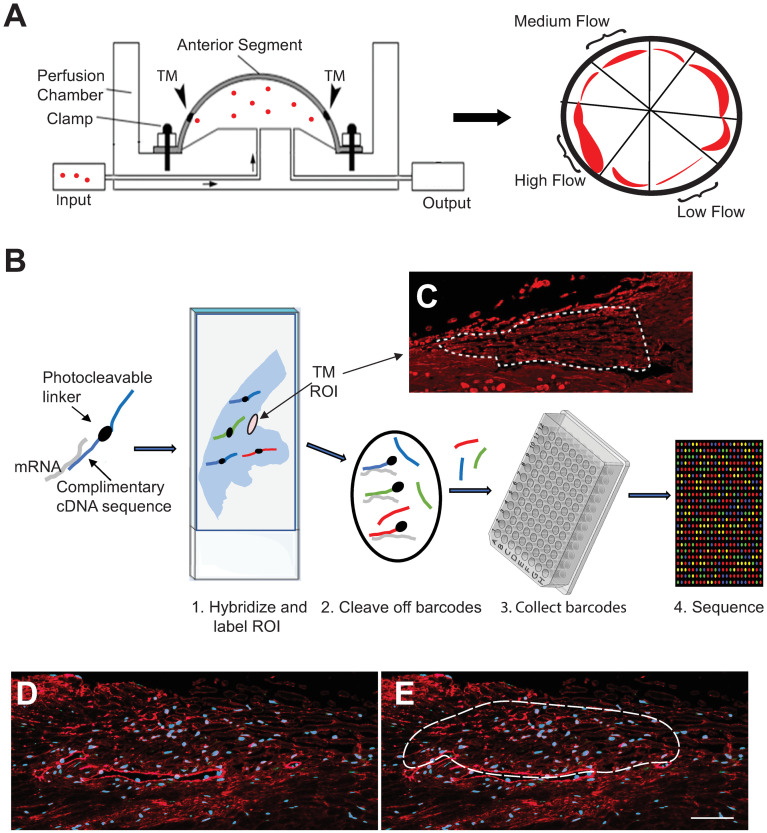
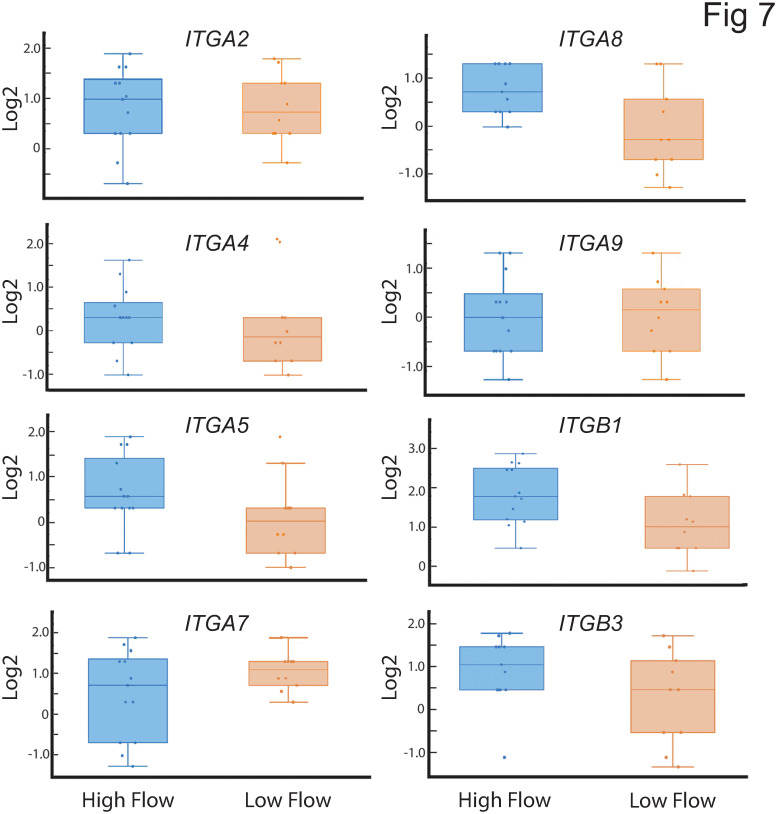
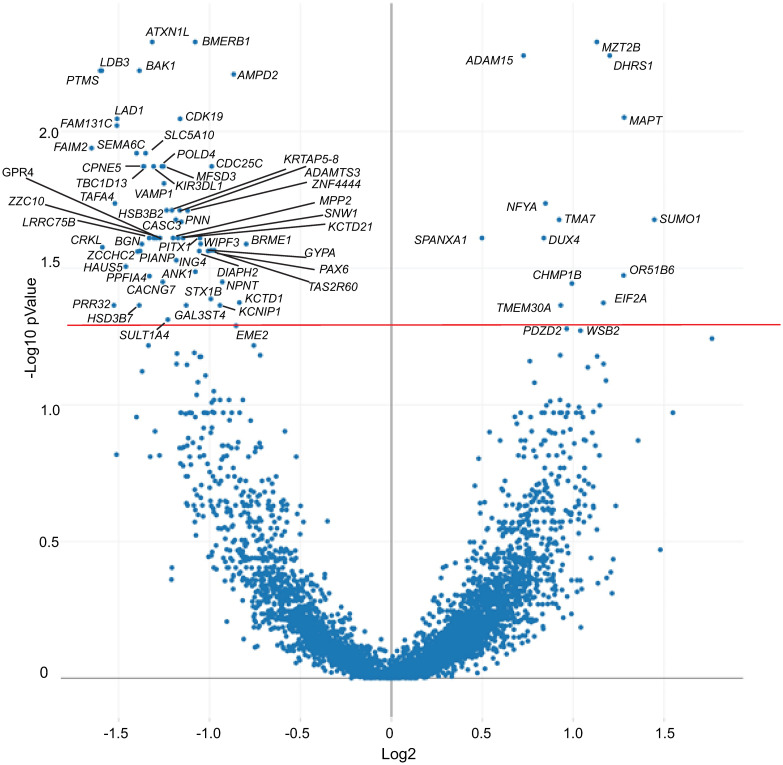
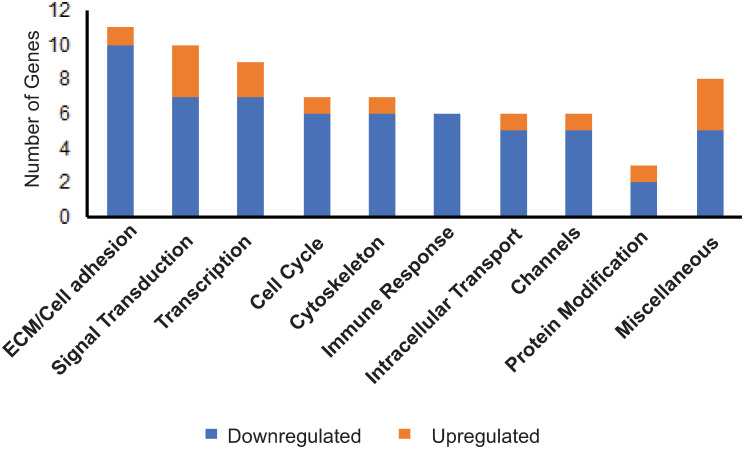
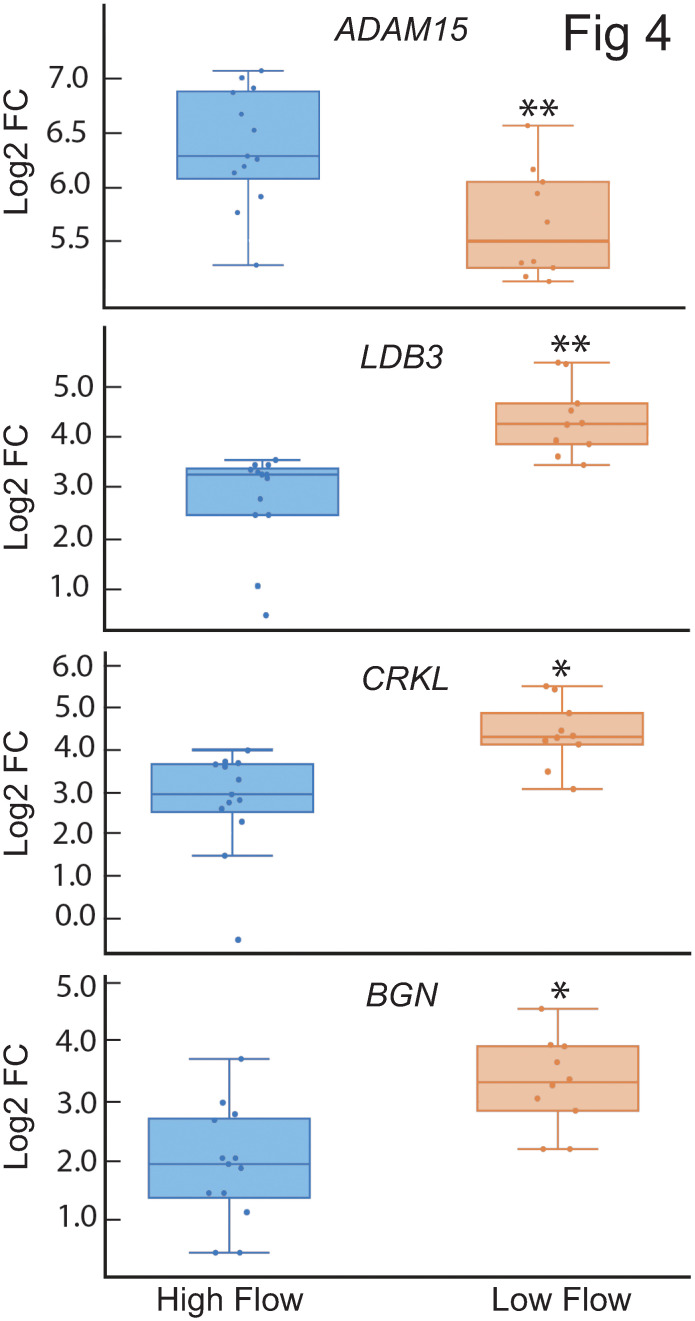
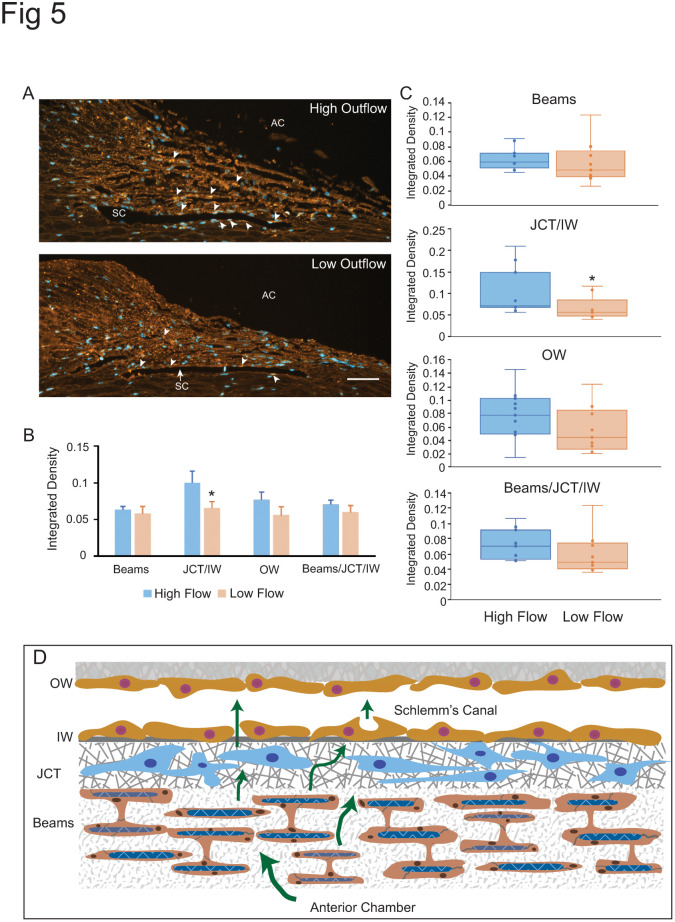
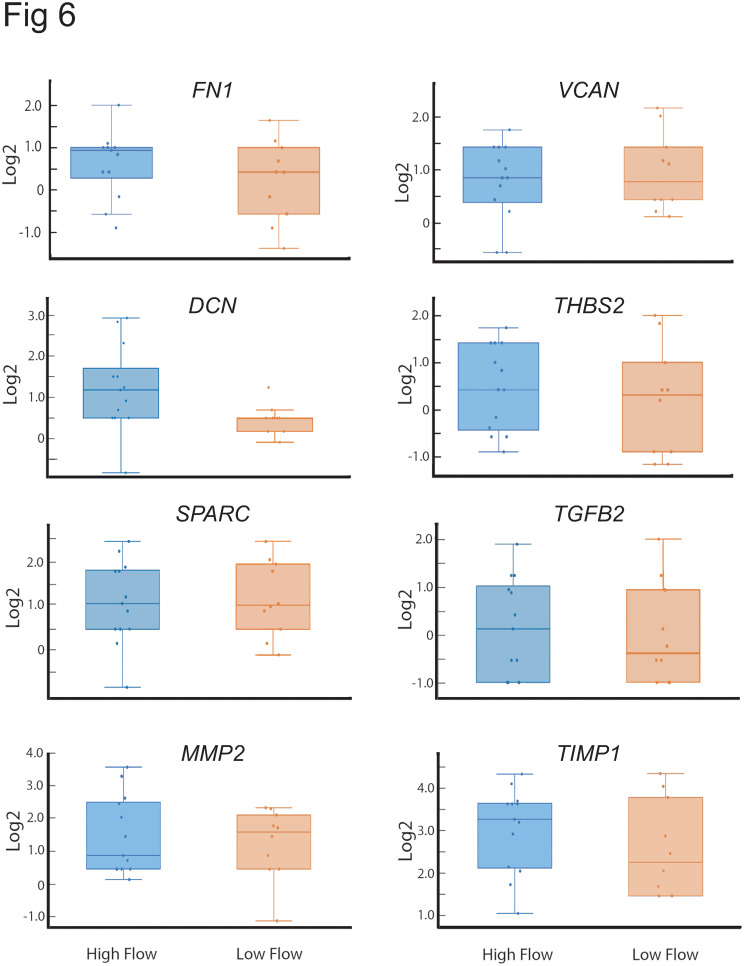
In this study we used a spatial transcriptomics approach to identify genes specifically associated with either high or low outflow regions in the trabecular meshwork (TM) that could potentially affect aqueous humor outflow in vivo. High and low outflow regions were identified and isolated from organ cultured human anterior segments perfused with fluorescently-labeled 200 nm FluoSpheres. The NanoString GeoMx Digital Spatial Profiler (DSP) platform was then used to identified genes in the paraffin embedded tissue sections from within those regions. These transcriptome analyses revealed that 16 genes were statistically upregulated in high outflow regions and 57 genes were statistically downregulated in high outflow regions when compared to low outflow regions. Gene ontology enrichment analysis indicated that the top three biological categories of these differentially expressed genes were ECM/cell adhesion, signal transduction, and transcription. The ECM/cell adhesion genes that showed the largest differential expression (Log2FC ±1.5) were ADAM15, BGN, LDB3, and CRKL. ADAM15, which is a metalloproteinase that can bind integrins, was upregulated in high outflow regions, while the proteoglycan BGN and two genes associated with integrin signaling (LDB3, and CRKL) were downregulated. Immunolabeling studies supported the differential expression of ADAM15 and showed that it was specifically upregulated in high outflow regions along the inner wall of Schlemm's canal and in the juxtacanalicular (JCT) region of the TM. In addition to these genes, the studies showed that genes for decorin, a small leucine-rich proteoglycan, and the α8 integrin subunit were enriched in high outflow regions. These studies identify several novel genes that could be involved in segmental outflow, thus demonstrating that digital spatial profiling could be a useful approach for understanding segmental flow through the TM. Furthermore, this study suggests that changes in the expression of genes involved in regulating the activity and/or organization of the ECM and integrins in the TM are likely to be key players in segmental outflow.
在这项研究中,我们使用空间转录组学方法来鉴定与小梁网(TM)中的高或低流出区特异性相关的基因,这些基因可能会影响体内房水流出。我们从用荧光标记的 200nm FluoSpheres 灌注的器官培养的人前节中鉴定和分离出高和低流出区。然后,我们使用 NanoString GeoMx 数字空间分析器(DSP)平台来鉴定来自这些区域内的石蜡包埋组织切片中的基因。这些转录组分析表明,与低流出区相比,16 个基因在高流出区中统计学上上调,而 57 个基因在高流出区中统计学下调。基因本体富集分析表明,这些差异表达基因的前三个生物学类别是细胞外基质/细胞黏附、信号转导和转录。差异表达最大的细胞外基质/细胞黏附基因(Log2FC ±1.5)是 ADAM15、BGN、LDB3 和 CRKL。ADAM15 是一种可以结合整合素的金属蛋白酶,在高流出区中上调,而蛋白聚糖 BGN 和两个与整合素信号有关的基因(LDB3 和 CRKL)下调。免疫标记研究支持 ADAM15 的差异表达,并表明它在高流出区沿施莱姆管内壁和 TM 的近管区(JCT)特异性上调。除了这些基因外,研究还表明,小富含亮氨酸的蛋白聚糖和α8 整合素亚基的基因在高流出区富集。这些研究鉴定了几个可能参与节段性流出的新基因,从而表明数字空间分析可能是理解 TM 节段性流动的有用方法。此外,本研究表明,参与调节 TM 中细胞外基质和整合素活性和/或组织的基因表达的变化可能是节段性流出的关键因素。