McCartney Josephine M, Leavens David A
School of Life Sciences, University of Sussex, Falmer BN1 9QG, UK.
School of Psychology, University of Sussex, Falmer BN1 9QH, UK.
Animals (Basel). 2024 Feb 8;14(4):573. doi: 10.3390/ani14040573.
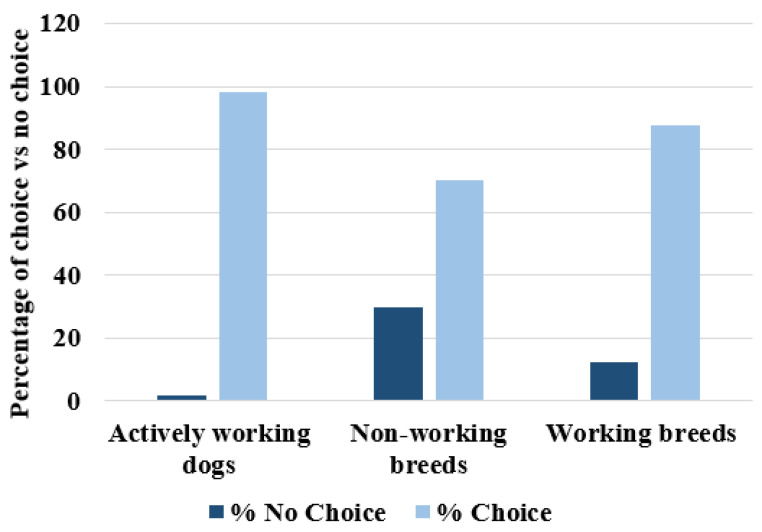
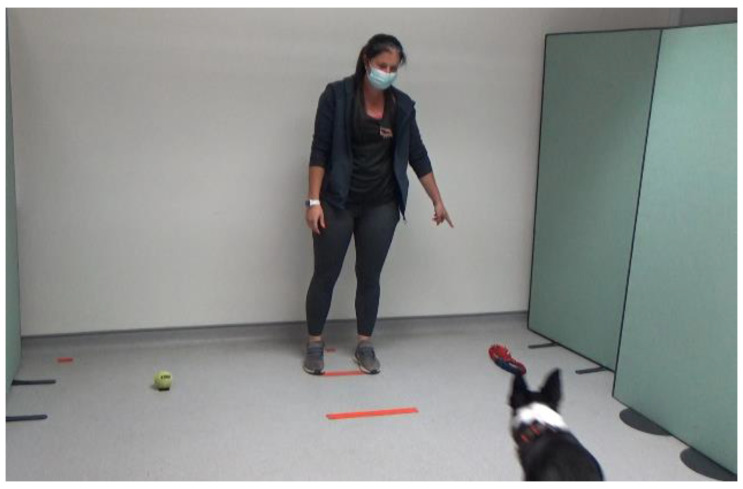
Domestic dogs are very successful at following human communicative gestures in paradigms such as the object-choice task. Pet dogs also prefer responding to cues given by a familiar cue-giver and this had not been found in working dogs. Therefore, we tested three groups of dogs in the object-choice task ( = 54): the groups were "Actively working" dogs from working dog breeds, pet dogs from "Non-working breeds" and pet dogs from "Working breeds". We found that "Actively working" and "Working breeds" dog groups outperformed "Non-working breeds" in following a point in the object-choice task. We also found that both "Actively working" and "Working breeds" preferred a familiar cue-giver over an unfamiliar one, in contrast to previous findings. Therefore, we conclude that dogs' abilities to perform well in the object-choice task is influenced by the selective history of the breed, and this is then increased by life experience and training.
在诸如物体选择任务等范式中,家养犬非常善于遵循人类的交流手势。宠物犬也更喜欢对熟悉的提示者给出的线索做出反应,而这在工作犬中尚未发现。因此,我们在物体选择任务中对三组犬(每组54只)进行了测试:这些组分别是来自工作犬品种的“积极工作”犬、来自“非工作犬品种”的宠物犬以及来自“工作犬品种”的宠物犬。我们发现,在物体选择任务中遵循指示方面,“积极工作”犬组和“工作犬品种”犬组的表现优于“非工作犬品种”犬组。我们还发现,与之前的研究结果相反,“积极工作”犬组和“工作犬品种”犬组都更喜欢熟悉的提示者而非不熟悉的提示者。因此,我们得出结论,犬在物体选择任务中表现良好的能力受到品种的选择历史的影响,然后生活经验和训练会增强这种能力。