Acharya Kamal R, Cohen Adar, Brankston Gabrielle, Soucy Jean-Paul R, Hulth Anette, Löfmark Sonja, Brownstein John S, Davidovich Nadav, Ellen Moriah E, Fisman David N, Moran-Gilad Jacob, Steinman Amir, MacFadden Derek R, Greer Amy L
Department of Population Medicine, University of Guelph, Guelph, ON N1G 2W1, Canada.
Koret School of Veterinary Medicine, The Robert H. Smith Faculty of Agriculture, Food and Environment, The Hebrew University of Jerusalem, Rehovot 7610001, Israel.
Animals (Basel). 2024 Feb 16;14(4):626. doi: 10.3390/ani14040626.
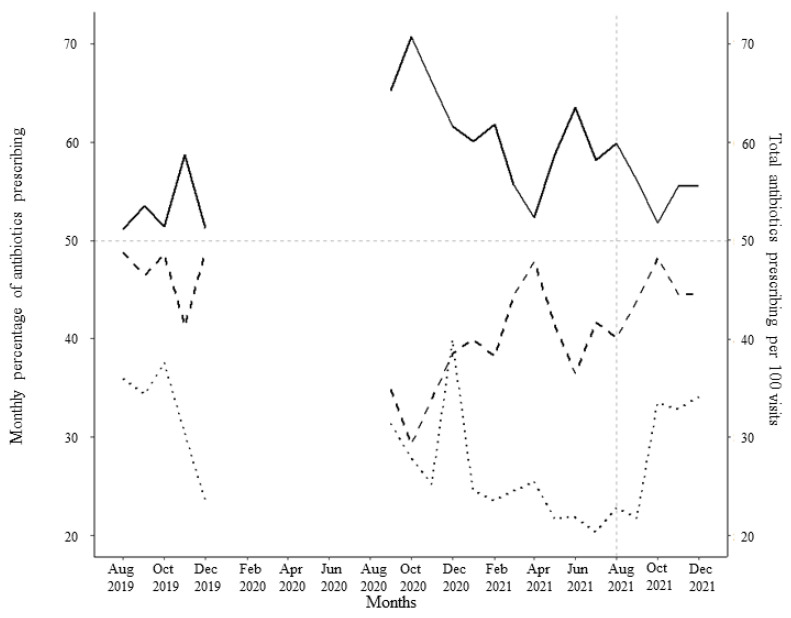
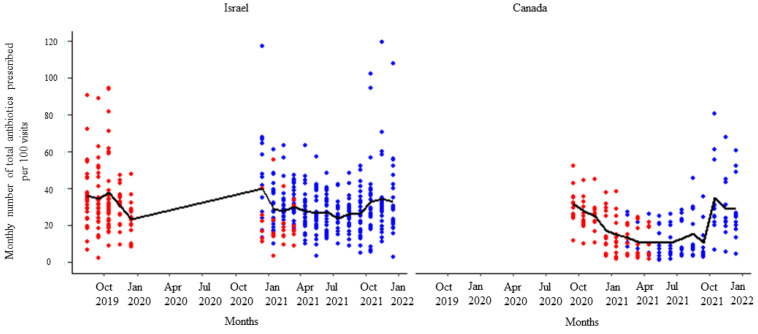
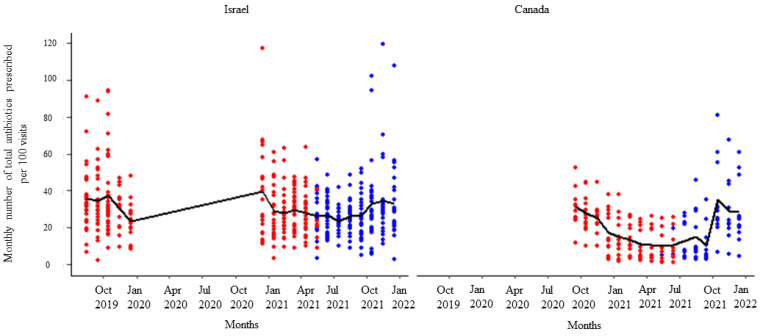
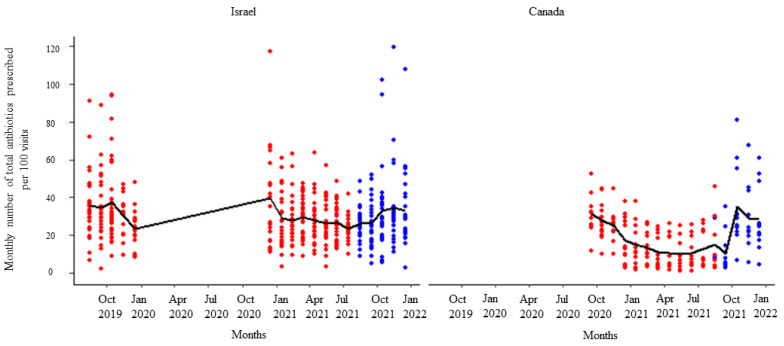
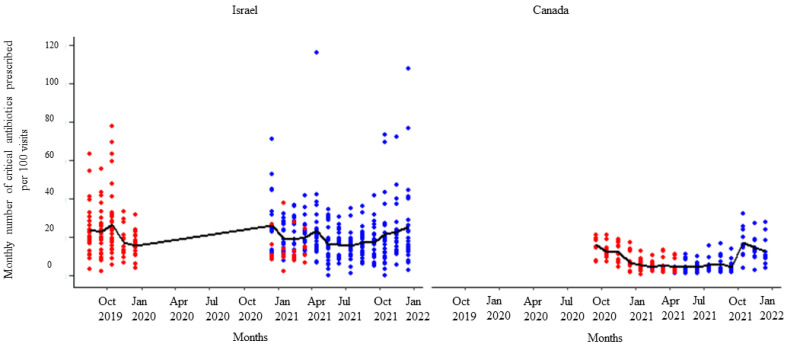
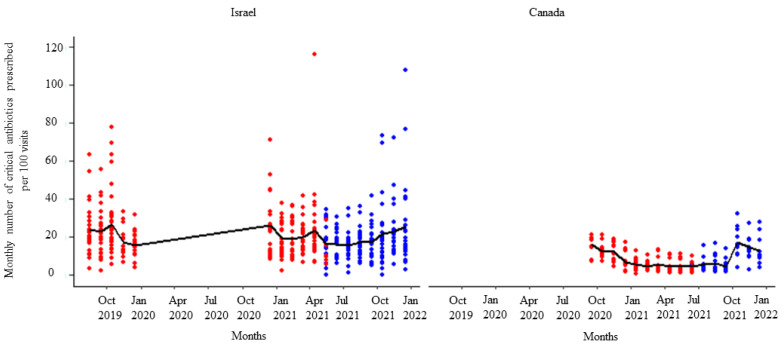
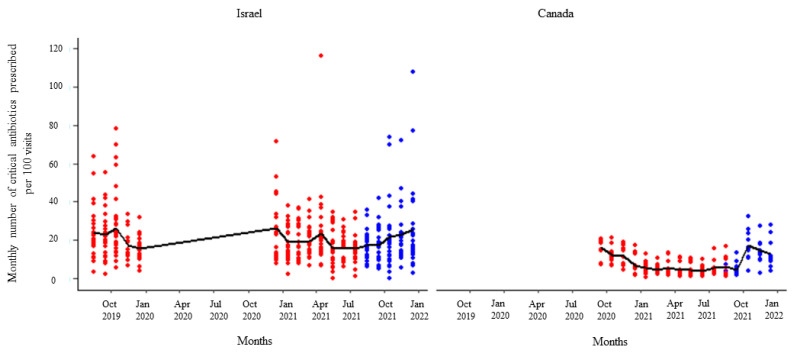
An interrupted time-series study design was implemented to evaluate the impact of antibiotic stewardship interventions on antibiotic prescribing among veterinarians. A total of 41 veterinarians were enrolled in Canada and Israel and their prescribing data between 2019 and 2021 were obtained. As an intervention, veterinarians periodically received three feedback reports comprising feedback on the participants' antibiotic prescribing and prescribing guidelines. A change in the level and trend of antibiotic prescribing after the administration of the intervention was compared using a multi-level generalized linear mixed-effect negative-binomial model. After the receipt of the first (incidence rate ratios [IRR] = 0.88; 95% confidence interval (CI): 0.79, 0.98), and second (IRR = 0.85; 95% CI: 0.75, 0.97) feedback reports, there was a reduced prescribing rate of total antibiotic when other parameters were held constant. This decline was more pronounced among Israeli veterinarians compared to Canadian veterinarians. When other parameters were held constant, the prescribing of critical antibiotics by Canadian veterinarians decreased by a factor of 0.39 compared to that of Israeli veterinarians. Evidently, antibiotic stewardship interventions can improve antibiotic prescribing in a veterinary setting. The strategy to sustain the effect of feedback reports and the determinants of differences between the two cohorts should be further explored.
采用中断时间序列研究设计来评估抗生素管理干预措施对兽医抗生素处方的影响。在加拿大和以色列共招募了41名兽医,并获取了他们2019年至2021年期间的处方数据。作为一项干预措施,兽医们定期收到三份反馈报告,其中包括关于参与者抗生素处方情况和处方指南的反馈。使用多层次广义线性混合效应负二项式模型比较了干预实施后抗生素处方水平和趋势的变化。在收到第一份(发病率比[IRR]=0.88;95%置信区间(CI):0.79,0.98)和第二份(IRR=0.85;95%CI:0.75,0.97)反馈报告后,在其他参数保持不变的情况下,总抗生素的处方率有所降低。与加拿大兽医相比,这种下降在以色列兽医中更为明显。在其他参数保持不变的情况下,与以色列兽医相比,加拿大兽医的关键抗生素处方量下降了0.39倍。显然,抗生素管理干预措施可以改善兽医环境中的抗生素处方情况。应进一步探索维持反馈报告效果的策略以及两个队列之间差异的决定因素。