Lawrence D. Longo Center for Perinatal Biology, School of Medicine, Loma Linda University, Loma Linda, CA 92350, USA.
Department of Pharmaceutical Sciences, School of Pharmacy, Loma Linda University, Loma Linda, CA 92350, USA.
Int J Mol Sci. 2024 Feb 15;25(4):2311. doi: 10.3390/ijms25042311.
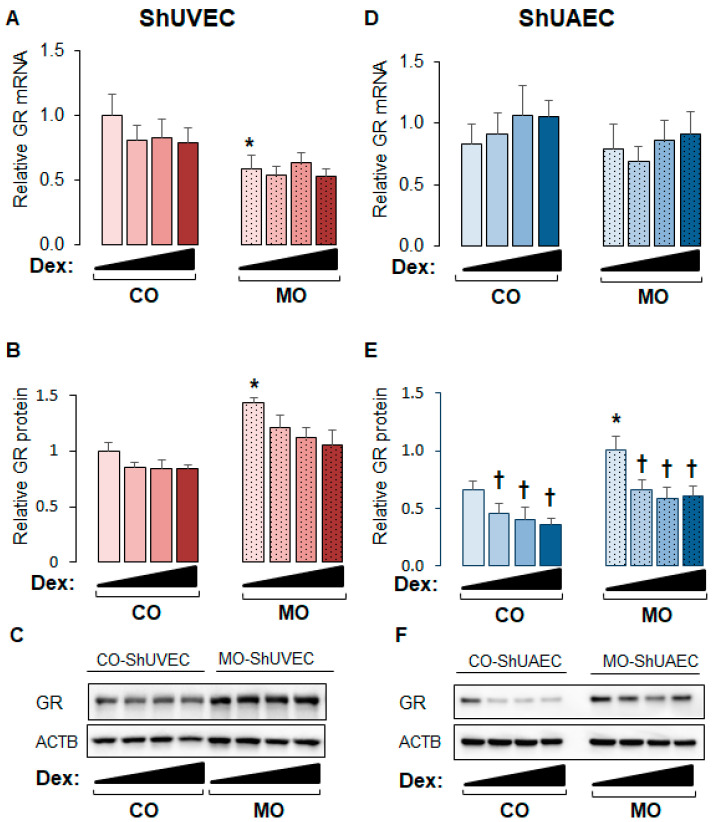
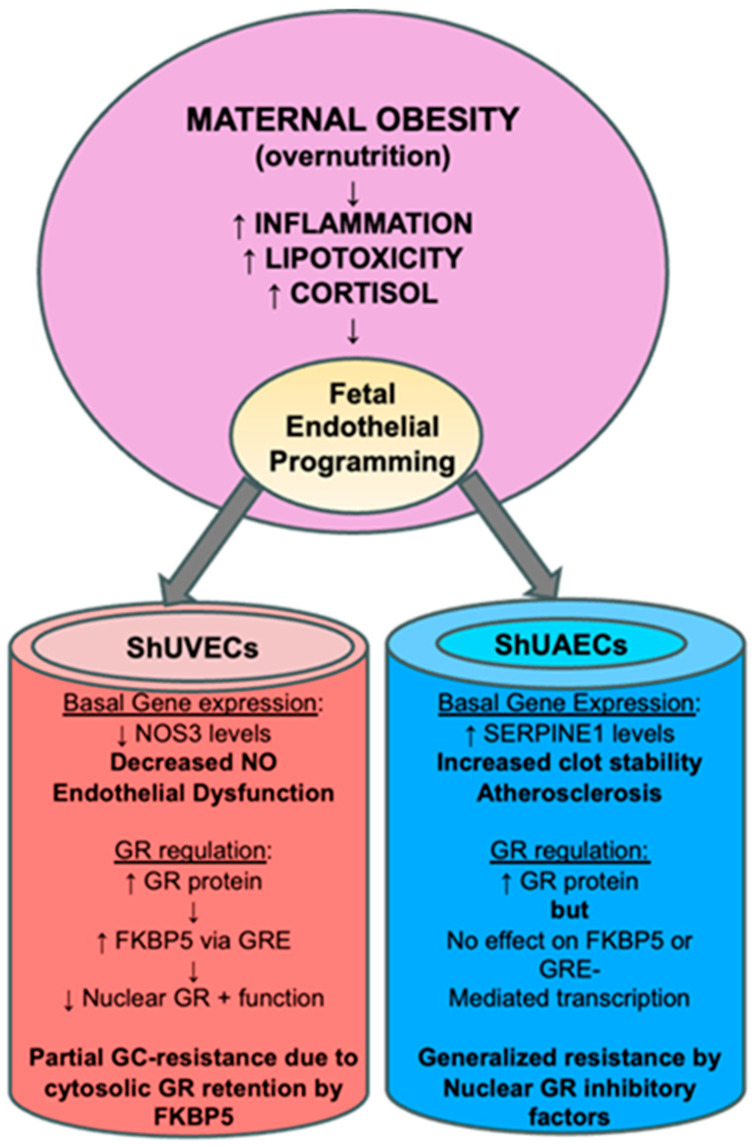
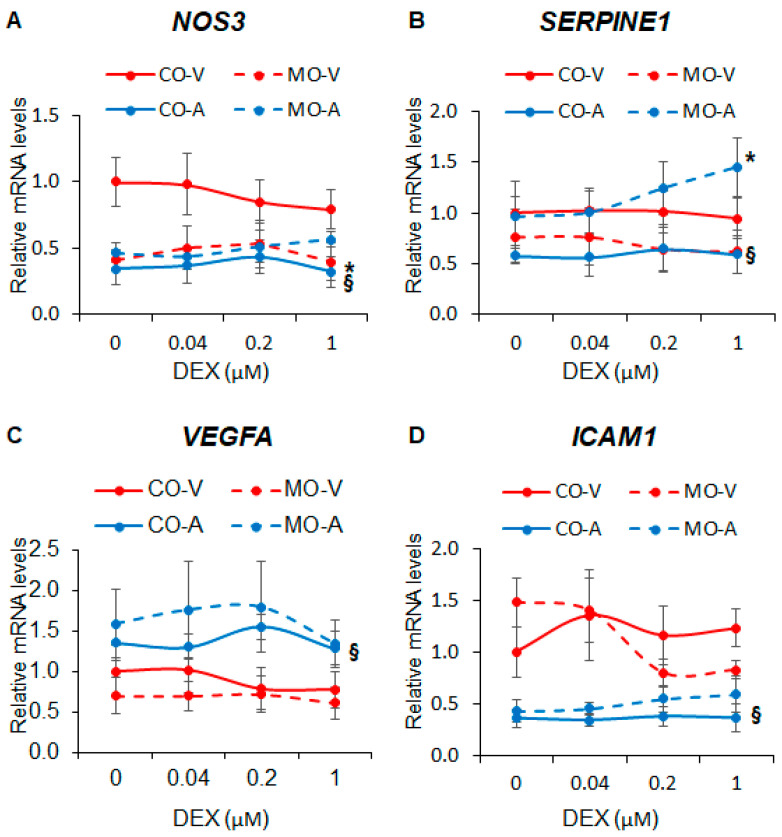
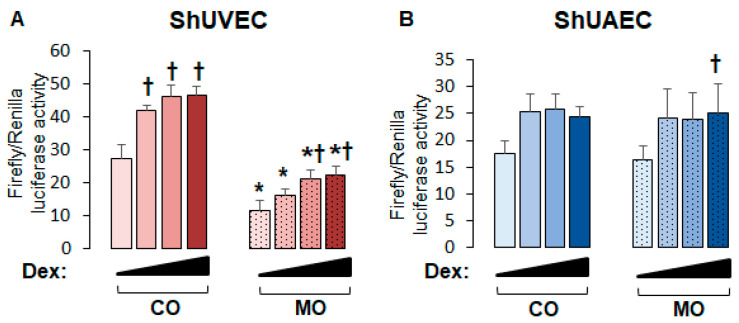
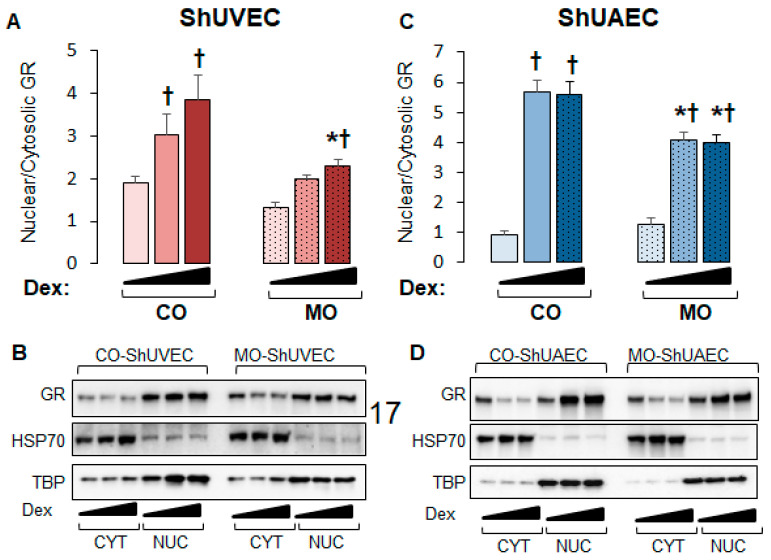
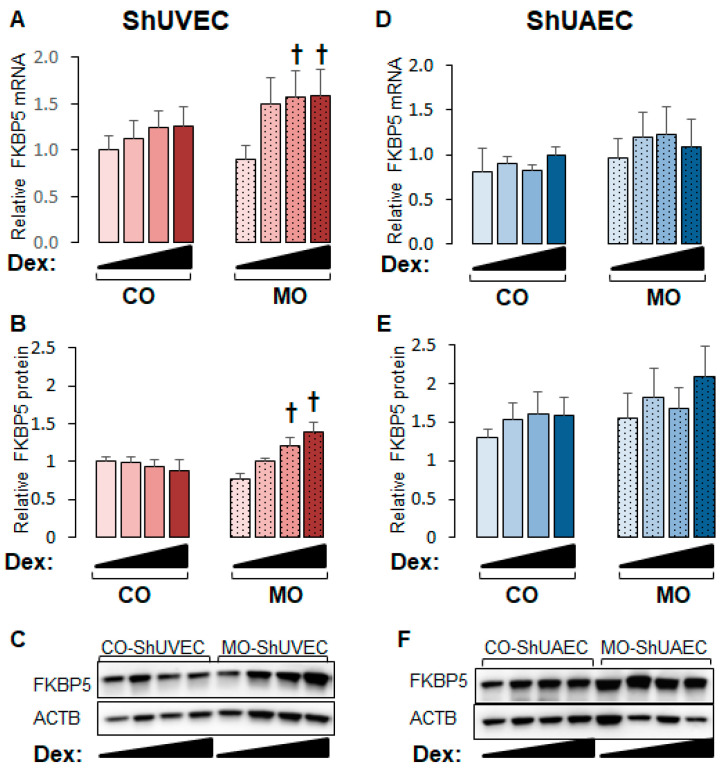
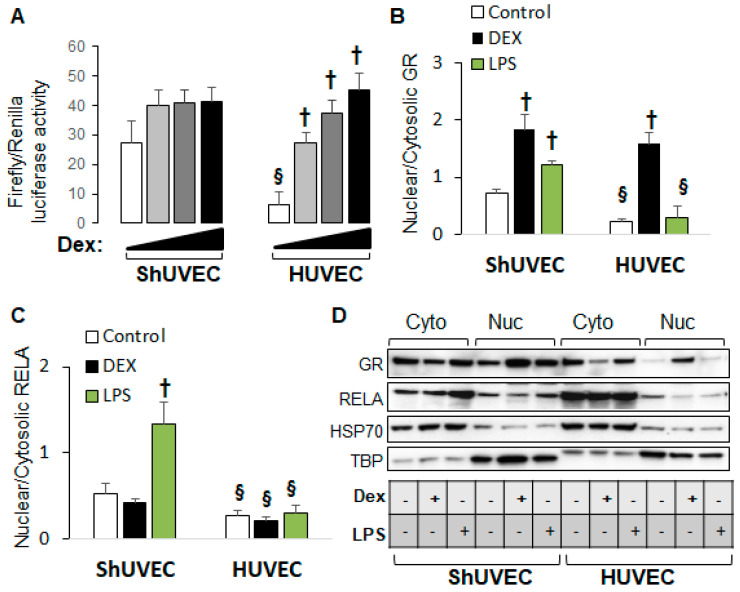
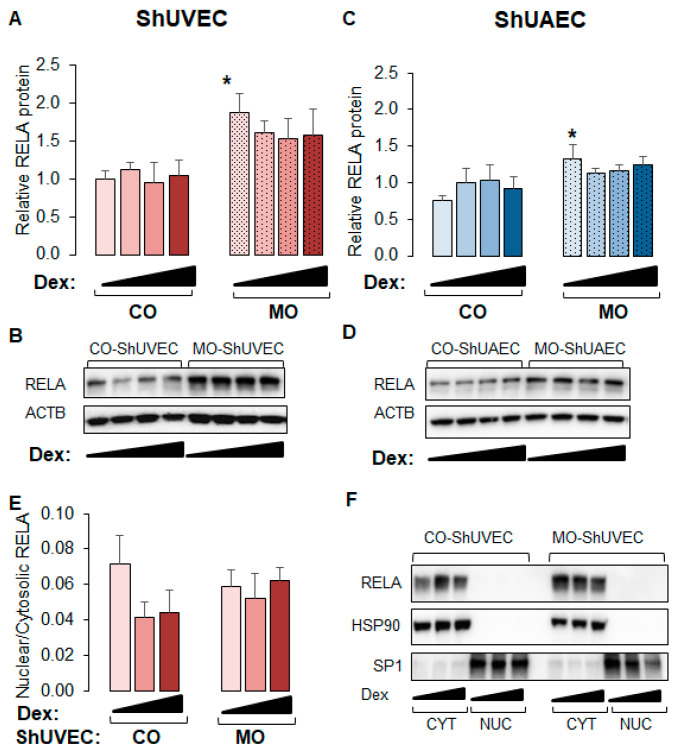
Maternal obesity (MO) is associated with offspring cardiometabolic diseases that are hypothesized to be partly mediated by glucocorticoids. Therefore, we aimed to study fetal endothelial glucocorticoid sensitivity in an ovine model of MO. Rambouillet/Columbia ewes were fed either 100% (control) or 150% (MO) National Research Council recommendations from 60 d before mating until near-term (135 days gestation). Sheep umbilical vein and artery endothelial cells (ShUVECs and ShUAECs) were used to study glucocorticoid receptor (GR) expression and function in vitro. Dexamethasone dose-response studies of gene expression, activation of a glucocorticoid response element (GRE)-dependent luciferase reporter vector, and cytosolic/nuclear GR translocation were used to assess GR homeostasis. MO significantly increased basal GR protein levels in both ShUVECs and ShUAECs. Increased GR protein levels did not result in increased dexamethasone sensitivity in the regulation of key endothelial gene expression such as endothelial nitric oxide synthase, plasminogen activator inhibitor 1, vascular endothelial growth factor, or intercellular adhesion molecule 1. In ShUVECs, MO increased GRE-dependent transactivation and FKBP prolyl isomerase 5 (FKBP5) expression. ShUAECs showed generalized glucocorticoid resistance in both dietary groups. Finally, we found that ShUVECs were less sensitive to dexamethasone-induced activation of GR than human umbilical vein endothelial cells (HUVECs). These findings suggest that MO-mediated effects in the offspring endothelium could be further mediated by dysregulation of GR homeostasis in humans as compared with sheep.
母体肥胖(MO)与后代心血管代谢疾病有关,这些疾病部分被认为是由糖皮质激素介导的。因此,我们旨在研究 MO 绵羊模型中胎儿内皮细胞对糖皮质激素的敏感性。从配种前 60 天到妊娠晚期(135 天),兰布列特/哥伦比亚母羊分别用 100%(对照)或 150%(MO)的国家研究委员会推荐量喂养。使用绵羊脐静脉和动脉内皮细胞(ShUVECs 和 ShUAECs)研究体外糖皮质激素受体(GR)的表达和功能。用地塞米松剂量反应研究基因表达、糖皮质激素反应元件(GRE)依赖性荧光素酶报告载体的激活以及胞质/核 GR 易位,以评估 GR 动态平衡。MO 显著增加了 ShUVECs 和 ShUAECs 中基础 GR 蛋白水平。GR 蛋白水平的增加并没有导致关键内皮基因表达(如内皮型一氧化氮合酶、纤溶酶原激活物抑制剂 1、血管内皮生长因子或细胞间黏附分子 1)的地塞米松敏感性增加。在 ShUVECs 中,MO 增加了 GRE 依赖性的反式激活和 FKBP 脯氨酰异构酶 5(FKBP5)的表达。ShUAECs 在两种饮食组中均表现出普遍的糖皮质激素抵抗。最后,我们发现 ShUVECs 对地塞米松诱导的 GR 激活的敏感性低于人脐静脉内皮细胞(HUVECs)。这些发现表明,与绵羊相比,MO 介导的后代内皮细胞的作用可能进一步由 GR 动态平衡的失调介导。