Immunology, Pathology, and Infectious Diseases, UNMC, Omaha, NE 68198-6805, USA.
Eppley Institute for Research in Cancer & Allied Diseases, UNMC, Omaha, NE 68198-6805, USA.
Genes (Basel). 2024 Jan 27;15(2):167. doi: 10.3390/genes15020167.
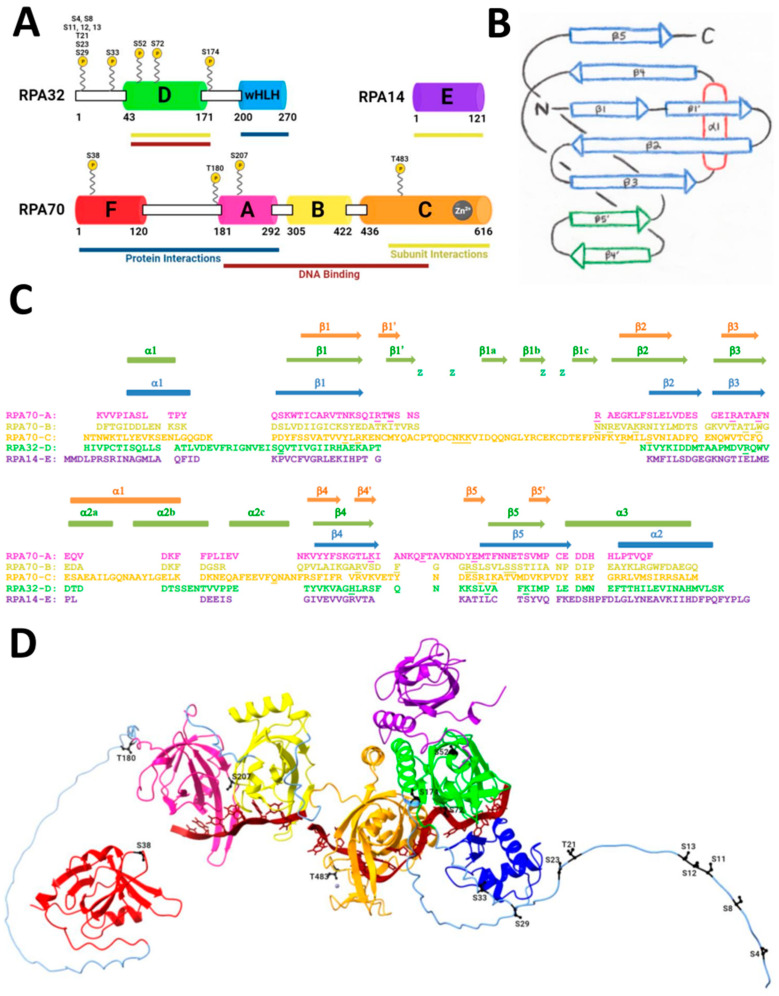
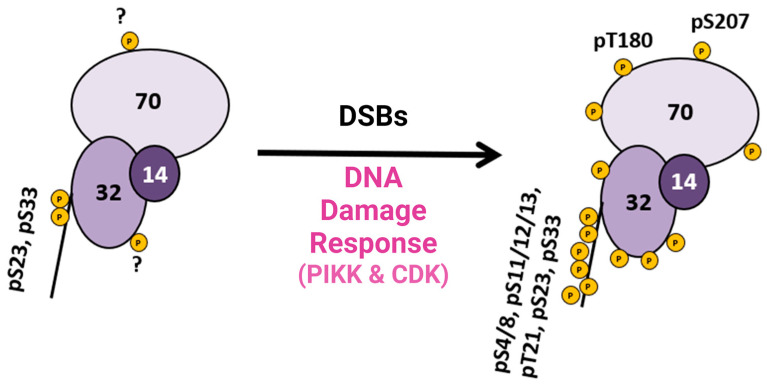
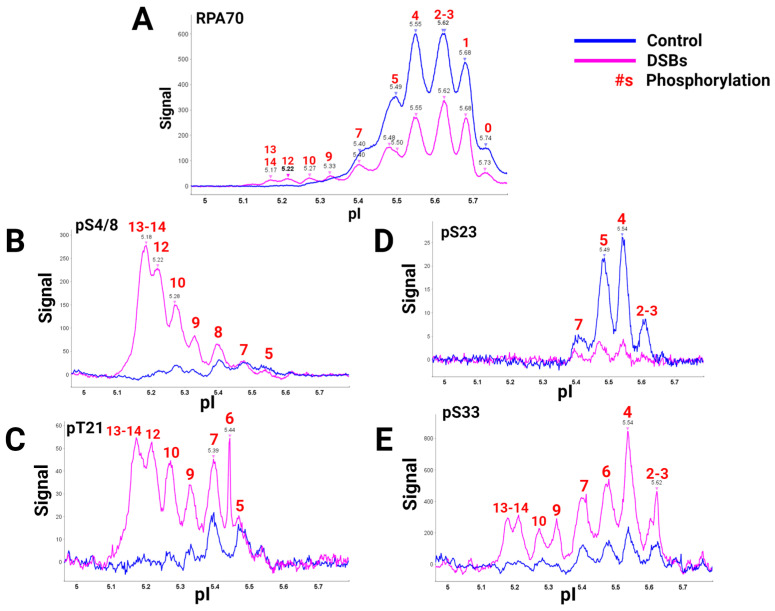
Human Replication Protein A (RPA) was historically discovered as one of the six components needed to reconstitute simian virus 40 DNA replication from purified components. RPA is now known to be involved in all DNA metabolism pathways that involve single-stranded DNA (ssDNA). Heterotrimeric RPA comprises several domains connected by flexible linkers and is heavily regulated by post-translational modifications (PTMs). The structure of RPA has been challenging to obtain. Various structural methods have been applied, but a complete understanding of RPA's flexible structure, its function, and how it is regulated by PTMs has yet to be obtained. This review will summarize recent literature concerning how RPA is phosphorylated in the cell cycle, the structural analysis of RPA, DNA and protein interactions involving RPA, and how PTMs regulate RPA activity and complex formation in double-strand break repair. There are many holes in our understanding of this research area. We will conclude with perspectives for future research on how RPA PTMs control double-strand break repair in the cell cycle.
人类复制蛋白 A(RPA)最初是作为从纯化成分中重新构建猴病毒 40 DNA 复制所需的六个成分之一而被发现的。现在已知 RPA 参与涉及单链 DNA(ssDNA)的所有 DNA 代谢途径。异三聚体 RPA 由通过柔性接头连接的几个结构域组成,并受到翻译后修饰(PTM)的严格调控。RPA 的结构一直难以获得。已经应用了各种结构方法,但尚未完全了解 RPA 的灵活结构、其功能以及 PTM 如何调节 RPA。这篇综述将总结有关 RPA 在细胞周期中如何磷酸化、RPA 的结构分析、涉及 RPA 的 DNA 和蛋白质相互作用以及 PTM 如何调节 RPA 活性和双链断裂修复复合物形成的最新文献。我们对这一研究领域的理解还存在许多空白。我们将以展望未来的研究来结束,探讨 RPA PTM 在细胞周期中如何控制双链断裂修复。