Department of Dermatology, Johns Hopkins University School of Medicine, Baltimore, MD 21231, USA.
Biomolecules. 2024 Feb 15;14(2):225. doi: 10.3390/biom14020225.
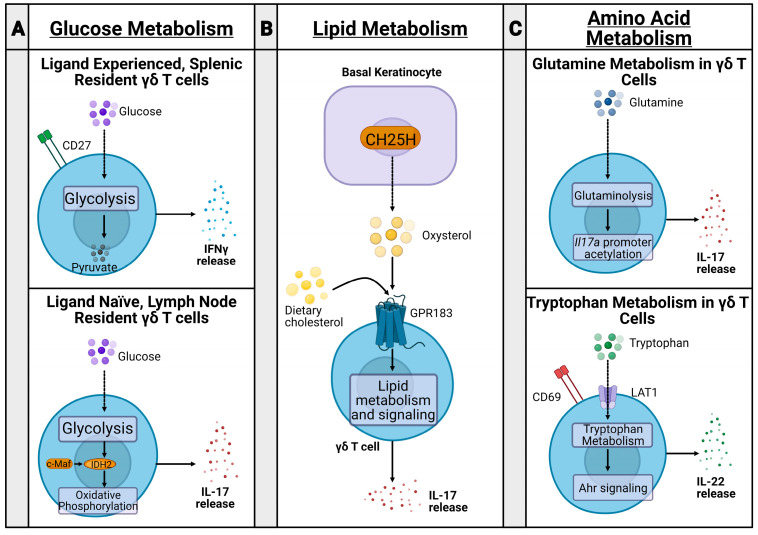
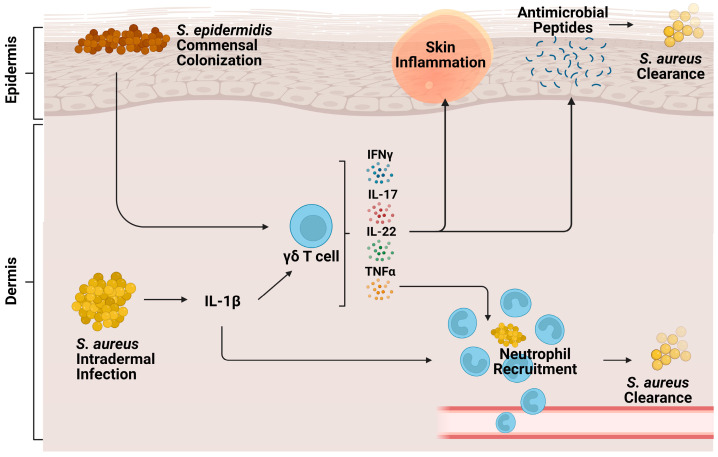
The growth of antibiotic-resistant bacterial infections necessitates focusing on host-derived immunotherapies. γδ T cells are an unconventional T cell subset, making up a relatively small portion of healthy circulating lymphocytes but a substantially increased proportion in mucosal and epithelial tissues. γδ T cells are activated and expanded in response to bacterial infection, having the capability to produce proinflammatory cytokines to recruit neutrophils and clear infection. They also play a significant role in dampening immune response to control inflammation and protecting the host against secondary challenge, making them promising targets when developing immunotherapy. Importantly, γδ T cells have differential metabolic states influencing their cytokine profile and subsequent inflammatory capacity. Though these differential metabolic states have not been well studied or reviewed in the context of bacterial infection, they are critical in understanding the mechanistic underpinnings of the host's innate immune response. Therefore, this review will focus on the context-specific host defense conferred by γδ T cells during infection with , , , and .
抗生素耐药菌感染的增长需要关注宿主来源的免疫疗法。γδ T 细胞是一种非常规的 T 细胞亚群,在健康循环淋巴细胞中仅占相对较小的比例,但在黏膜和上皮组织中比例显著增加。γδ T 细胞在细菌感染时被激活和扩增,具有产生促炎细胞因子招募中性粒细胞和清除感染的能力。它们在抑制免疫反应以控制炎症和保护宿主免受二次攻击方面也发挥着重要作用,因此在开发免疫疗法时成为有前途的靶点。重要的是,γδ T 细胞具有不同的代谢状态,影响其细胞因子谱和随后的炎症能力。尽管这些不同的代谢状态在细菌感染的背景下尚未得到很好的研究或综述,但它们对于理解宿主固有免疫反应的机制基础至关重要。因此,本综述将重点关注 γδ T 细胞在感染 、 、 和 时赋予的特定于宿主的防御作用。