
钙对壳聚糖-海藻酸钠纳米颗粒协同效应的调控:增强Pickering乳液对D-柠檬烯的稳定性
Modulation the Synergistic Effect of Chitosan-Sodium Alginate Nanoparticles with Ca: Enhancing the Stability of Pickering Emulsion on D-Limonene.
作者信息
Li Qian, Li Rui, Yong Fanxing, Zhao Qiaoli, Chen Jing, Lin Xing, Li Ziyu, Wang Zhuo, Xu Baojun, Zhong Saiyi
机构信息
Guangdong Provincial Key Laboratory of Aquatic Product Processing and Safety, Guangdong Province Engineering Laboratory for Marine Biological Products, Guangdong Provincial Engineering Technology Research Center of Seafood, Guangdong Provincial Science and Technology Innovation Center for Subtropical Fruit and Vegetable Processing, College of Food Science and Technology, Guangdong Ocean University, Zhanjiang 524088, China.
Food Science and Technology Programme, Department of Life Sciences, Beijing Normal University-Hong Kong Baptist University United International College, Zhuhai 519087, China.
出版信息
Foods. 2024 Feb 19;13(4):622. doi: 10.3390/foods13040622.
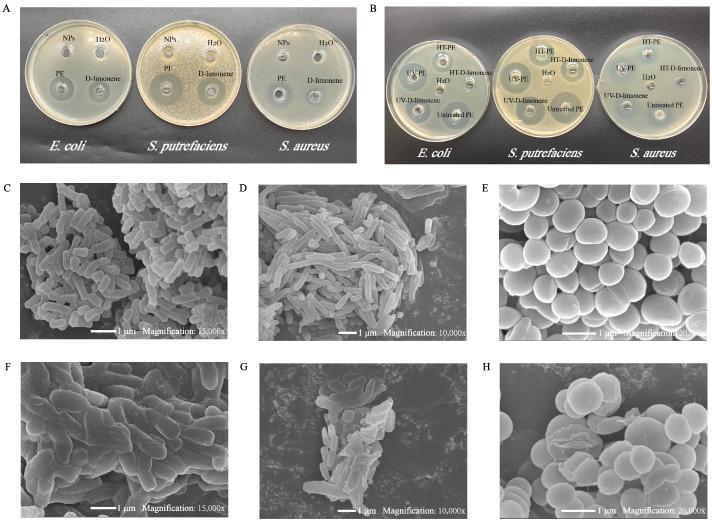
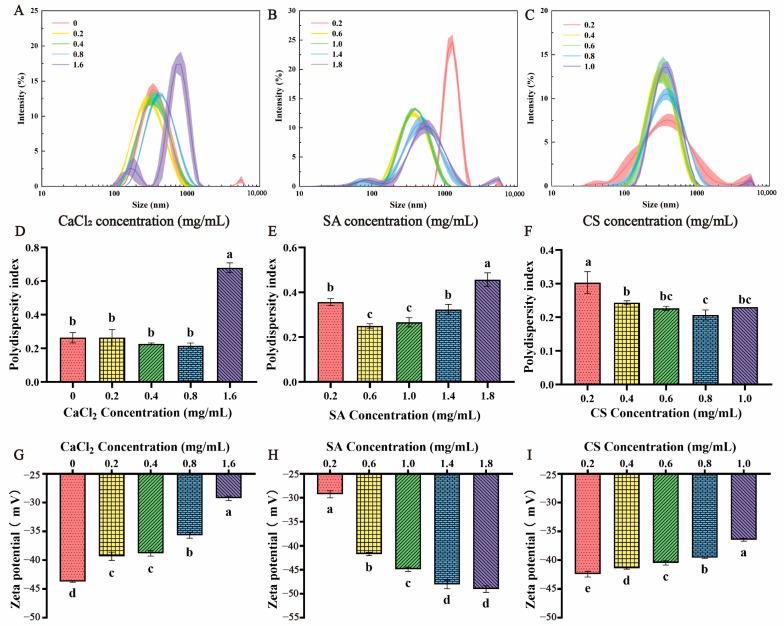
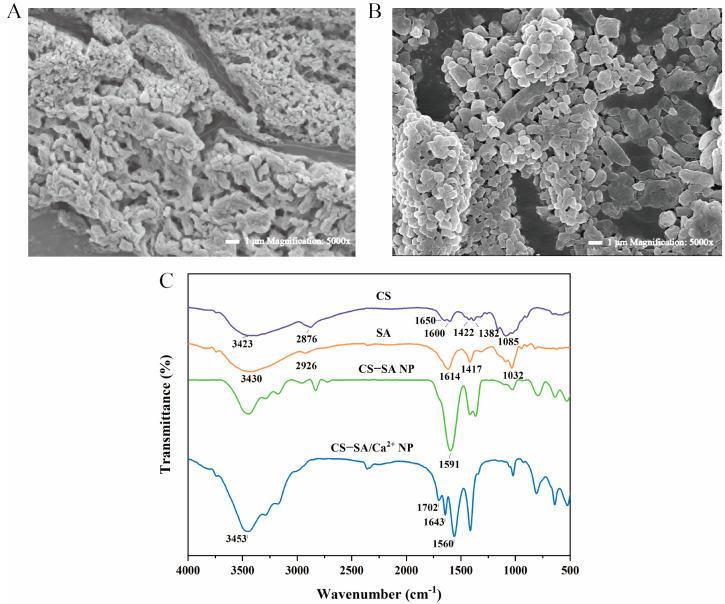
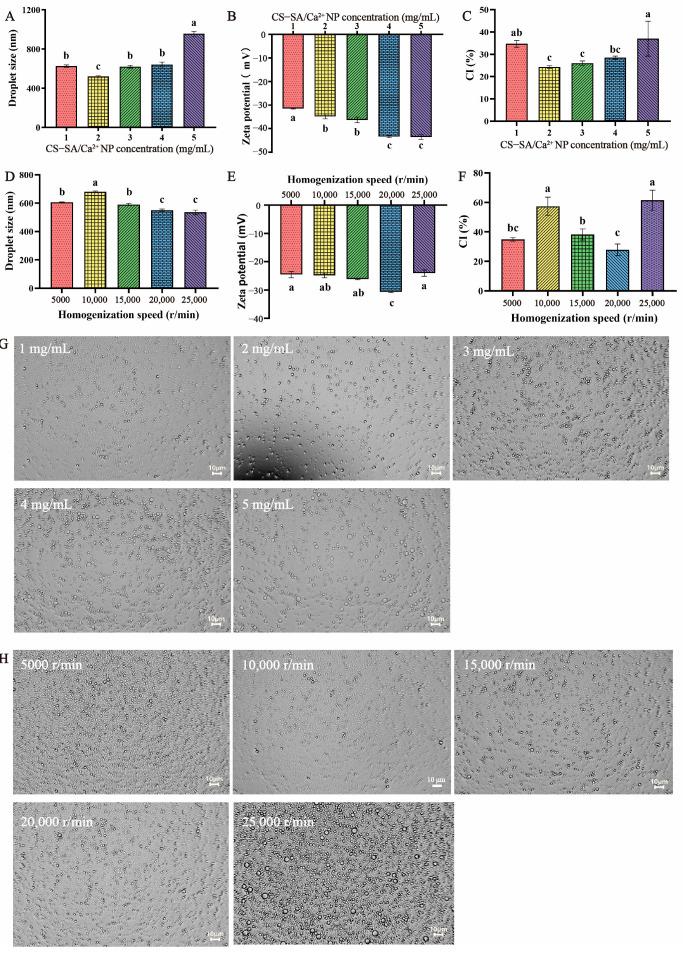
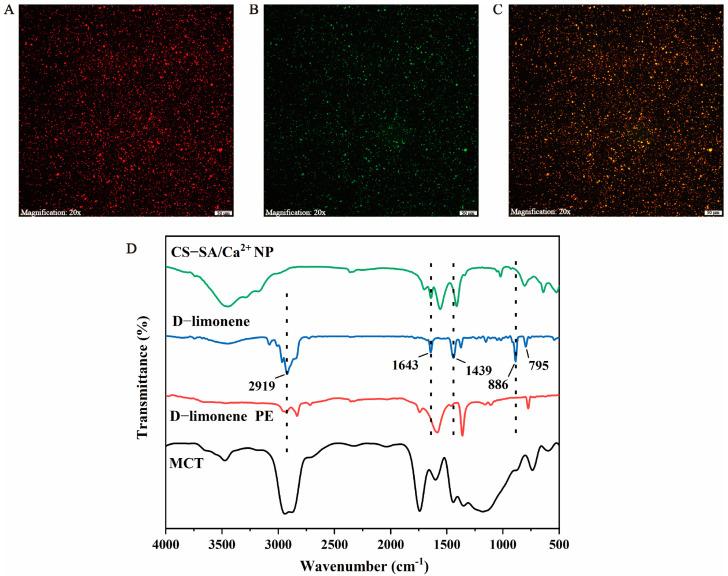
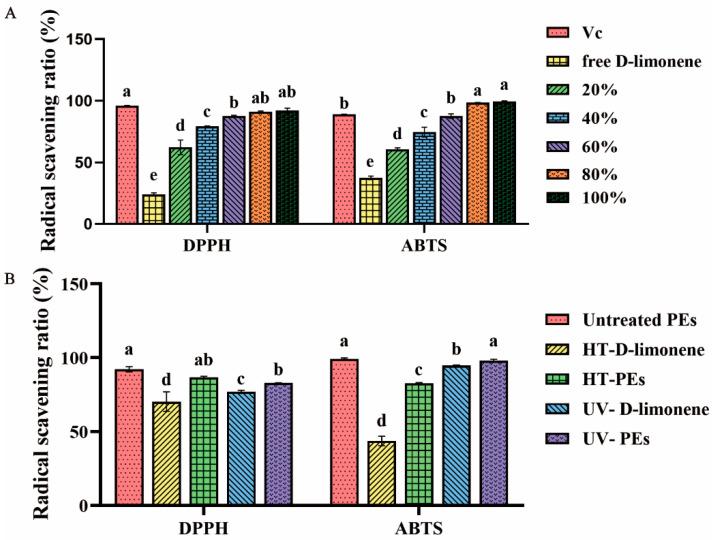
Pickering emulsions (PEs) have been regarded as an effective approach to sustaining and preserving the bioactivities of essential oils. The aim of this research is to prepare a PE stabilized by chitosan/alginate nanoparticles (CS-SA NPs) for the encapsulation and stabilization of D-limonene. In this work, the influence of calcium ions (Ca) on the morphology and interaction of nanoparticles was studied, and then the preparation technology of CS-SA/Ca NPs was optimized. The results showed that the presence of Ca reduced the size of the nanoparticles and made them assume a spherical structure. In addition, under the conditions of 0.2 mg/mL CaCl, 0.6 mg/mL SA, and 0.4 mg/mL CS, the CS-SA/Ca NPs had the smallest size (274 ± 2.51 nm) and high stability (-49 ± 0.69 mV). Secondly, the PE was prepared by emulsifying D-limonene with CS-SA/Ca NPs, and the NP concentrations and homogenization speeds were optimized. The results showed that the small droplet size PE could be prepared with 2 mg/mL NP and a homogenization speed of 20,000 r/min, and it had excellent antibacterial and antioxidant activities. Most importantly, the emulsion showed higher activity, higher resistance to ultraviolet (UV) and a higher temperature than free D-limonene. This research provides a feasible solution for the encapsulation, protection and delivery of essential oils.
皮克林乳液(PEs)被认为是一种维持和保存精油生物活性的有效方法。本研究的目的是制备一种由壳聚糖/海藻酸钠纳米颗粒(CS-SA NPs)稳定的PE,用于D-柠檬烯的包封和稳定化。在这项工作中,研究了钙离子(Ca)对纳米颗粒形态和相互作用的影响,然后优化了CS-SA/Ca NPs的制备工艺。结果表明,Ca的存在减小了纳米颗粒的尺寸并使其呈现球形结构。此外,在0.2 mg/mL氯化钙、0.6 mg/mL海藻酸钠和0.4 mg/mL壳聚糖的条件下,CS-SA/Ca NPs具有最小的尺寸(274±2.51 nm)和高稳定性(-49±0.69 mV)。其次,用CS-SA/Ca NPs乳化D-柠檬烯制备PE,并优化了NP浓度和均质速度。结果表明,用2 mg/mL NP和20000 r/min的均质速度可以制备出小液滴尺寸的PE,并且它具有优异的抗菌和抗氧化活性。最重要的是,该乳液比游离D-柠檬烯表现出更高的活性、更高的抗紫外线(UV)能力和更高的温度耐受性。本研究为精油的包封、保护和递送提供了一种可行的解决方案。
 Zotero 插件