Centre for Cancer & Inflammation Research, School of Chinese Medicine, Hong Kong Baptist University, Hong Kong, China.
Hangzhou Xixi Hospital, Zhejiang Chinese Medical University, Hangzhou, China.
Nat Commun. 2024 Feb 24;15(1):1685. doi: 10.1038/s41467-024-45995-5.
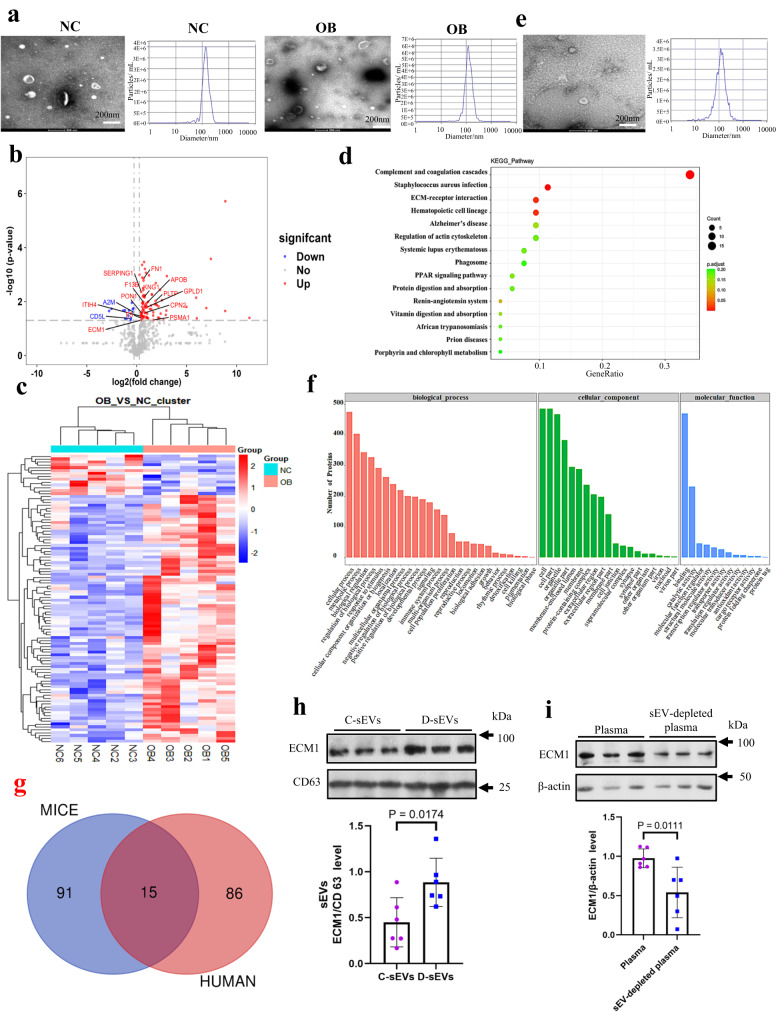
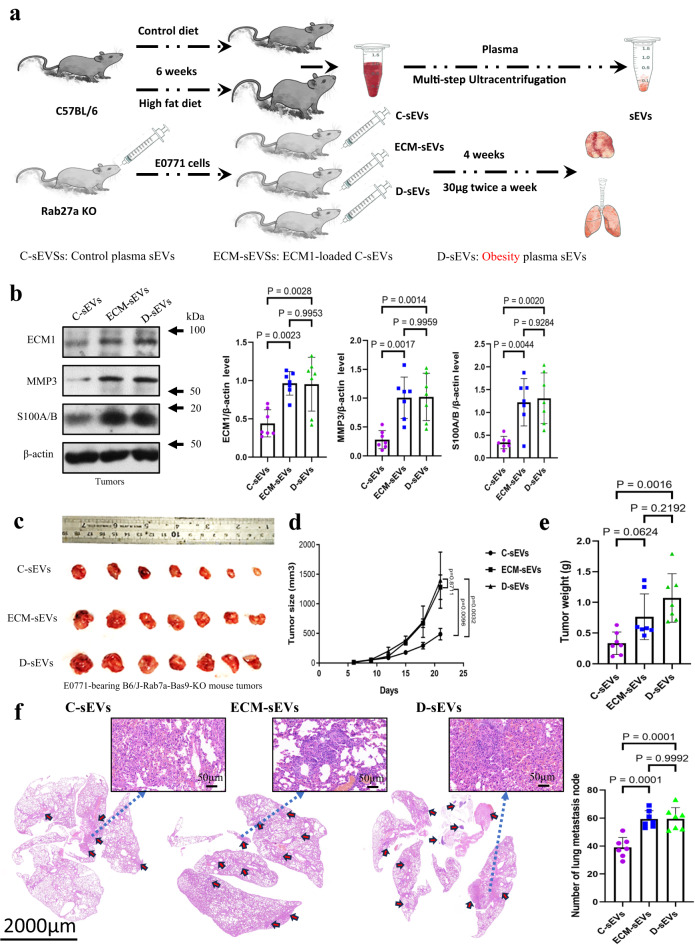
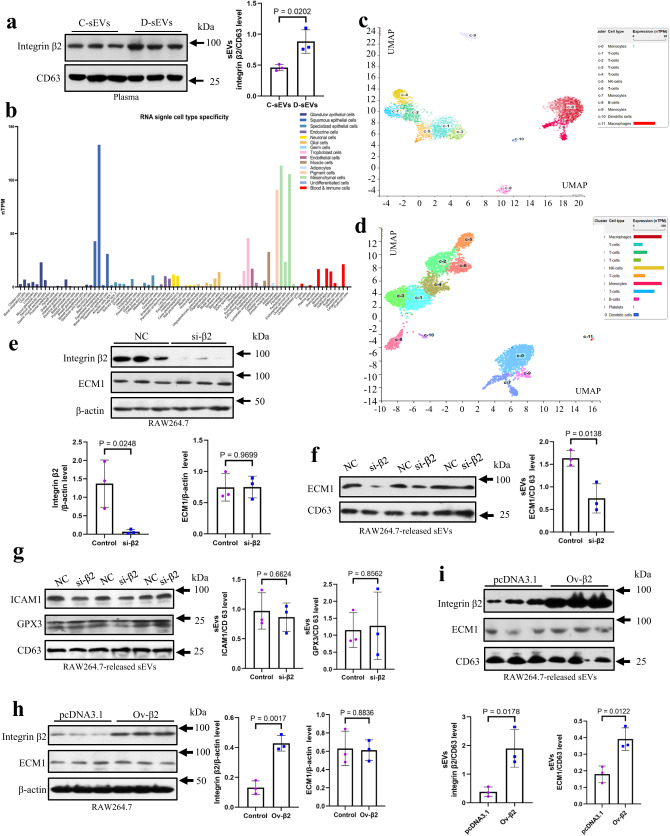
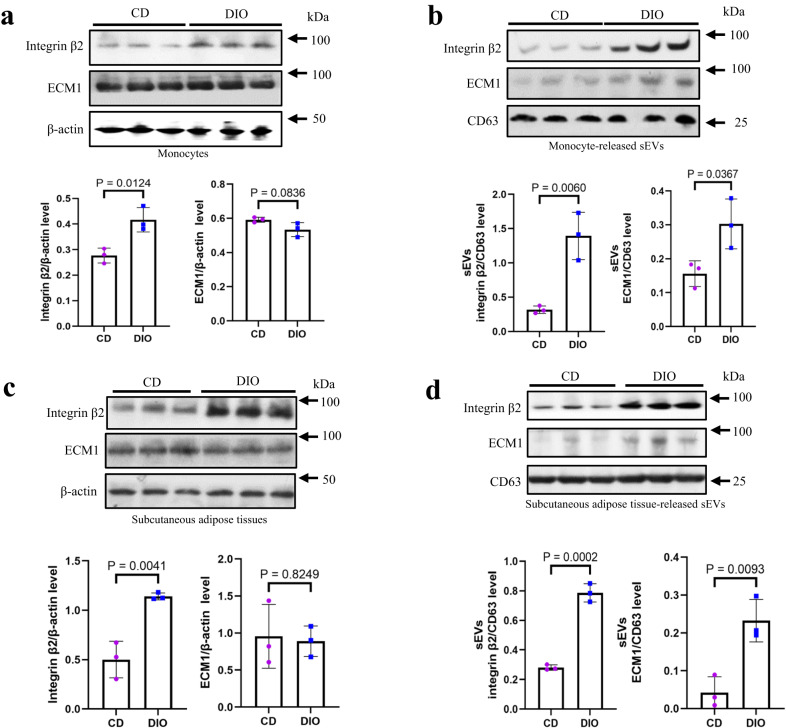
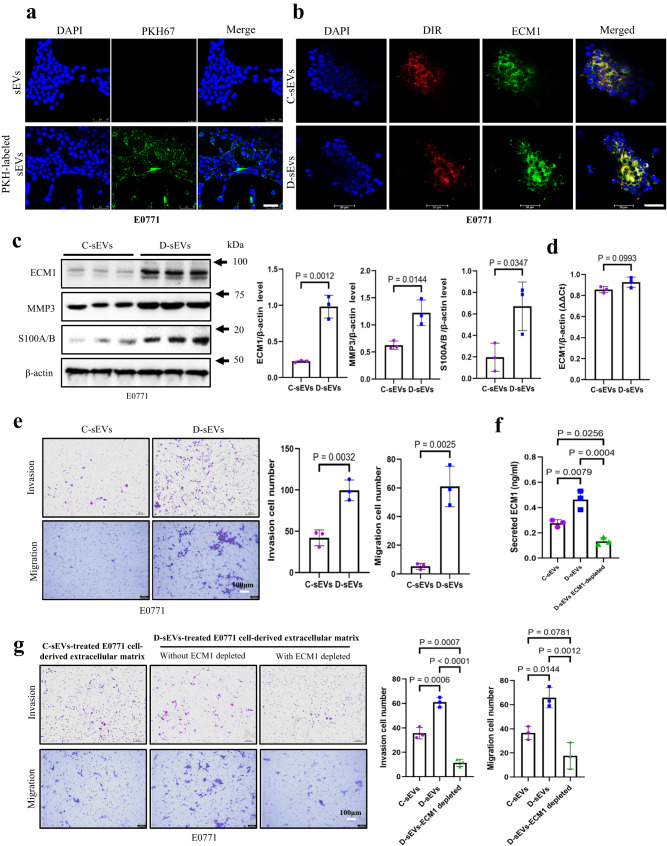
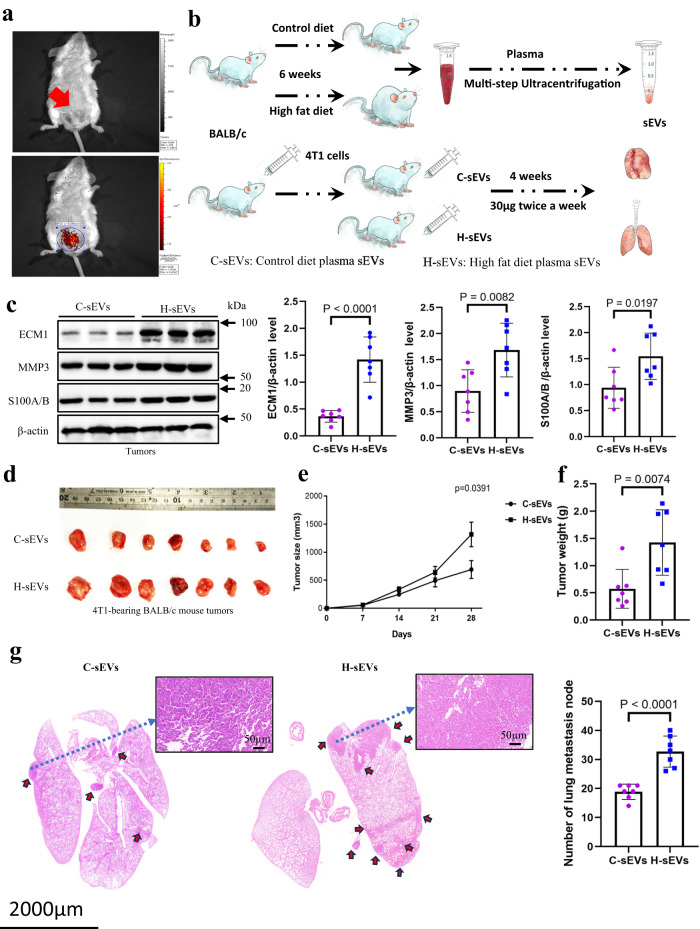
The cargo content in small extracellular vesicles (sEVs) changes under pathological conditions. Our data shows that in obesity, extracellular matrix protein 1 (ECM1) protein levels are significantly increased in circulating sEVs, which is dependent on integrin-β2. Knockdown of integrin-β2 does not affect cellular ECM1 protein levels but significantly reduces ECM1 protein levels in the sEVs released by these cells. In breast cancer (BC), overexpressing ECM1 increases matrix metalloproteinase 3 (MMP3) and S100A/B protein levels. Interestingly, sEVs purified from high-fat diet-induced obesity mice (D-sEVs) deliver more ECM1 protein to BC cells compared to sEVs from control diet-fed mice. Consequently, BC cells secrete more ECM1 protein, which promotes cancer cell invasion and migration. D-sEVs treatment also significantly enhances ECM1-mediated BC metastasis and growth in mouse models, as evidenced by the elevated tumor levels of MMP3 and S100A/B. Our study reveals a mechanism and suggests sEV-based strategies for treating obesity-associated BC.
小细胞外囊泡(sEVs)中的货物内容在病理条件下发生变化。我们的数据表明,在肥胖症中,循环 sEVs 中的细胞外基质蛋白 1(ECM1)蛋白水平显著增加,这依赖于整合素-β2。整合素-β2 的敲低不会影响细胞内 ECM1 蛋白水平,但会显著降低这些细胞释放的 sEVs 中的 ECM1 蛋白水平。在乳腺癌(BC)中,过表达 ECM1 会增加基质金属蛋白酶 3(MMP3)和 S100A/B 蛋白水平。有趣的是,与来自对照饮食喂养小鼠的 sEVs 相比,从高脂肪饮食诱导肥胖小鼠(D-sEVs)中纯化的 sEVs 向 BC 细胞输送更多的 ECM1 蛋白。因此,BC 细胞分泌更多的 ECM1 蛋白,这促进了癌细胞的侵袭和迁移。D-sEVs 处理还显著增强了 ECM1 介导的 BC 转移和在小鼠模型中的生长,这可以通过 MMP3 和 S100A/B 的肿瘤水平升高来证明。我们的研究揭示了一种机制,并提出了基于 sEV 的策略来治疗肥胖相关的 BC。