Department of Epidemiology, Harvard T. H. Chan School of Public Health, Boston, MA, USA.
School of Applied Sciences, University of Mississippi, University, Jackson, MS, USA.
Commun Biol. 2024 Feb 24;7(1):230. doi: 10.1038/s42003-024-05887-2.
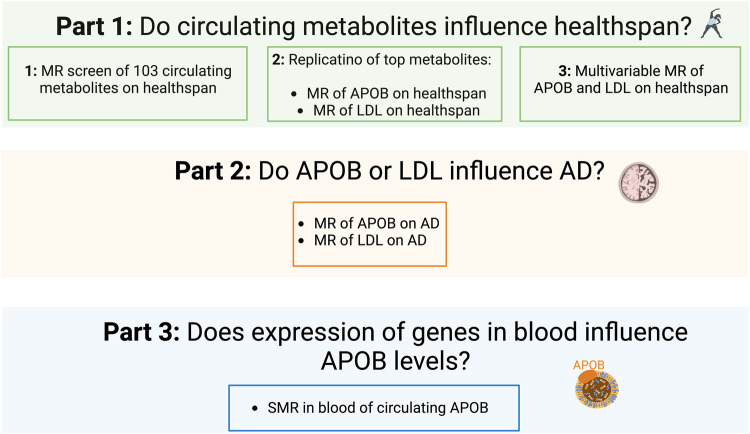
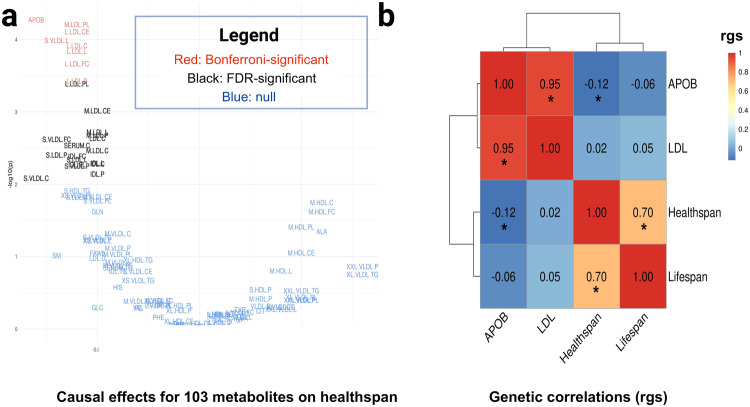
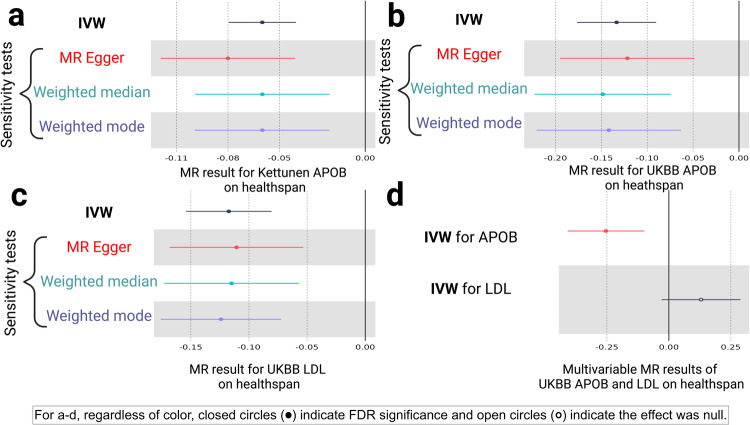
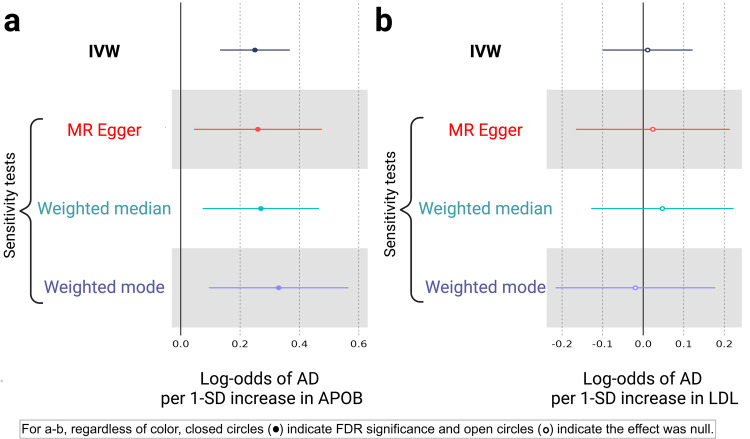
Apolipoprotein B-100 (APOB) is a component of fat- and cholesterol-transporting molecules in the bloodstream. It is the main lipoprotein in low-density lipoprotein cholesterol (LDL) and has been implicated in conditions that end healthspan (the interval between birth and onset of chronic disease). However, APOB's direct relationship with healthspan remains uncertain. With Mendelian randomization, we show that higher levels of APOB and LDL shorten healthspan in humans. Multivariable Mendelian randomization of APOB and LDL on healthspan suggests that the predominant trait accounting for the relationship is APOB. In addition, we provide preliminary evidence that APOB increases risk for Alzheimer's disease, a condition that ends healthspan. If these relationships are causal, they suggest that interventions to improve healthspan in aging populations could include strategies targeting APOB. Ultimately, given that more than 44 million people currently suffer from Alzheimer's disease worldwide, such interventions are needed.
载脂蛋白 B-100(APOB)是血液中脂肪和胆固醇转运分子的一个组成部分。它是低密度脂蛋白胆固醇(LDL)中的主要脂蛋白,与缩短健康寿命(即从出生到慢性疾病发作的间隔)的各种情况有关。然而,APOB 与健康寿命的确切关系尚不确定。通过孟德尔随机化,我们发现 APOB 和 LDL 水平升高会缩短人类的健康寿命。APOB 和 LDL 对健康寿命的多变量孟德尔随机化表明,主要的特征是 APOB。此外,我们提供了初步证据表明 APOB 会增加患阿尔茨海默病的风险,而这种疾病会缩短健康寿命。如果这些关系是因果关系,那么它们表明,改善老龄化人口健康寿命的干预措施可能包括针对 APOB 的策略。最终,鉴于目前全世界有超过 4400 万人患有阿尔茨海默病,这种干预是必要的。