Churchill Caroline C, Peterson Cristina D, Kitto Kelley F, Pflepsen Kelsey R, Belur Lalitha R, McIvor R Scott, Vulchanova Lucy, Wilcox George L, Fairbanks Carolyn A
Department of Experimental and Clinical Pharmacology, University of Minnesota, Minneapolis, MN, United States.
Department of Neuroscience, University of Minnesota, Minneapolis, MN, United States.
Front Pain Res (Lausanne). 2024 Feb 9;4:1269017. doi: 10.3389/fpain.2023.1269017. eCollection 2023.
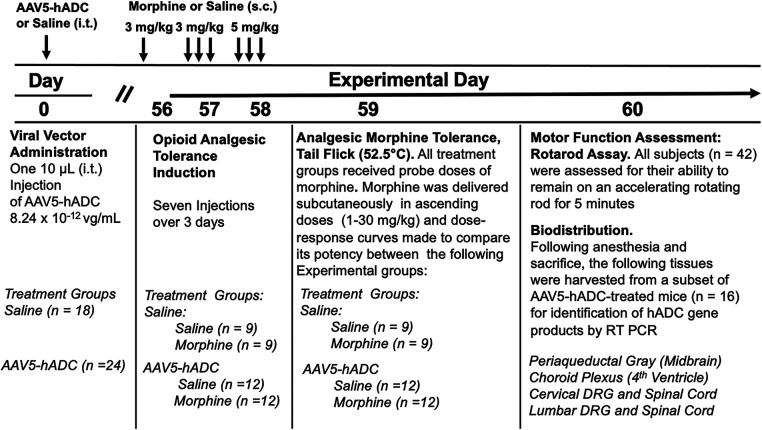
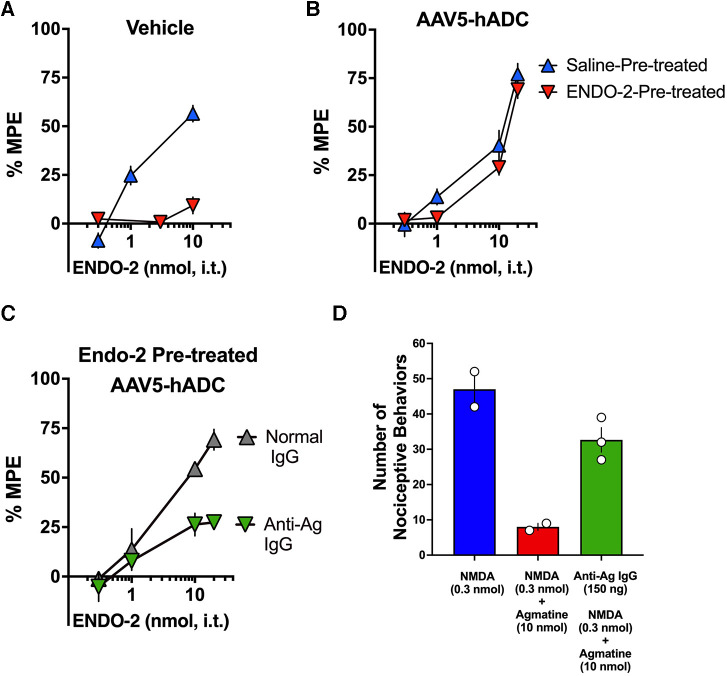
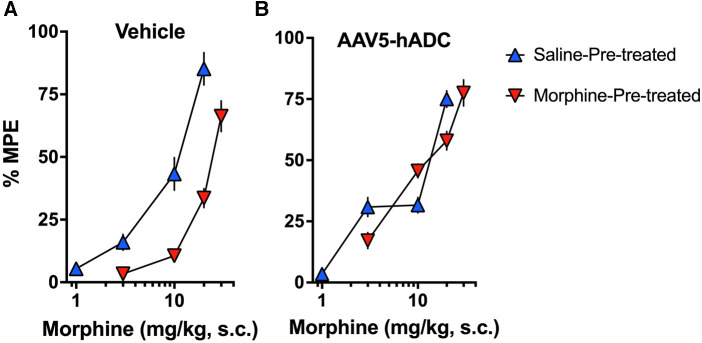
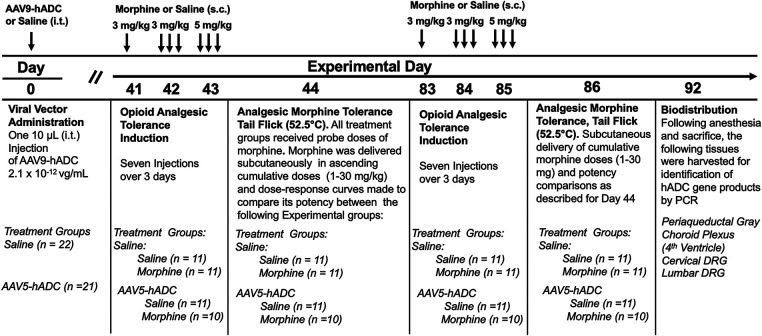
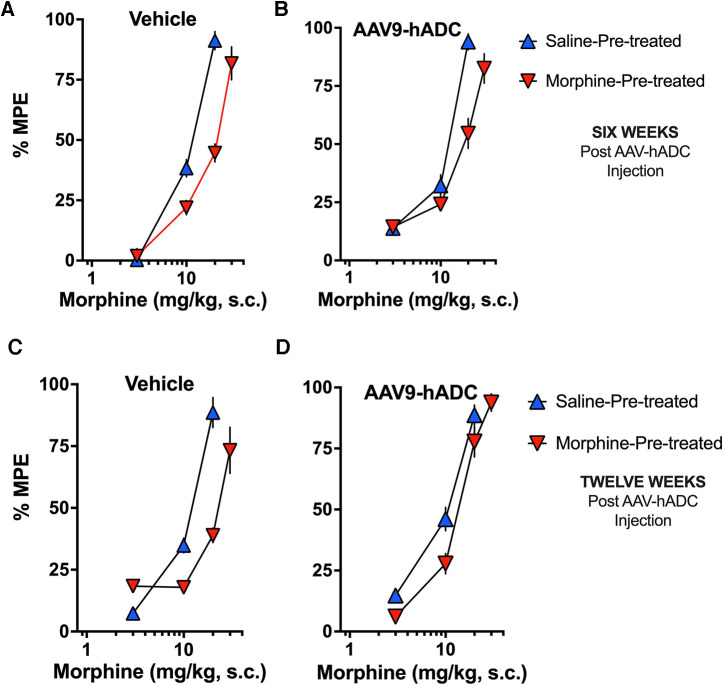
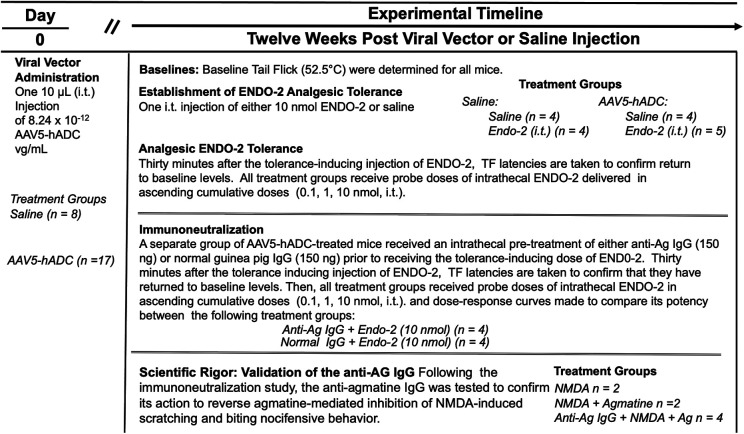
Agmatine, a decarboxylated form of L-arginine, prevents opioid analgesic tolerance, dependence, and self-administration when given by both central and systemic routes of administration. Endogenous agmatine has been previously detected in the central nervous system. The presence of a biochemical pathway for agmatine synthesis offers the opportunity for site-specific overexpression of the presumptive synthetic enzyme for local therapeutic effects. In the present study, we evaluated the development of opioid analgesic tolerance in ICR-CD1 mice pre-treated with either vehicle control or intrathecally delivered adeno-associated viral vectors (AAV) carrying the gene for human arginine decarboxylase (hADC). Vehicle-treated or AAV-hADC-treated mice were each further divided into two groups which received repeated delivery over three days of either saline or systemically-delivered morphine intended to induce opioid analgesic tolerance. Morphine analgesic dose-response curves were constructed in all subjects on day four using the warm water tail flick assay as the dependent measure. We observed that pre-treatment with AAV-hADC prevented the development of analgesic tolerance to morphine. Peripheral and central nervous system tissues were collected and analyzed for presence of hADC mRNA. In a similar experiment, AAV-hADC pre-treatment prevented the development of analgesic tolerance to a high dose of the opioid neuropeptide endomorphin-2. Intrathecal delivery of anti-agmatine IgG (but not normal IgG) reversed the inhibition of endomorphin-2 analgesic tolerance in AAV-hADC-treated mice. To summarize, we report here the effects of AAV-mediated gene transfer of human ADC (hADC) in models of opioid-induced analgesic tolerance. This study suggests that gene therapy may contribute to reducing opioid analgesic tolerance.
胍丁胺是L-精氨酸的脱羧形式,通过中枢和全身给药途径给予时,可预防阿片类镇痛耐受、依赖和自我给药。先前已在中枢神经系统中检测到内源性胍丁胺。胍丁胺合成生化途径的存在为推定合成酶的位点特异性过表达提供了机会,以实现局部治疗效果。在本研究中,我们评估了用载体对照或鞘内递送携带人精氨酸脱羧酶(hADC)基因的腺相关病毒载体(AAV)预处理的ICR-CD1小鼠中阿片类镇痛耐受的发展情况。载体处理或AAV-hADC处理的小鼠各自进一步分为两组,这两组在三天内接受盐水或全身递送吗啡的重复给药,旨在诱导阿片类镇痛耐受。在第四天,使用温水甩尾试验作为因变量测量,在所有受试者中构建吗啡镇痛剂量反应曲线。我们观察到,用AAV-hADC预处理可预防对吗啡的镇痛耐受的发展。收集外周和中枢神经系统组织并分析hADC mRNA的存在情况。在一项类似实验中,AAV-hADC预处理可预防对高剂量阿片类神经肽内吗啡肽-2的镇痛耐受的发展。鞘内递送抗胍丁胺IgG(而非正常IgG)可逆转AAV-hADC处理小鼠中内吗啡肽-2镇痛耐受的抑制作用。总之,我们在此报告了AAV介导的人ADC(hADC)基因转移在阿片类诱导的镇痛耐受模型中的作用。这项研究表明基因治疗可能有助于降低阿片类镇痛耐受。