Waketola Alemayehu G, Hone Fekadu G, Geldasa Fikadu T, Genene Zewdneh, Mammo Wendimagegn, Tegegne Newayemedhin A
Department Physics Education, Kotebe University of Education, Addis Ababa 31248, Ethiopia.
Department of Physics, Addis Ababa University, Addis Ababa 1176, Ethiopia.
ACS Omega. 2024 Feb 6;9(7):8082-8091. doi: 10.1021/acsomega.3c08386. eCollection 2024 Feb 20.
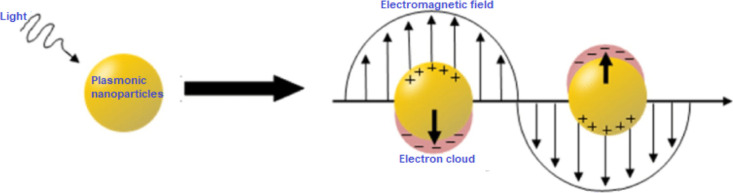
Light trapping induced by the introduction of metallic nanoparticles has been shown to improve photo absorption in organic solar cells (OSCs). Researchers in the fields of plasmonics and organic photovoltaics work together to boost sunlight absorption and photon-electron interactions in order to improve device performance. In this contribution, an inverted OSC was fabricated by using indacenodithieno[3,2-]thiophene--2,2'-bithiazole () as a wide-band gap donor copolymer and (6,6)-phenyl-C-butyric acid methyl ester (PCBM) as an acceptor. Silver nanorods (Ag-NRs), synthesized by precipitation method, were embedded in the active layer of the solar cell. The device fabricated with 1 wt % Ag-NRs in the active layer showed a 26% improvement in power conversion efficiency (PCE) when exposed to 100 mW/cm simulated solar illumination. The role of Ag-NRs in the performance improvement of the OSCs was analyzed systematically using morphological, electrical, and optical characterization methods. The light trapping and exciton generation were improved due to the localized surface plasmon resonance (LSPR) activated in Ag-NRs in the form of longitudinal and transverse modes. The photoactive layers (:PCBM) with the incorporation of 0.5 and 1 wt % Ag-NR showed increased absorption, while the absorption with 1.5 wt % Ag-NRs appeared to be reduced in the wavelength range from 400 to 580 nm. Ag-NRs play a favorable role in exciton photogeneration and dissociation due to the two LSPR modes generated by the Ag-NRs. In the optimized device, the short-circuit current density () increased from 11.92 to 14.25 mA/cm, resulting in an increase in the PCE from 3.94 to 4.93%, which is attributed to the improved light-trapping by LSPR using Ag-NRs.
引入金属纳米颗粒所诱导的光捕获已被证明可改善有机太阳能电池(OSC)中的光吸收。等离子体激元学和有机光伏领域的研究人员共同努力,以增强阳光吸收和光子 - 电子相互作用,从而提高器件性能。在本论文中,通过使用茚并二噻吩并[3,2 - b]噻吩 - 2,2'- 联噻唑( )作为宽带隙供体共聚物以及(6,6)-苯基 - C7 - 丁酸甲酯(PCBM)作为受体来制备倒置的有机太阳能电池。通过沉淀法合成的银纳米棒(Ag - NRs)被嵌入到太阳能电池的活性层中。当活性层中含有1 wt%的Ag - NRs时,所制备的器件在100 mW/cm²模拟太阳光照下,功率转换效率(PCE)提高了26%。利用形态学、电学和光学表征方法系统地分析了Ag - NRs在有机太阳能电池性能提升中的作用。由于以纵向和横向模式激活的Ag - NRs中的局域表面等离子体共振(LSPR),光捕获和激子产生得到了改善。掺入0.5 wt%和1 wt% Ag - NR的光活性层( :PCBM)显示出吸收增加,而在400至580 nm波长范围内,掺入1.5 wt% Ag - NRs时吸收似乎降低。由于Ag - NRs产生的两种LSPR模式,Ag - NRs在激子光生和离解中发挥了有利作用。在优化的器件中,短路电流密度( )从11.92增加到14.25 mA/cm²,导致PCE从3.94%增加到4.93%,这归因于使用Ag - NRs通过LSPR改善了光捕获。