Okoroiwu Henshaw Uchechi, Edet Uwem Okon, Uchendu Ikenna Kingsley, Echieh Chidiebere Peter, Nneoyi-Egbe Ada Francesca, Anyanwu Stanley Obialor, Umoh Ekementeabasi Aniebo, Nwaiwu Ndidi Patience, Mbabuike Ikenna Uchechukwu
Medical Laboratory Science Department, Faculty of Health Sciences and Technology, David Umahi Federal University of Health Sciences, Uburu, Ebonyi State, Nigeria.
Haematology Unit, Department of Medical Laboratory Science, University of Calabar, Calabar, Nigeria.
J Public Health Res. 2024 Feb 24;13(1):22799036241231787. doi: 10.1177/22799036241231787. eCollection 2024 Jan.
Rate and pattern of under-five mortality is a reflection of a society's healthcare system and quality of life. This study is aimed at reviewing the causes of infants and under-five morbidity and mortality in Calabar, Southern Nigeria.
This study used retrospective descriptive cross-sectional design. We did a retrospective collation of data on under-five morbidity and mortality from 2012 to 2017 of under-five patients admitted or died while in admission in University of Calabar Teaching Hospital. The causes of morbidity and mortality were reported based on International Classification of Diseases 10 (ICD-10). The morbidity, mortality and fatality rates were computed.
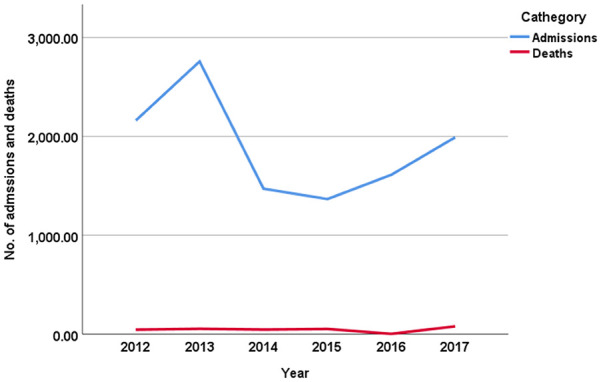
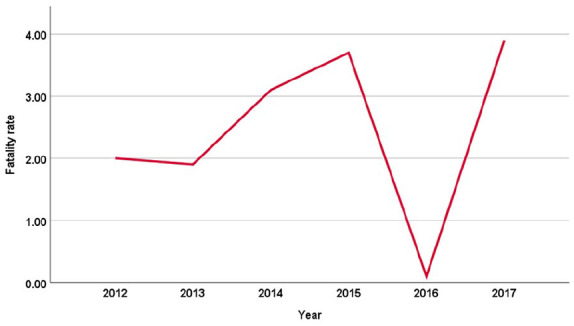
A total of 11,416 under-five admissions and 391 deaths were recorded within the study period giving a fatality rate of 3.4%. Age 1-4 years category represented 50.5% of the admissions while infants (<1 year) constitute majority of the deaths (64.7%). There were 5652 infant admissions and 253 infant deaths giving fatality rate of 4.5% within the study period. Males constituted majority (55.8%) of under-five morbidity whereas females constituted majority (51.2%) of the deaths. Conditions originating from perinatal period; and infectious and parasitic diseases were the leading broad cause of under-five mortality. Specific disease analysis showed sepsis/septicemia; congenital infectious and parasitic diseases; slow fetal growth, malnutrition and short gestation as the chief causes of both infant and under-five mortality.
The leading causes of under-five deaths in the studied population are amenable. Improved healthcare and antenatal will be of immense benefit.
五岁以下儿童的死亡率及模式反映了一个社会的医疗体系和生活质量。本研究旨在回顾尼日利亚南部卡拉巴尔地区婴儿及五岁以下儿童发病和死亡的原因。
本研究采用回顾性描述性横断面设计。我们对2012年至2017年在卡拉巴尔大学教学医院住院或住院期间死亡的五岁以下患者的发病和死亡数据进行了回顾性整理。发病和死亡原因根据国际疾病分类第10版(ICD - 10)进行报告。计算了发病率、死亡率和病死率。
研究期间共记录了11416例五岁以下儿童住院病例和391例死亡病例,病死率为3.4%。1 - 4岁年龄组占住院病例的50.5%,而婴儿(<1岁)占死亡病例的大多数(64.7%)。研究期间有5652例婴儿住院病例和253例婴儿死亡病例,病死率为4.5%。五岁以下儿童发病中男性占多数(55.8%),而死亡中女性占多数(51.2%)。围生期起源的疾病以及传染病和寄生虫病是五岁以下儿童死亡的主要广泛原因。具体疾病分析显示败血症/脓毒症、先天性传染病和寄生虫病、胎儿生长缓慢、营养不良和孕周短是婴儿及五岁以下儿童死亡的主要原因。
研究人群中五岁以下儿童死亡的主要原因是可以控制的。改善医疗保健和产前护理将带来巨大益处。