Ma Grace X, Zhu Lin, Tan Yin, Do Phuong, Guerrier Guercie, Wang Min Qi, Nguyen Minhhuyen, Tran Tam, Pham Philip
Center for Asian Health, Lewis Katz School of Medicine, Temple University, Philadelphia, PA.
Department of Urban Health and Population Science, Lewis Katz School of Medicine, Temple University, Philadelphia, PA.
Res Sq. 2024 Feb 8:rs.3.rs-3934937. doi: 10.21203/rs.3.rs-3934937/v1.
The fecal immunochemical test (FIT) is a non-invasive method for colorectal cancer (CRC) screening, particularly effective in underserved Vietnamese American communities with low screening rates. This study reports on a culturally tailored multilevel intervention, incorporating FIT, aimed at increasing CRC screening among these populations aged 50 or above in the Greater Philadelphia metropolitan area.
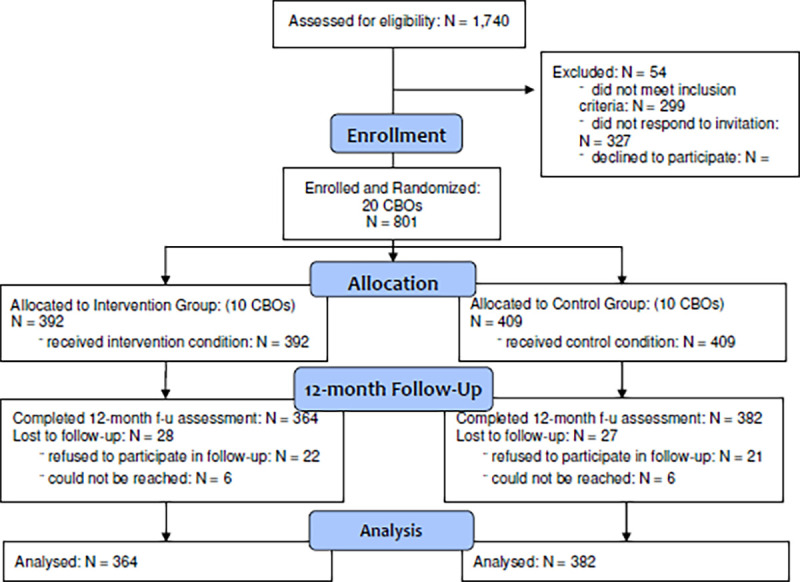
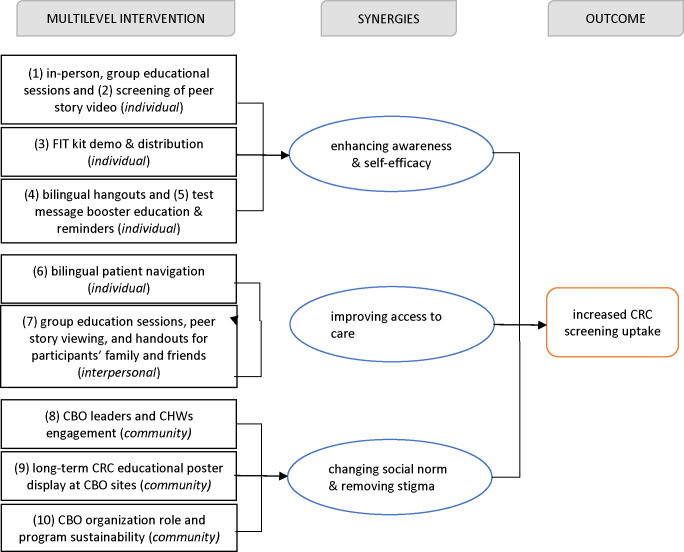
From 2017 to 2020, we conducted a two-arm cluster randomized controlled trial to test the efficacy of a culturally tailored, multicomponent multilevel intervention aimed at increasing CRC screening uptake via enhanced self-awareness and self-efficacy, improved access to care, and changes in social norms and removal of stigma. The intervention group received multicomponent, multilevel CRC intervention including provision of a FIT self-sampling kit, with intervention approaches informed by the Centers for Disease Control's Clinical Preventive Services (CPS) Guidelines for adults 50+. The control group received only the CPS education.
The study sample consisted of 746 eligible Vietnamese American participants recruited from 20 community-based organizations, with 95% having limited English proficiency. At 12-month follow-up, the intervention group showed substantially higher rates of FIT completion (89.56% vs. 7.59%, p < .001) and any CRC testing (91.48% vs. 42.41%, p < .001) compared to the control group.
The results suggest that the community-based, culturally-tailored multilevel intervention, which incorporates with FIT self-testing, effectively enhances CRC screening among low-income Vietnamese Americans. Additionally, these results underscore the significance of community-oriented strategies, like collaborating with relevant community-based organizations, in achieving CRC screening targets.
粪便免疫化学检测(FIT)是一种用于结直肠癌(CRC)筛查的非侵入性方法,在筛查率较低的美籍越南人社区中尤为有效。本研究报告了一项针对特定文化背景的多层次干预措施,该措施纳入了FIT,旨在提高大费城都会区50岁及以上人群的CRC筛查率。
从2017年到2020年,我们进行了一项双臂整群随机对照试验,以测试一种针对特定文化背景的多成分多层次干预措施的效果,该干预措施旨在通过增强自我意识和自我效能、改善医疗服务可及性以及改变社会规范和消除耻辱感来提高CRC筛查的接受度。干预组接受了多成分、多层次的CRC干预,包括提供FIT自采样试剂盒,干预方法参考了疾病控制中心针对50岁以上成年人的临床预防服务(CPS)指南。对照组仅接受CPS教育。
研究样本包括从20个社区组织招募的746名符合条件的美籍越南参与者,其中95%英语水平有限。在12个月的随访中,与对照组相比,干预组的FIT完成率(89.56%对7.59%,p<.001)和任何CRC检测率(91.48%对42.41%,p<.001)都显著更高。
结果表明,结合FIT自我检测的基于社区的、针对特定文化背景的多层次干预措施,能有效提高低收入美籍越南人的CRC筛查率。此外,这些结果强调了以社区为导向的策略(如与相关社区组织合作)在实现CRC筛查目标方面的重要性。