Department of Surgery, Amsterdam UMC, University of Amsterdam, PO Box 22660, 1105, AZ, Amsterdam, The Netherlands.
Department of Minimally invasive surgery, Tor Vergata University of Rome, Rome, Italy.
BMC Surg. 2024 Feb 26;24(1):71. doi: 10.1186/s12893-024-02340-3.
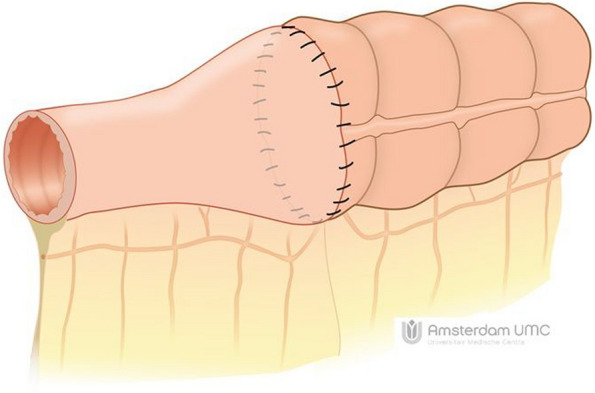
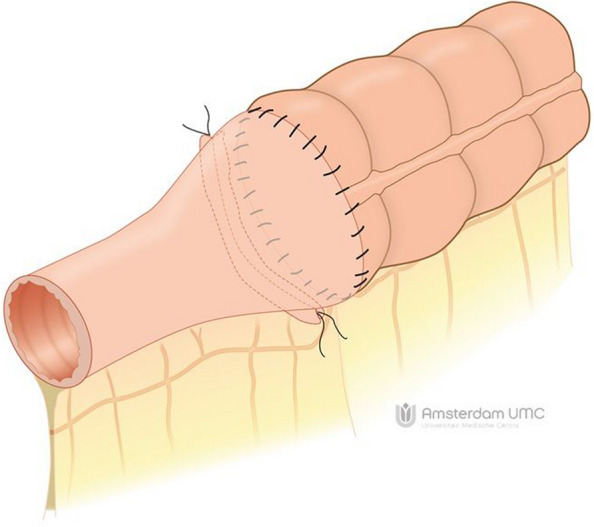
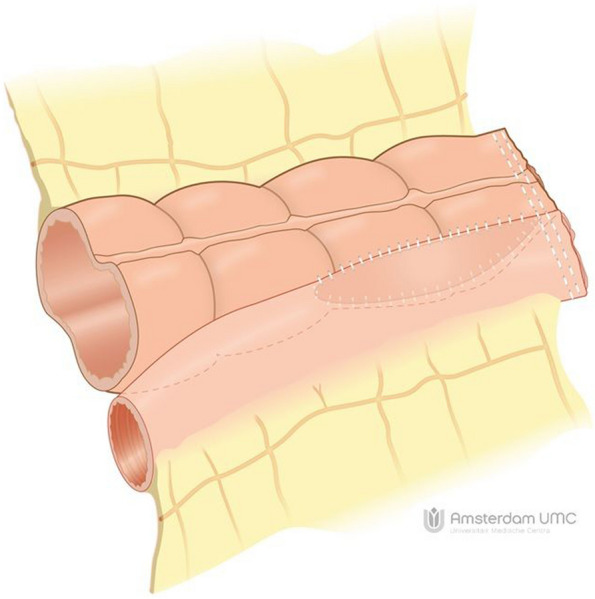
The most common intestinal operation in Crohn's disease (CD) is an ileocolic resection. Despite optimal surgical and medical management, recurrent disease after surgery is common. Different types of anastomoses with respect to configuration and construction can be made after resection for example, handsewn (end-to-end and Kono-S) and stapled (side-to-side). The various types of anastomoses might affect endoscopic recurrence and its assessment, the functional outcome, and costs. The objective of the present study is to compare the three types of anastomoses with respect to endoscopic recurrence at 6 months, gastrointestinal function, and health care consumption.
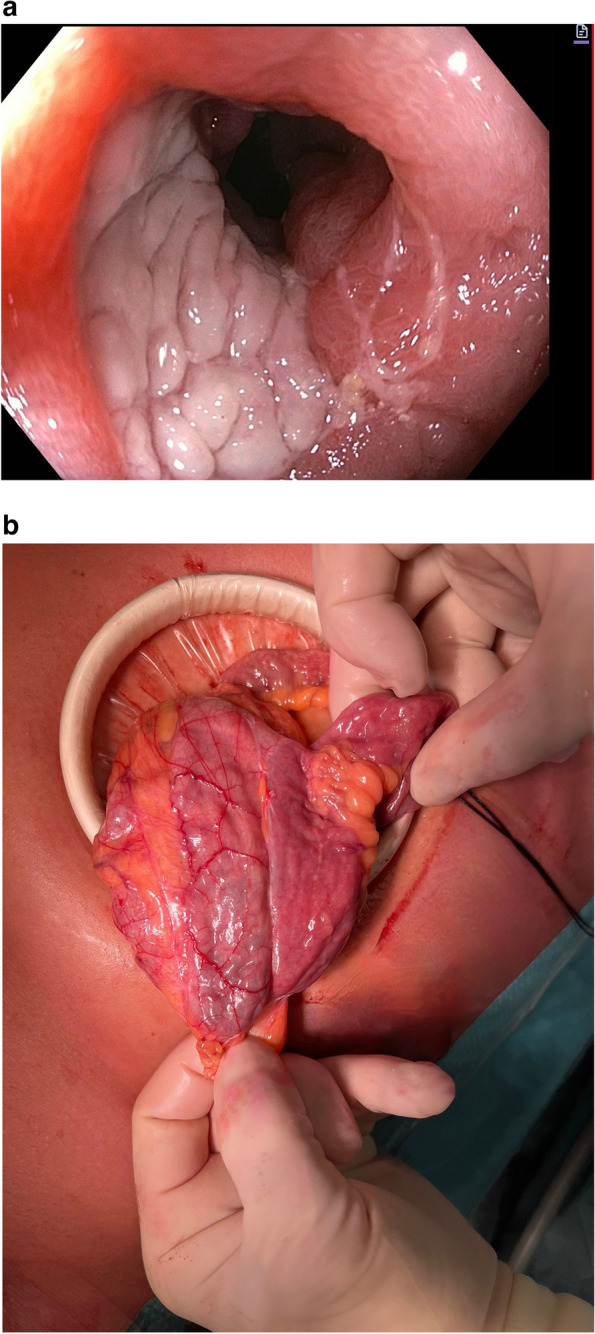
This is a randomized controlled multicentre superiority trial, allocating patients either to side-to-side stapled anastomosis as advised in current guidelines or a handsewn anastomoses (an end-to-end or Kono-S). It is hypothesized that handsewn anastomoses do better than stapled, and end-to-end perform better than the saccular Kono-S. Two international studies with a similar setup will be conducted mainly in the Netherlands (End2End) and Italy (HAND2END). Patients diagnosed with CD, aged over 16 years in the Netherlands and 18 years in Italy requiring (re)resection of the (neo)terminal ileum are eligible. The first part of the study compares the two handsewn anastomoses with the stapled anastomosis. To detect a clinically relevant difference of 25% in endoscopic recurrence, a total of 165 patients will be needed in the Netherlands and 189 patients in Italy. Primary outcome is postoperative endoscopic recurrence (defined as Rutgeerts score ≥ i2b) at 6 months. Secondary outcomes are postoperative morbidity, gastrointestinal function, quality of life (QoL) and costs.
The research question addresses a knowledge gap within the general practice elucidating which type of anastomosis is superior in terms of endoscopic and clinical recurrence, functionality, QoL and health care consumption. The results of the proposed study might change current practice in contrast to what is advised by the guidelines.
NCT05246917 for HAND2END and NCT05578235 for End2End ( http://www.
gov/ ).
在克罗恩病(CD)中,最常见的肠道手术是回肠结肠切除术。尽管进行了最佳的手术和医疗管理,但手术后疾病仍会复发。例如,在切除术后可以采用不同类型的吻合方式,包括手工吻合(端对端和 Kono-S)和吻合器吻合(侧侧吻合)。不同类型的吻合方式可能会影响内镜下的复发及其评估、功能结果和医疗费用。本研究的目的是比较三种吻合方式在术后 6 个月的内镜复发、胃肠功能和医疗保健消费方面的差异。
这是一项随机对照多中心优效性试验,将患者分配至侧侧吻合器吻合(按当前指南建议)或手工吻合(端对端或 Kono-S)。假设手工吻合优于吻合器吻合,端对端优于囊袋状 Kono-S。将在荷兰(End2End)和意大利(HAND2END)进行两项具有类似设计的国际研究。荷兰的纳入标准为诊断为 CD、年龄大于 16 岁且需要切除(新)末端回肠的患者,意大利的纳入标准为诊断为 CD、年龄大于 18 岁且需要切除(新)末端回肠的患者。研究的第一部分比较了两种手工吻合与吻合器吻合的效果。为了检测内镜复发率的 25%的临床相关差异,荷兰需要 165 例患者,意大利需要 189 例患者。主要结局是术后 6 个月内镜下复发(定义为 Rutgeerts 评分≥i2b)。次要结局是术后发病率、胃肠功能、生活质量(QoL)和医疗费用。
该研究旨在解决一般实践中的一个知识空白,即哪种吻合方式在内镜和临床复发、功能、QoL 和医疗保健消费方面更具优势。该研究结果可能会改变目前与指南建议相反的实践。
HAND2END 为 NCT05246917,End2End 为 NCT05578235(http://www.clinicaltrials.gov/)。