Comberiati Anna Maria, Lomartire Chiara, Malvasi Mariaelena, Migliorini Raffaele, Pacella Fernanda, Malvasi Vito Maurizio, Turchetti Paolo, Pacella Elena
Department of Sense Organs, Sapienza University of Rome, Rome, Italy.
Department of Ophthalmology, Carlo Poma Hospital, Mantua, Italy.
Clin Optom (Auckl). 2024 Feb 22;16:55-69. doi: 10.2147/OPTO.S446717. eCollection 2024.
To evaluate ocular motility (OM) disorders and strabismus in a sample of patients with retinitis pigmentosa (RP) and a control sample.
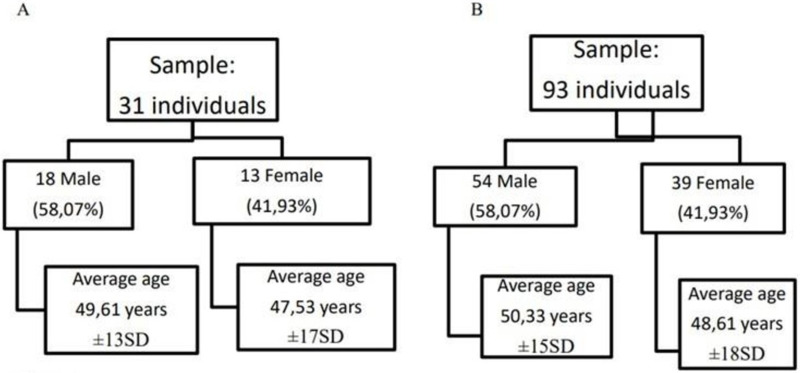
In this cross-sectional retrospective analysis, we studied a sample of RP patients with a mean age of 48.74 years and an average visual acuity of 7/10 based on Snellen optotype and a sample of control patients with similar mean age (49 years [men], 47 years [women]) and sex and an average visual acuity of 9.9/10, with the aim of assessing correlations between alteration of OM and strabismus in RP patients based on age, high refractive defect, or severely impaired binocular vision. The examination followed a protocol of testing for anamnesis and best-corrected visual acuity, as well as a complete eye examination, corneal reflex, cover test, OM, Hess screen, and Lang test.
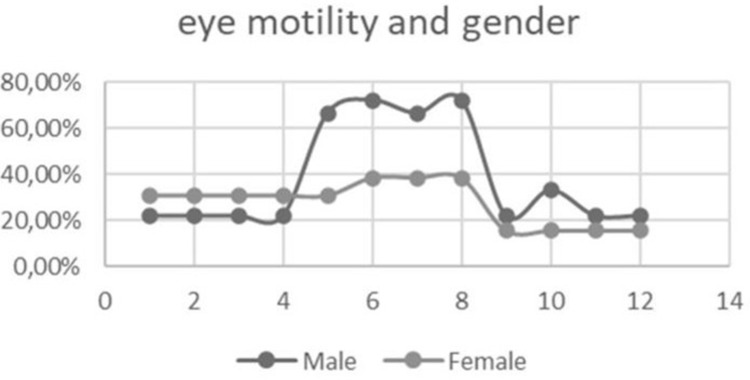
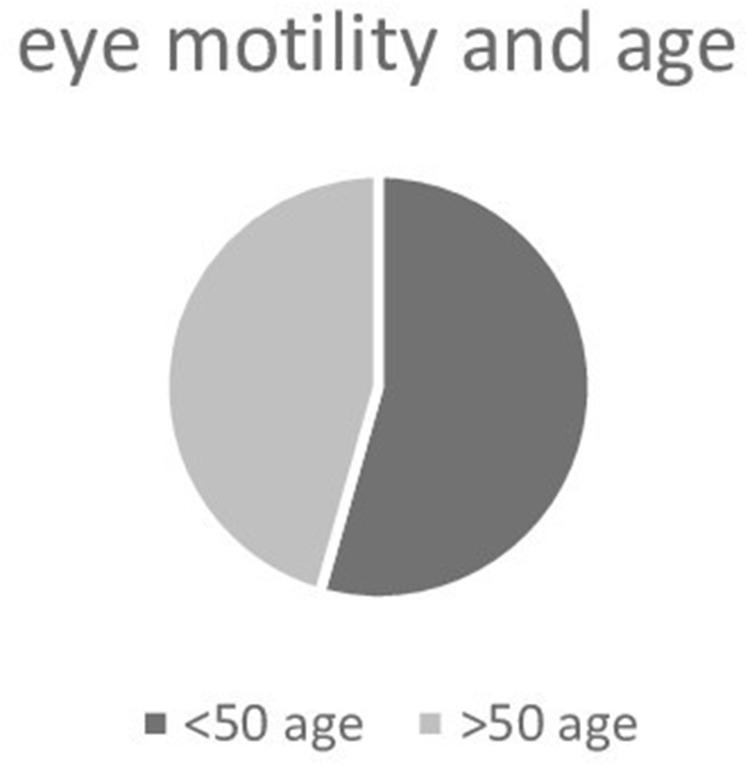
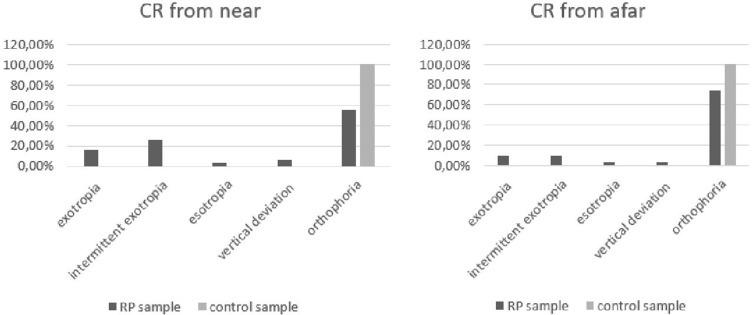
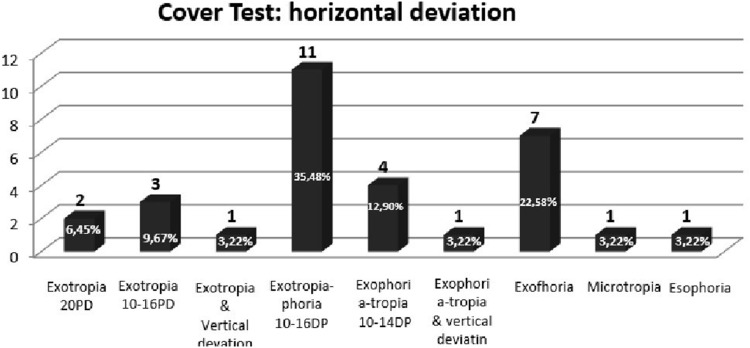
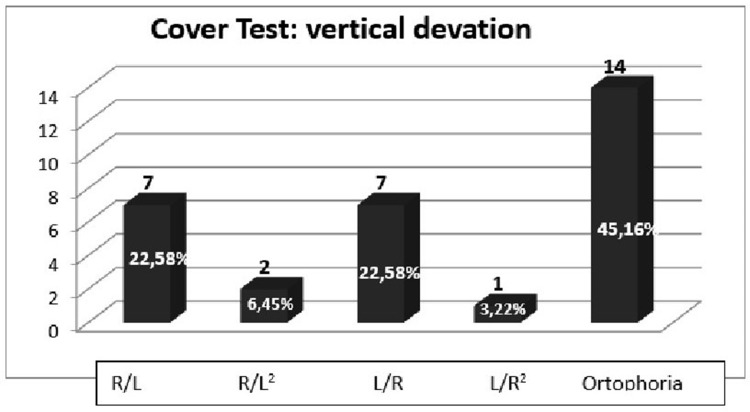
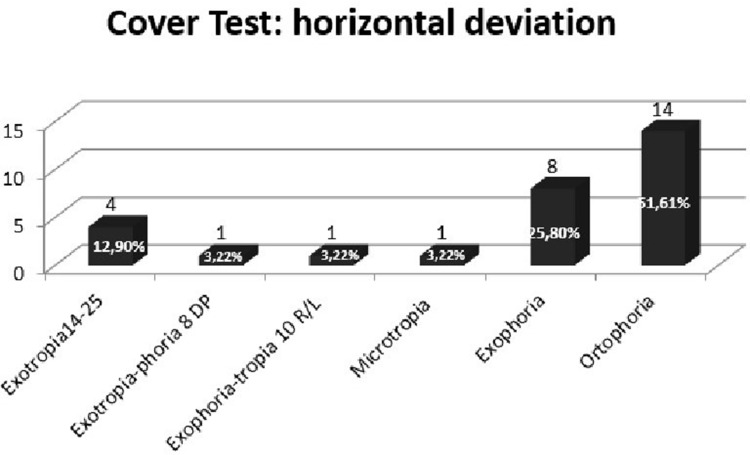
At the first orthoptic evaluation, 45.16% of patients showed strabismus, 41.93% exotropia (25% of cases intermittent), 3.22% esotropia, and 6.45% vertical deviation. Later evaluation showed strabismus in 25.80% of patients, exotropia in 19.35% (9.67% intermittent), esotropia in 3.22%, and vertical deviation in 3.22%. Assessment of eye motility study showed 51.6% overaction of the inferior oblique and hypofunction of the superior rectus, and 18% overaction of the lateral rectus and hypofunction of the medial rectus. According to our results, alterations in OM and strabismus in RP patients are not correlated with age or high refractive defect. Therefore, motility disorders and strabismus are attributed to a genetic factor to which men are more susceptible.
The incidence of OM disorder was 77.42%, and strabismus was present in 45.16% of patients.
评估视网膜色素变性(RP)患者样本及对照样本中的眼球运动(OM)障碍和斜视情况。
在这项横断面回顾性分析中,我们研究了一组平均年龄为48.74岁、基于斯内伦视力表平均视力为7/10的RP患者样本,以及一组平均年龄(男性49岁,女性47岁)、性别相似且平均视力为9.9/10的对照患者样本,目的是评估RP患者中OM改变与斜视之间基于年龄、高度屈光不正或双眼视力严重受损的相关性。检查遵循病史询问和最佳矫正视力测试方案,以及全面的眼部检查、角膜反射、遮盖试验、OM、 Hess屏和Lang试验。
在首次斜视检查评估中,45.16%的患者表现为斜视,41.93%为外斜视(25%为间歇性病例),3.22%为内斜视,6.45%为垂直偏斜。后续评估显示25.80%的患者存在斜视,19.35%为外斜视(9.67%为间歇性),3.22%为内斜视,3.22%为垂直偏斜。眼球运动研究评估显示,下斜肌亢进和上直肌功能减退占51.6%,外直肌亢进和内直肌功能减退占18%。根据我们的结果,RP患者的OM改变和斜视与年龄或高度屈光不正无关。因此,运动障碍和斜视归因于男性更易患的遗传因素。
OM障碍的发生率为77.42%,45.16%的患者存在斜视。