Melo-Carrillo Agustin, Strassman Andrew M, Broide Ron, Adams Aubrey, Dabruzzo Brett, Brin Mitchell, Burstein Rami
Department of Anesthesia, Critical Care and Pain Medicine, Beth Israel Deaconess Medical Center. Boston, MA 02115, USA.
Harvard Medical School, Harvard University, Boston, MA 02115, USA.
Brain. 2024 Aug 1;147(8):2884-2896. doi: 10.1093/brain/awae062.
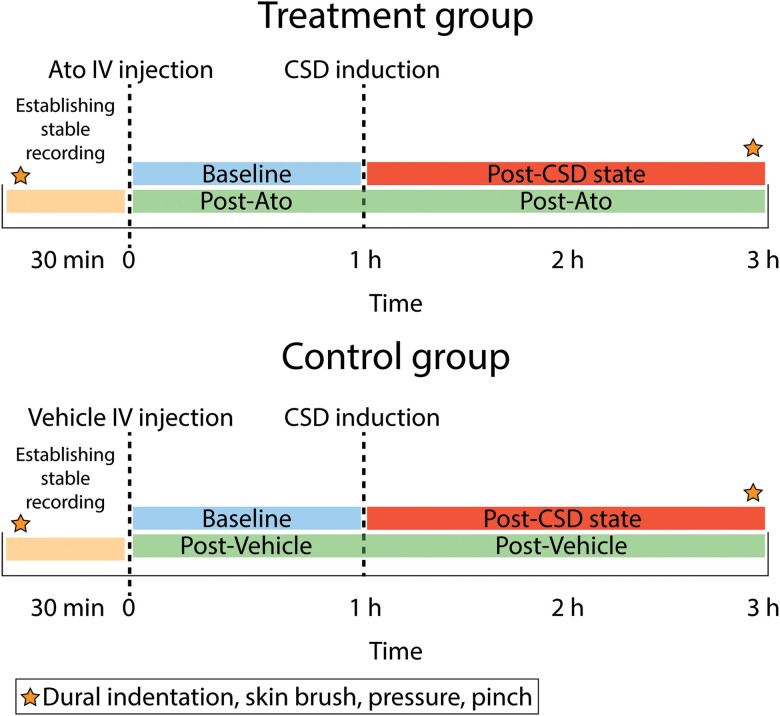
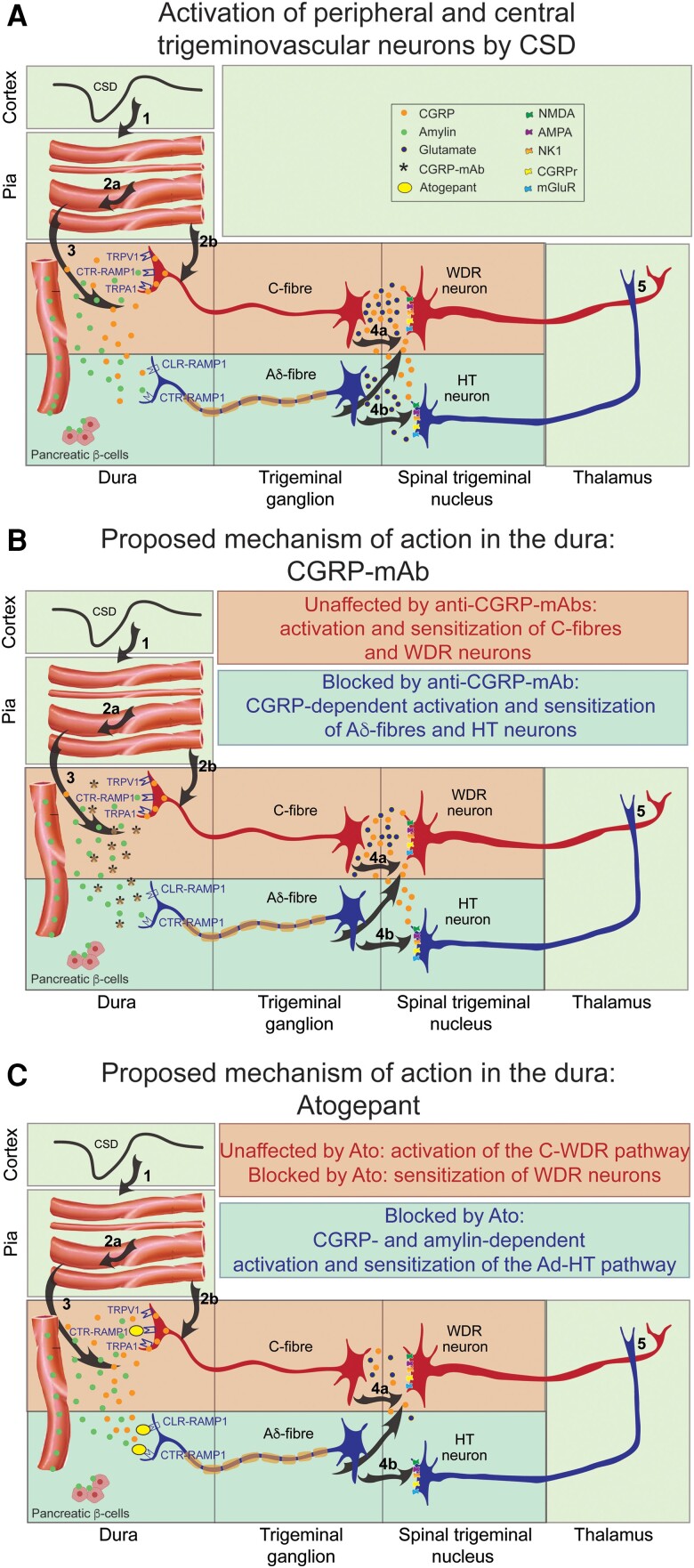
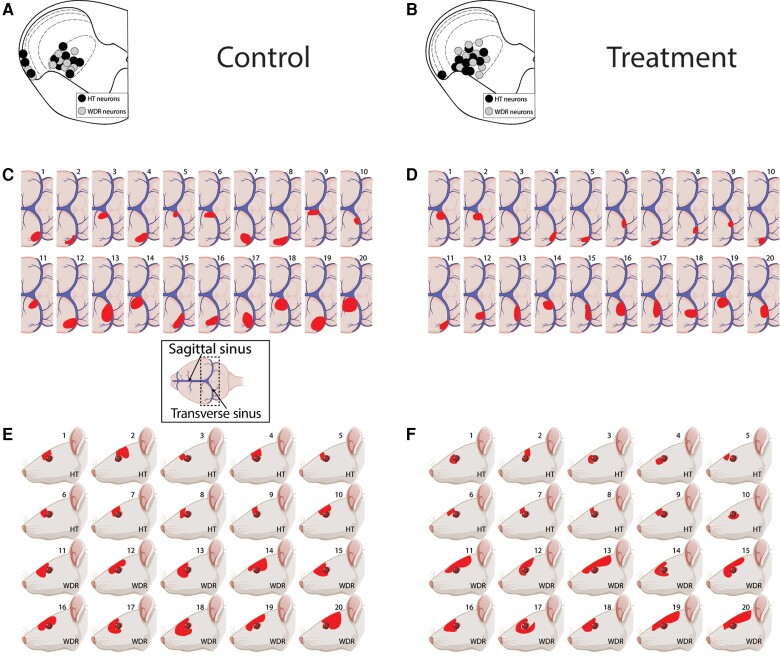
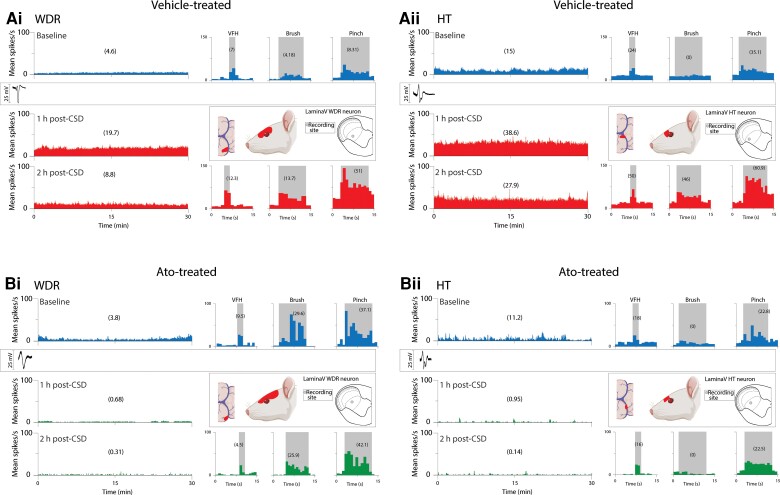
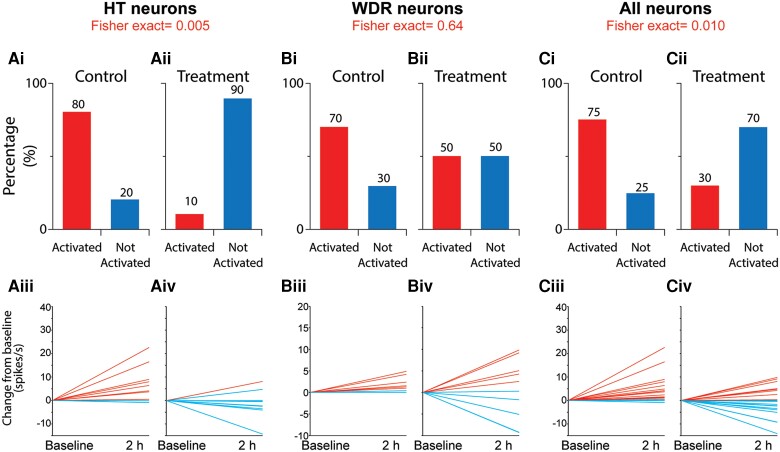
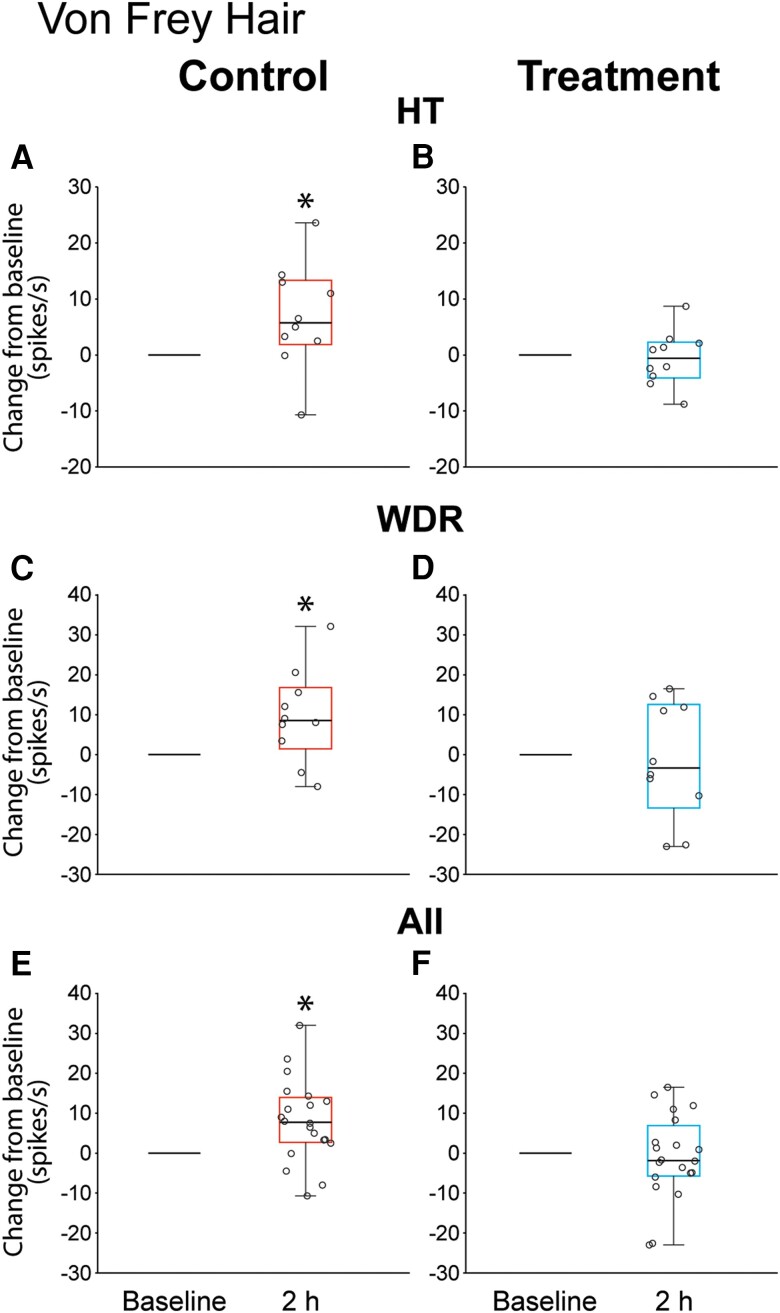
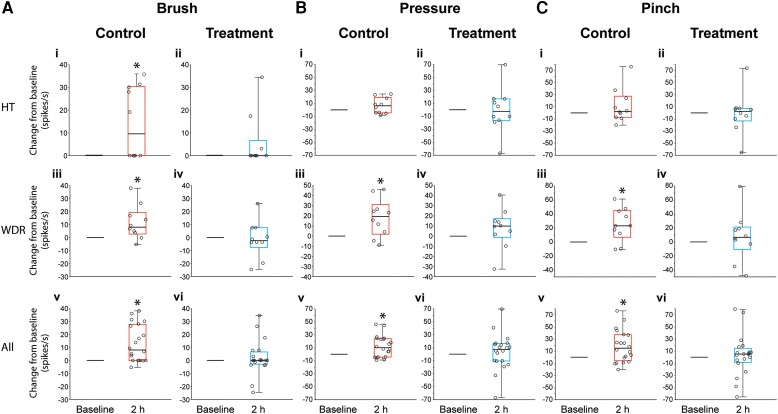
Recently, we showed that while atogepant-a small-molecule calcitonin gene-related peptide (CGRP) receptor antagonist-does not fully prevent activation of meningeal nociceptors, it significantly reduces a cortical spreading depression (CSD)-induced early response probability in C fibres and late response probability in Aδ fibres. The current study investigates atogepant effect on CSD-induced activation and sensitization of high threshold (HT) and wide dynamic range (WDR) central dura-sensitive trigeminovascular neurons. In anaesthetized male rats, single-unit recordings were used to assess effects of atogepant (5 mg/kg) versus vehicle on CSD-induced activation and sensitization of HT and WDR trigeminovascular neurons. Single cell analysis of atogepant pretreatment effects on CSD-induced activation and sensitization of central trigeminovascular neurons in the spinal trigeminal nucleus revealed the ability of this small molecule CGRP receptor antagonist to prevent activation and sensitization of nearly all HT neurons (8/10 versus 1/10 activated neurons in the control versus treated groups, P = 0.005). In contrast, atogepant pretreatment effects on CSD-induced activation and sensitization of WDR neurons revealed an overall inability to prevent their activation (7/10 versus 5/10 activated neurons in the control versus treated groups, P = 0.64). Unexpectedly however, in spite of atogepant's inability to prevent activation of WDR neurons, it prevented their sensitization (as reflected their responses to mechanical stimulation of the facial receptive field before and after the CSD). Atogepant' ability to prevent activation and sensitization of HT neurons is attributed to its preferential inhibitory effects on thinly myelinated Aδ fibres. Atogepant's inability to prevent activation of WDR neurons is attributed to its lesser inhibitory effects on the unmyelinated C fibres. Molecular and physiological processes that govern neuronal activation versus sensitization can explain how reduction in CGRP-mediated slow but not glutamate-mediated fast synaptic transmission between central branches of meningeal nociceptors and nociceptive neurons in the spinal trigeminal nucleus can prevent their sensitization but not activation.
最近,我们发现,虽然小分子降钙素基因相关肽(CGRP)受体拮抗剂阿托格潘不能完全阻止脑膜伤害感受器的激活,但它能显著降低皮层扩散性抑制(CSD)诱导的C纤维早期反应概率和Aδ纤维晚期反应概率。本研究调查了阿托格潘对CSD诱导的高阈值(HT)和广动力范围(WDR)中枢硬脑膜敏感三叉神经血管神经元激活和敏化的影响。在麻醉的雄性大鼠中,采用单单位记录法评估阿托格潘(5mg/kg)与溶剂对照对CSD诱导的HT和WDR三叉神经血管神经元激活和敏化的影响。对阿托格潘预处理对脊髓三叉神经核中CSD诱导的中枢三叉神经血管神经元激活和敏化的影响进行单细胞分析,结果显示这种小分子CGRP受体拮抗剂能够阻止几乎所有HT神经元的激活和敏化(对照组与治疗组中激活神经元分别为1/10和8/10,P = 0.005)。相比之下,阿托格潘预处理对CSD诱导的WDR神经元激活和敏化作用显示其总体上无法阻止它们的激活(对照组与治疗组中激活神经元分别为5/10和7/10,P = 0.64)。然而,出乎意料的是,尽管阿托格潘无法阻止WDR神经元的激活,但它能阻止其敏化(这反映在CSD前后它们对面部感受野机械刺激的反应上)。阿托格潘阻止HT神经元激活和敏化的能力归因于其对薄髓鞘Aδ纤维的优先抑制作用。阿托格潘无法阻止WDR神经元激活的原因是其对无髓鞘C纤维的抑制作用较小。控制神经元激活与敏化的分子和生理过程可以解释,CGRP介导的脑膜伤害感受器中枢分支与脊髓三叉神经核中伤害性神经元之间缓慢而非谷氨酸介导的快速突触传递减少,如何能够阻止它们的敏化而不是激活。