Division of Cancer Medicine, The University of Texas MD Anderson Cancer Center, Houston, Texas.
TRACTION (Translational Research to Advance Therapeutics and Innovation in Oncology), The University of Texas MD Anderson Cancer Center, Houston, Texas.
Clin Cancer Res. 2024 May 15;30(10):2121-2139. doi: 10.1158/1078-0432.CCR-23-1763.
Mutations in the ATM gene are common in multiple cancers, but clinical studies of therapies targeting ATM-aberrant cancers have yielded mixed results. Refinement of ATM loss of function (LOF) as a predictive biomarker of response is urgently needed.
We present the first disclosure and preclinical development of a novel, selective ATR inhibitor, ART0380, and test its antitumor activity in multiple preclinical cancer models. To refine ATM LOF as a predictive biomarker, we performed a comprehensive pan-cancer analysis of ATM variants in patient tumors and then assessed the ATM variant-to-protein relationship. Finally, we assessed a novel ATM LOF biomarker approach in retrospective clinical data sets of patients treated with platinum-based chemotherapy or ATR inhibition.
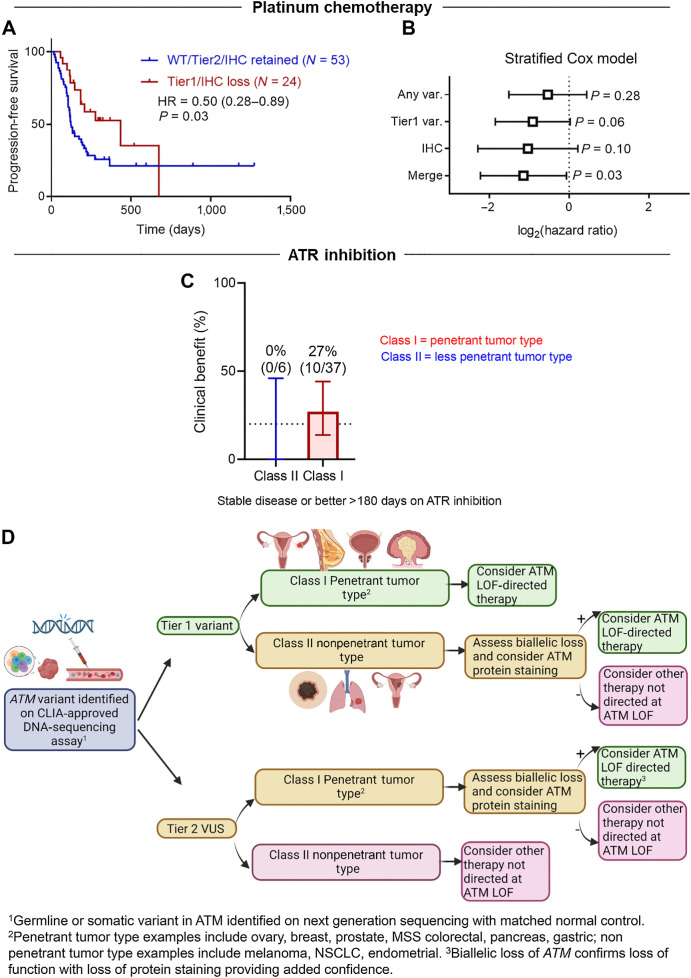
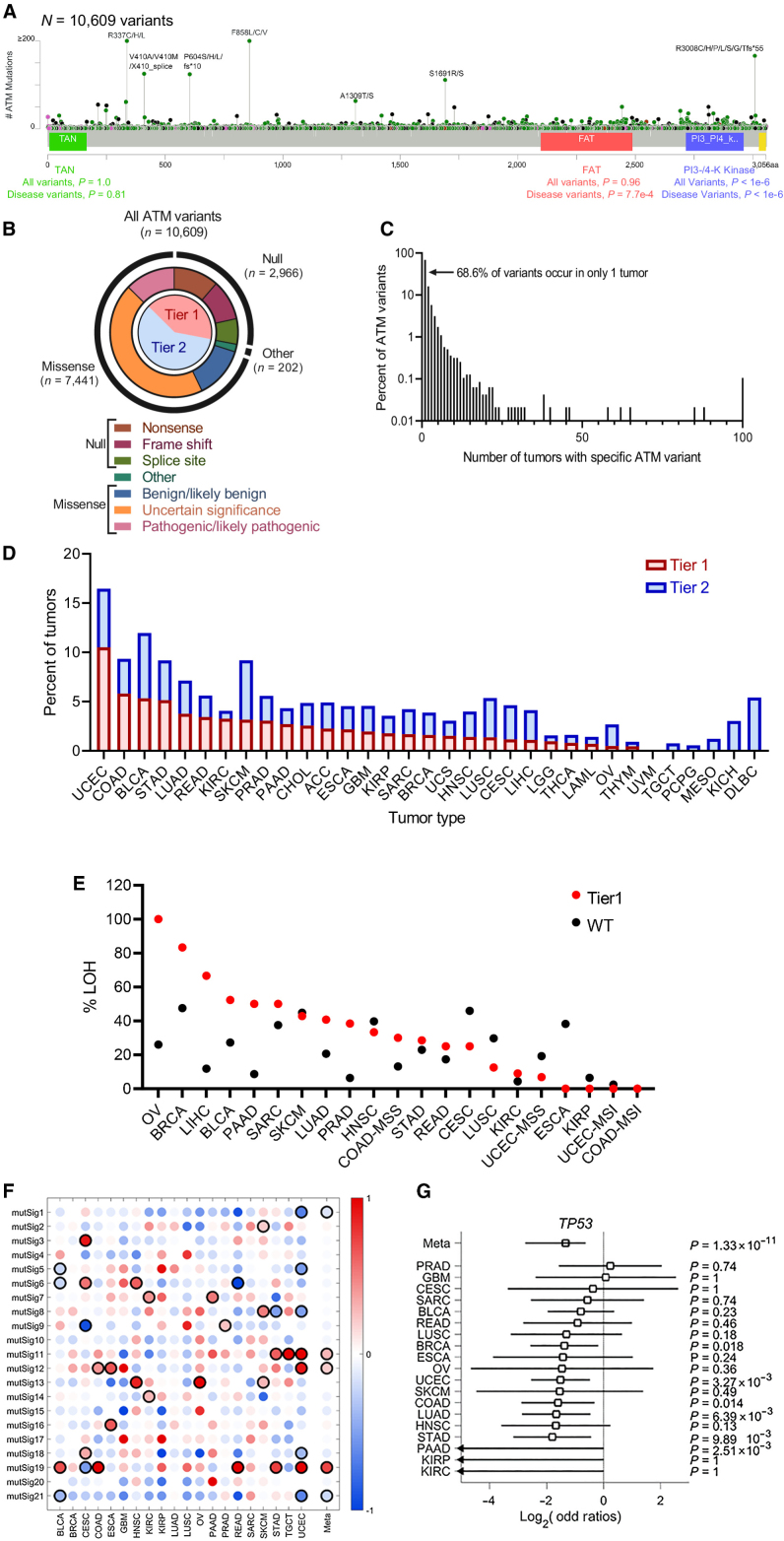
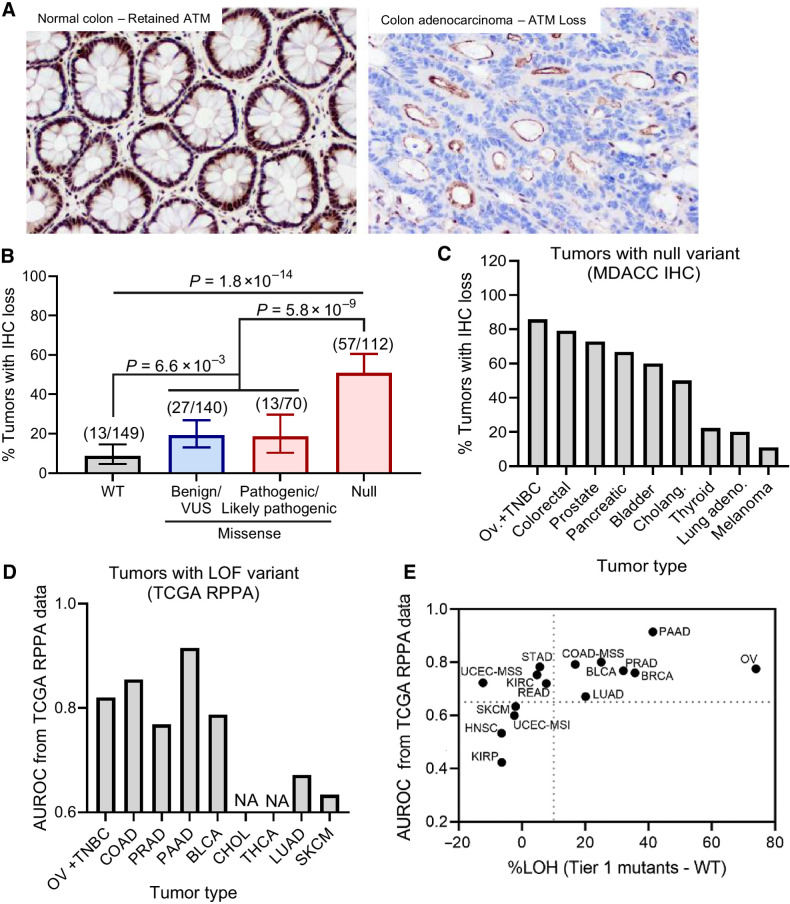
ART0380 had potent, selective antitumor activity in a range of preclinical cancer models with differing degrees of ATM LOF. Pan-cancer analysis identified 10,609 ATM variants in 8,587 patient tumors. Cancer lineage-specific differences were seen in the prevalence of deleterious (Tier 1) versus unknown/benign (Tier 2) variants, selective pressure for loss of heterozygosity, and concordance between a deleterious variant and ATM loss of protein (LOP). A novel ATM LOF biomarker approach that accounts for variant classification, relationship to ATM LOP, and tissue-specific penetrance significantly enriched for patients who benefited from platinum-based chemotherapy or ATR inhibition.
These data help to better define ATM LOF across tumor types in order to optimize patient selection and improve molecularly targeted therapeutic approaches for patients with ATM LOF cancers.
ATM 基因的突变在多种癌症中很常见,但针对 ATM 异常癌症的治疗方法的临床研究结果喜忧参半。迫切需要对 ATM 功能丧失(LOF)作为预测反应的生物标志物进行改进。
我们首次披露并开发了一种新型、选择性的 ATR 抑制剂 ART0380,并在多种临床前癌症模型中测试了其抗肿瘤活性。为了改进 ATM LOF 作为预测生物标志物,我们对患者肿瘤中的 ATM 变体进行了全面的泛癌症分析,然后评估了 ATM 变体与蛋白质的关系。最后,我们在接受铂类化疗或 ATR 抑制治疗的患者的回顾性临床数据集评估了一种新的 ATM LOF 生物标志物方法。
ART0380 在具有不同程度 ATM LOF 的一系列临床前癌症模型中具有强大的、选择性的抗肿瘤活性。泛癌症分析在 8587 例患者肿瘤中鉴定出 10609 个 ATM 变体。在有害(Tier 1)与未知/良性(Tier 2)变体的流行率、杂合性丢失的选择压力以及有害变体与 ATM 蛋白丢失(LOP)之间的一致性方面,观察到癌症谱系特异性差异。一种新的 ATM LOF 生物标志物方法,该方法考虑了变体分类、与 ATM LOP 的关系以及组织特异性穿透性,可显著富集从铂类化疗或 ATR 抑制中获益的患者。
这些数据有助于更好地定义肿瘤类型中的 ATM LOF,以优化患者选择,并改善 ATM LOF 癌症患者的分子靶向治疗方法。