Vicente Unai, Ara Alberto, Palacín-Lois María, Marco-Pallarés Josep
Department of Cognition, Development and Educational Psychology, Institute of Neurosciences, University of Barcelona, Barcelona, Spain.
Department of Social and Quantitative Psychology, University of Barcelona, Barcelona, Spain.
Front Psychol. 2024 Feb 14;15:1272841. doi: 10.3389/fpsyg.2024.1272841. eCollection 2024.
The pursuit of convergence and the social behavioral adjustment of conformity are fundamental cooperative behaviors that help people adjust their mental frameworks to reach a common goal. However, while social psychology has extensively studied conformity by its influence context, there is still plenty to investigate about the neural cognitive mechanisms involved in this behavior.
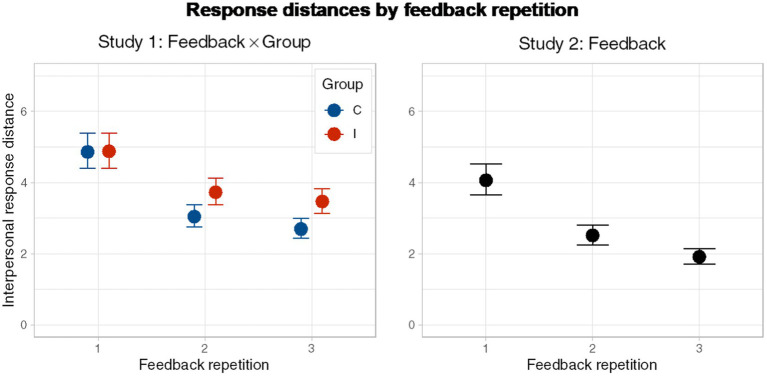
We proposed a paradigm with two phases, a pre-activation phase to enhance cooperative tendencies and, later, a social decision-making phase in which dyads had to make a perceptual estimation in three consecutive trials and could converge in their decisions without an explicit request or reward to do so. In Study 1, 80 participants were divided in two conditions. In one condition participants did the pre-activation phase alone, while in the other condition the two participants did it with their partners and could interact freely. In Study 2, we registered the electroencephalographical (EEG) activity of 36 participants in the social decision-making phase.
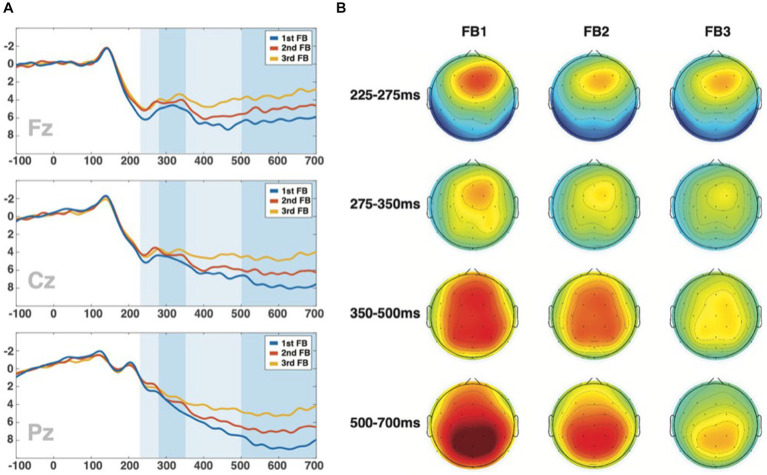
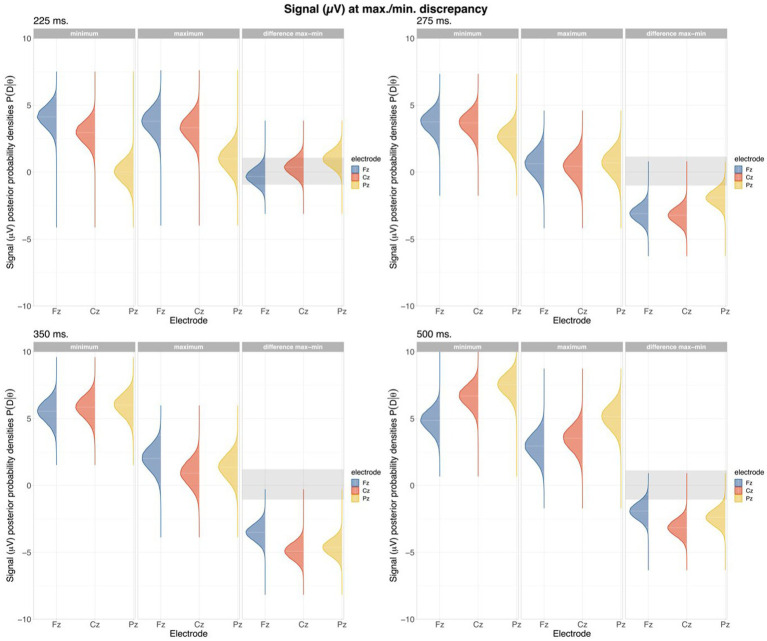
Study 1 showed behavioral evidence of higher spontaneous convergence in participants who interacted in the pre-activation phase. Event related Potentials (ERP) recorded in Study 2 revealed signal differences in response divergence in different time intervals. Time-frequency analysis showed theta, alpha, and beta evidence related to cognitive control, attention, and reward processing associated with social convergence.
Current results support the spontaneous convergence of behavior in dyads, with increased behavioral adjustment in those participants who have previously cooperated. In addition, neurophysiological components were associated with discrepancy levels between participants, and supported the validity of the experimental paradigm to study spontaneous social behavioral adaptation in experimental settings.
追求趋同和从众的社会行为调整是基本的合作行为,有助于人们调整心理框架以达成共同目标。然而,虽然社会心理学已通过其影响背景对从众进行了广泛研究,但对于这种行为所涉及的神经认知机制仍有许多有待探究之处。
我们提出了一个分两个阶段的范式,一个预激活阶段以增强合作倾向,随后是一个社会决策阶段,在该阶段中,二人组必须在连续三次试验中进行感知估计,并且能够在没有明确要求或奖励的情况下使他们的决策趋同。在研究1中,80名参与者被分为两种条件。在一种条件下,参与者单独进行预激活阶段,而在另一种条件下,两名参与者与他们的伙伴一起进行预激活阶段并且可以自由互动。在研究2中,我们记录了36名参与者在社会决策阶段的脑电图(EEG)活动。
研究1显示,在预激活阶段进行互动的参与者中存在更高自发趋同的行为证据。研究2中记录的事件相关电位(ERP)揭示了在不同时间间隔内反应差异的信号差异。时频分析显示了与认知控制、注意力以及与社会趋同相关的奖励处理有关的θ波、α波和β波证据。
当前结果支持二人组行为的自发趋同,先前合作的参与者的行为调整有所增加。此外,神经生理成分与参与者之间的差异水平相关,并支持该实验范式在实验环境中研究自发社会行为适应的有效性。