Jeon Youchul, Li Lei, Bhatia Mudit, Ryu Hodon, Santo Domingo Jorge W, Brown Jess, Goetz Jake, Seo Youngwoo
Department of Civil and Environmental Engineering, University of Toledo, Mail Stop 307, 3006 Nitschke Hall, Toledo, OH 43606, United States of America.
Water Infrastructure Division, Center for Environmental Solutions and Emergency Response, U.S. Environmental Protection Agency, Cincinnati, OH 45268, United States of America.
Sci Total Environ. 2024 Jun 1;927:171301. doi: 10.1016/j.scitotenv.2024.171301. Epub 2024 Feb 28.
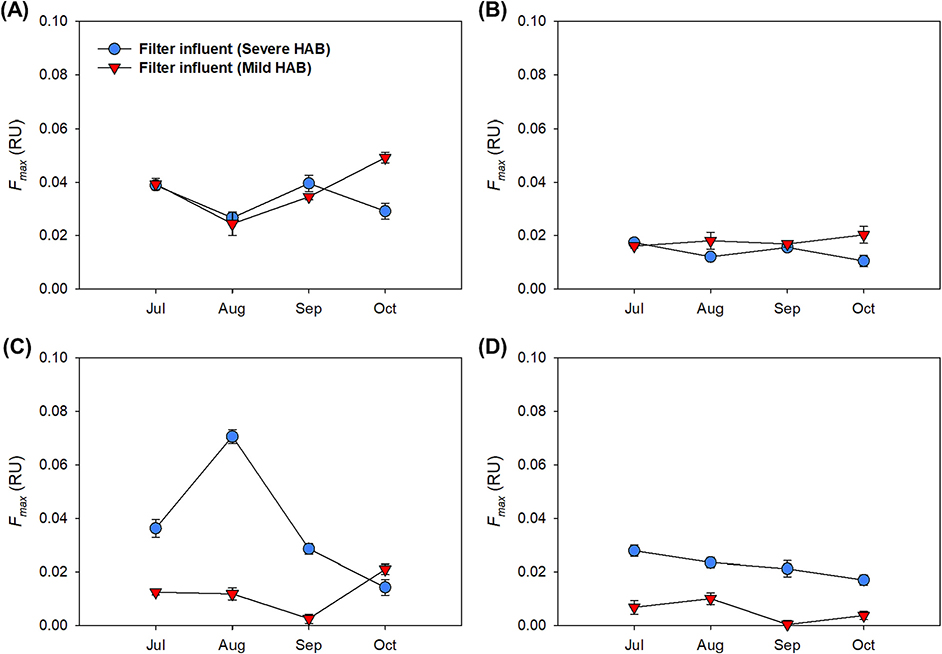
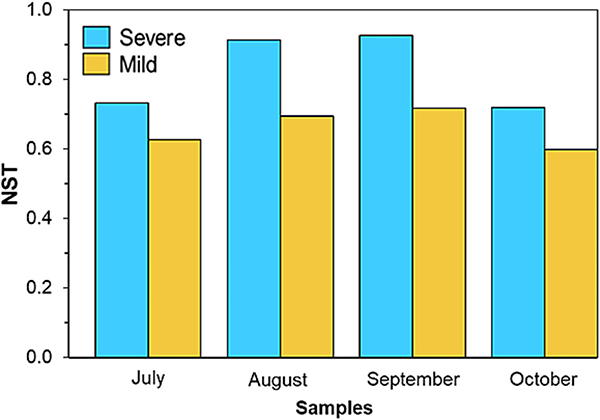
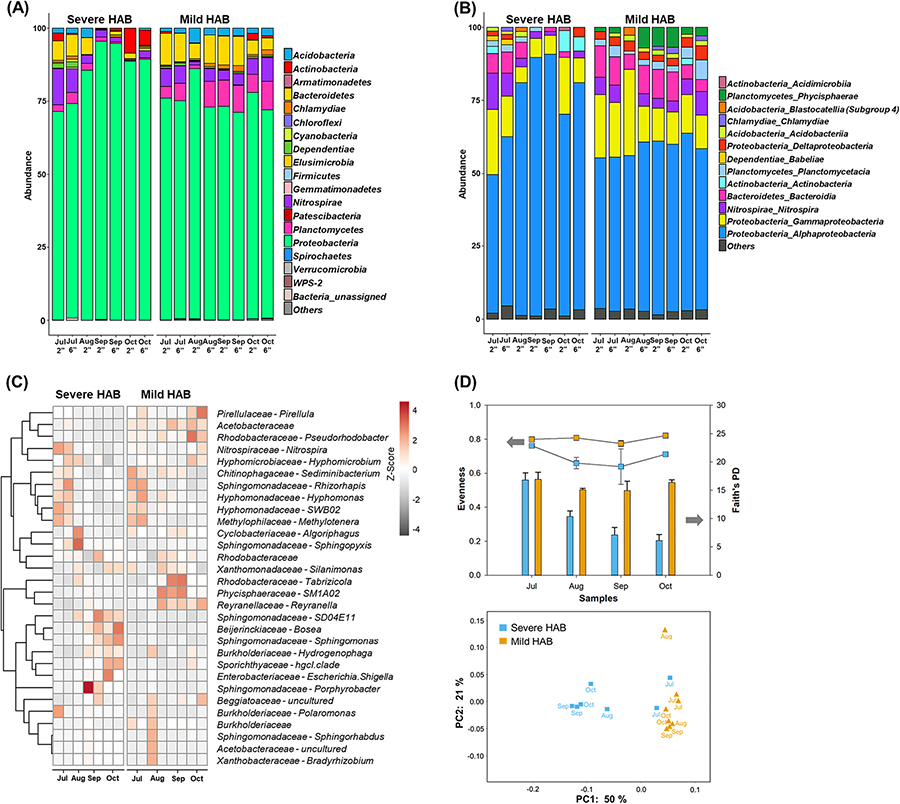
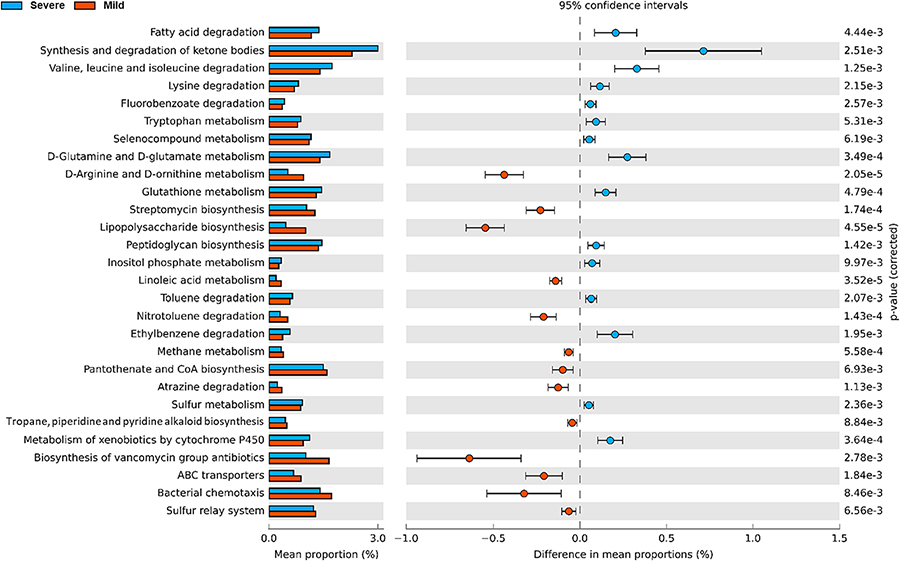
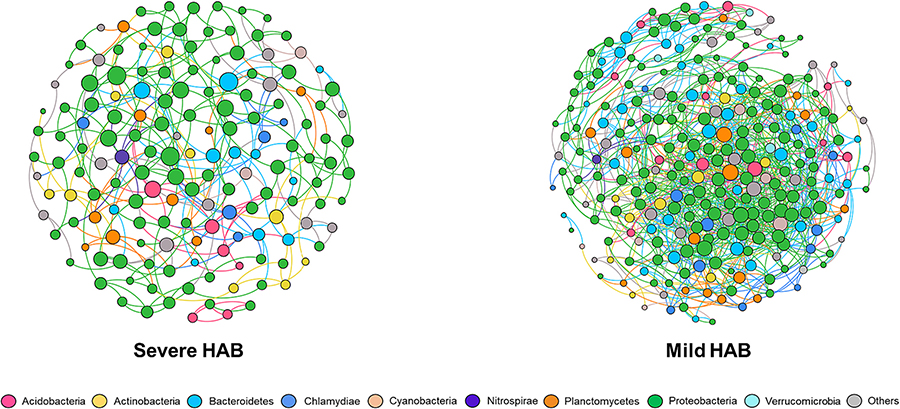
The occurrence of harmful algal blooms (HABs) in freshwater environments has been expanded worldwide with growing frequency and severity. HABs can pose a threat to public water supplies, raising concerns about safety of treated water. Many studies have provided valuable information about the impacts of HABs and management strategies on the early-stage treatment processes (e.g., pre-oxidation and coagulation/flocculation) in conventional drinking water treatment plants (DWTPs). However, the potential effect of HAB-impacted water in the granular media filtration has not been well studied. Biologically-active filters (BAFs), which are used in drinking water treatment and rely largely on bacterial community interactions, have not been examined during HABs in full-scale DWTPs. In this study, we assessed the bacterial community structure of BAFs, functional profiles, assembly processes, and bio-interactions in the community during both severe and mild HABs. Our findings indicate that bacterial diversity in BAFs significantly decreases during severe HABs due to the predominance of bloom-associated bacteria (e.g., Spingopyxis, Porphyrobacter, and Sphingomonas). The excitation-emission matrix combined with parallel factor analysis (EEM-PARAFAC) confirmed that filter influent affected by the severe HAB contained a higher portion of protein-like substances than filter influent samples during a mild bloom. In addition, BAF community functions showed increases in metabolisms associated with intracellular algal organic matter (AOM), such as lipids and amino acids, during severe HABs. Further ecological process and network analyses revealed that severe HAB, accompanied by the abundance of bloom-associated taxa and increased nutrient availability, led to not only strong stochastic processes in the assembly process, but also a bacterial community with lower complexity in BAFs. Overall, this study provides deeper insights into BAF bacterial community structure, function, and assembly in response to HABs.
淡水环境中有害藻华(HABs)的发生在全球范围内不断扩大,频率和严重程度日益增加。有害藻华会对公共供水构成威胁,引发人们对处理后水安全性的担忧。许多研究提供了关于有害藻华的影响以及管理策略对传统饮用水处理厂(DWTPs)早期处理过程(如预氧化和混凝/絮凝)影响的宝贵信息。然而,受有害藻华影响的水在颗粒介质过滤中的潜在影响尚未得到充分研究。生物活性滤池(BAFs)用于饮用水处理,很大程度上依赖细菌群落相互作用,但在全规模饮用水处理厂发生有害藻华期间尚未得到检验。在本研究中,我们评估了严重和轻度有害藻华期间生物活性滤池的细菌群落结构、功能概况、组装过程以及群落中的生物相互作用。我们的研究结果表明,在严重有害藻华期间,由于与藻华相关细菌(如纺锤鞘菌属、卟啉杆菌属和鞘氨醇单胞菌属)占主导地位,生物活性滤池中的细菌多样性显著降低。结合平行因子分析的激发 - 发射矩阵(EEM - PARAFAC)证实,受严重有害藻华影响的滤池进水比轻度藻华期间的滤池进水样品含有更高比例的类蛋白质物质。此外,在严重有害藻华期间,生物活性滤池群落功能显示与细胞内藻类有机物(AOM)相关的代谢增加,如脂质和氨基酸。进一步的生态过程和网络分析表明,严重有害藻华伴随着与藻华相关类群的丰富和养分可用性增加,不仅导致组装过程中强烈的随机过程,还导致生物活性滤池中细菌群落的复杂性降低。总体而言,本研究为生物活性滤池细菌群落结构、功能以及对有害藻华的响应组装提供了更深入的见解。