Department of Laboratory Medicine, National Taiwan University Hospital, Taipei, Taiwan.
Department of Laboratory Medicine, College of Medicine, National Taiwan University, Taipei, Taiwan.
Front Immunol. 2024 Feb 15;15:1334882. doi: 10.3389/fimmu.2024.1334882. eCollection 2024.
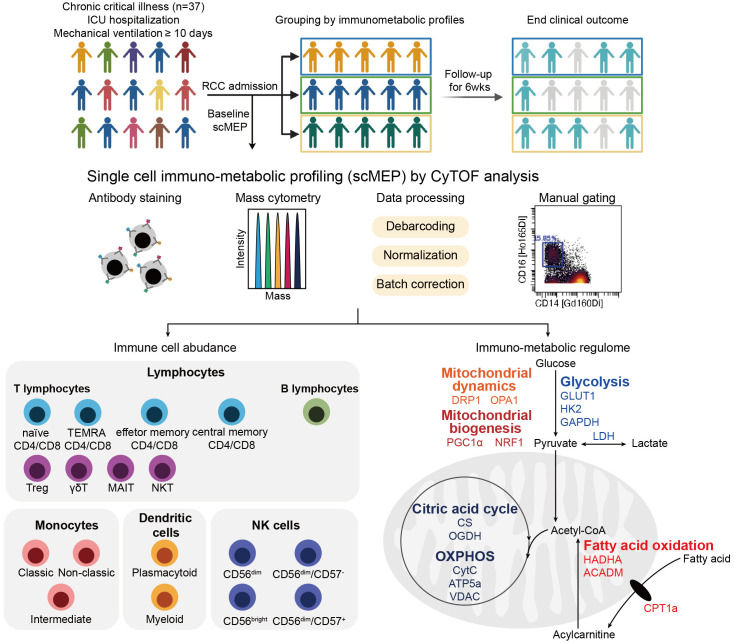
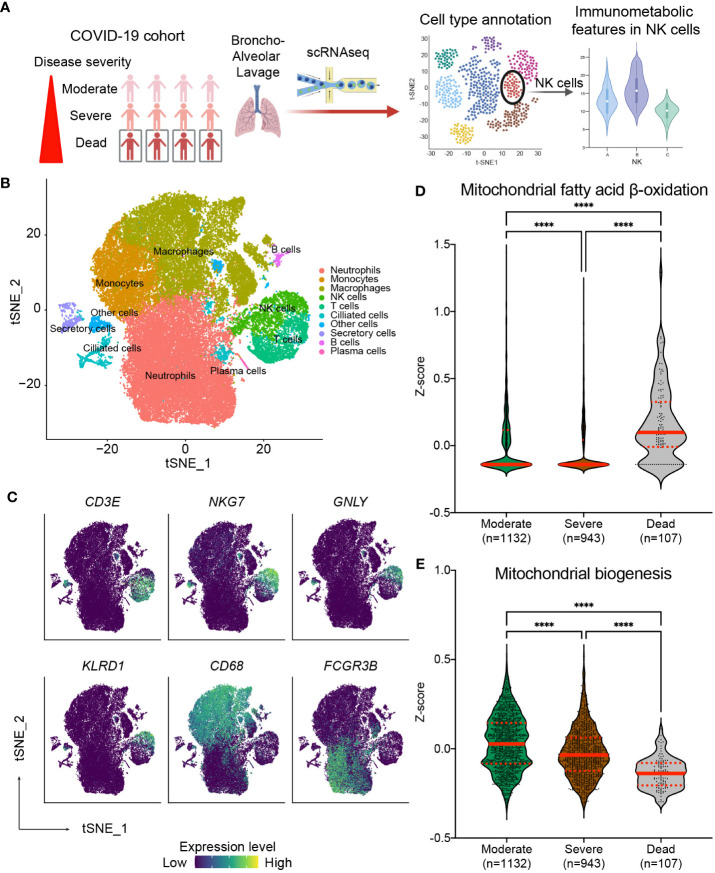
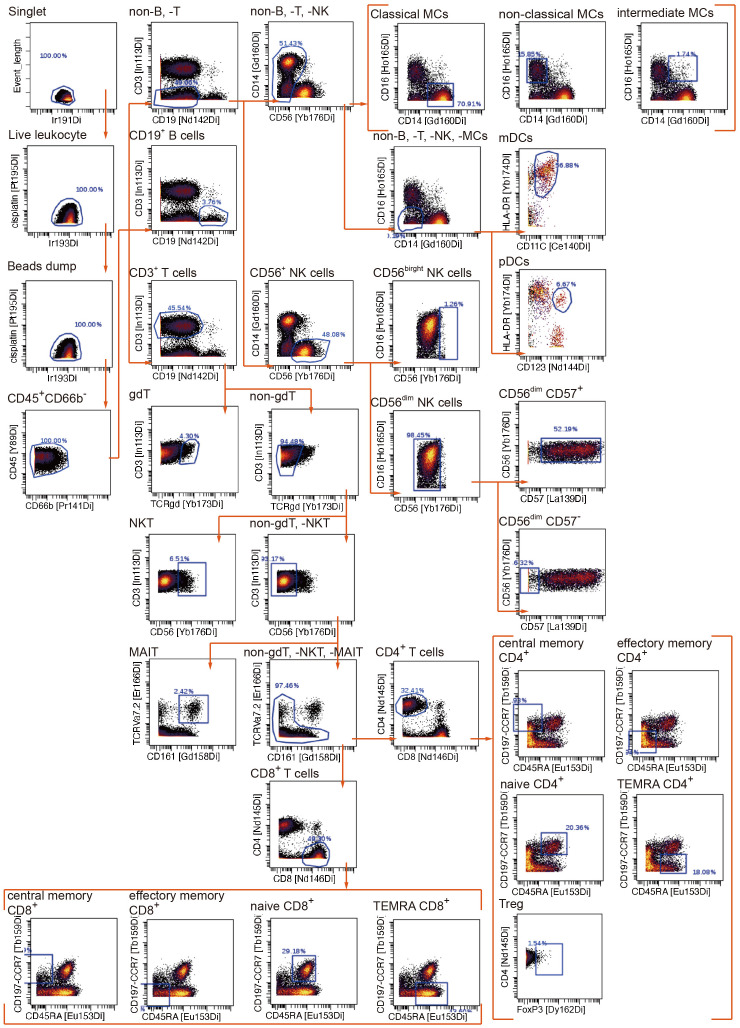
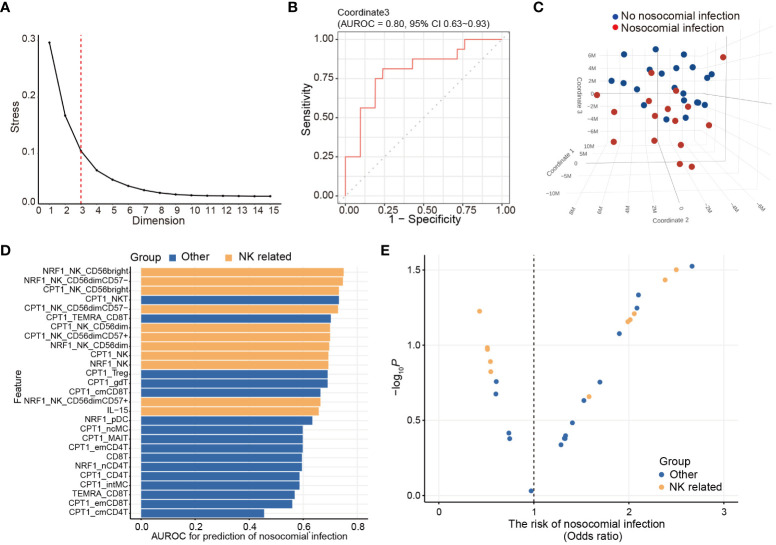
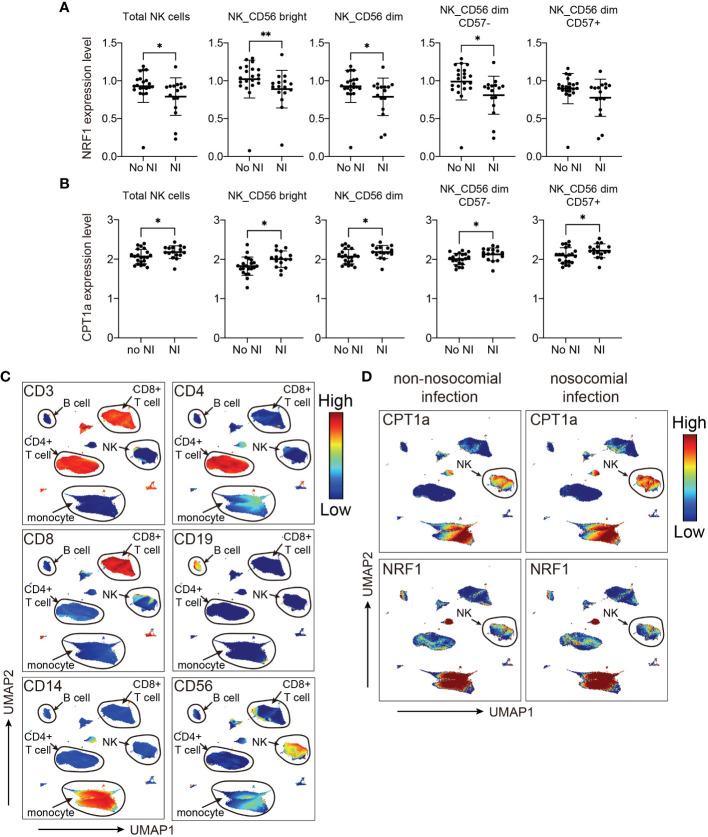
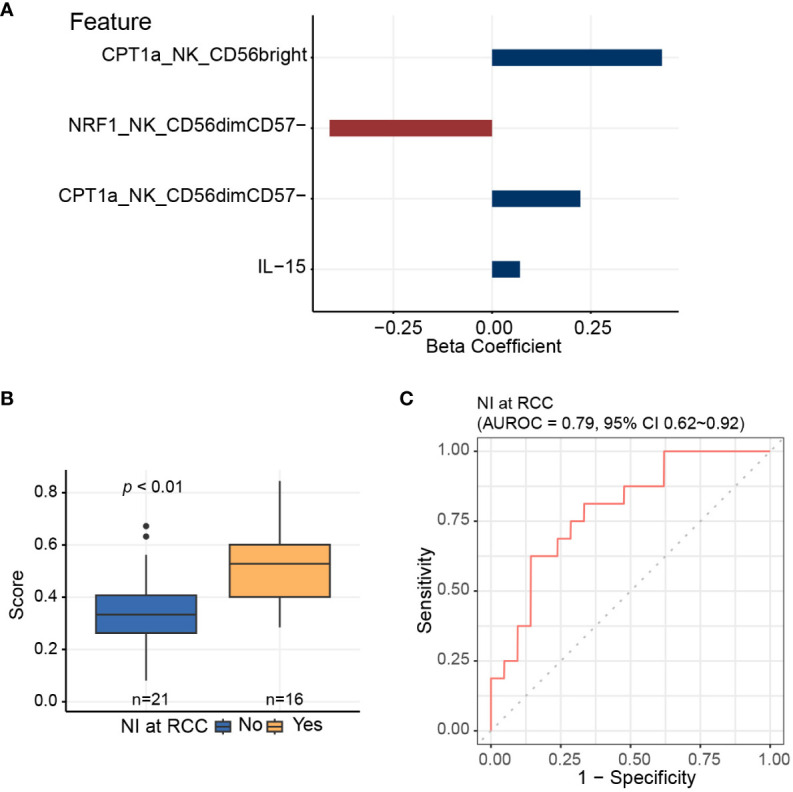
Immunosuppression increases the risk of nosocomial infection in patients with chronic critical illness. This exploratory study aimed to determine the immunometabolic signature associated with nosocomial infection during chronic critical illness. We prospectively recruited patients who were admitted to the respiratory care center and who had received mechanical ventilator support for more than 10 days in the intensive care unit. The study subjects were followed for the occurrence of nosocomial infection until 6 weeks after admission, hospital discharge, or death. The cytokine levels in the plasma samples were measured. Single-cell immunometabolic regulome profiling by mass cytometry, which analyzed 16 metabolic regulators in 21 immune subsets, was performed to identify immunometabolic features associated with the risk of nosocomial infection. During the study period, 37 patients were enrolled, and 16 patients (43.2%) developed nosocomial infection. Unsupervised immunologic clustering using multidimensional scaling and logistic regression analyses revealed that expression of nuclear respiratory factor 1 (NRF1) and carnitine palmitoyltransferase 1a (CPT1a), key regulators of mitochondrial biogenesis and fatty acid transport, respectively, in natural killer (NK) cells was significantly associated with nosocomial infection. Downregulated NRF1 and upregulated CPT1a were found in all subsets of NK cells from patients who developed a nosocomial infection. The risk of nosocomial infection is significantly correlated with the predictive score developed by selecting NK cell-specific features using an elastic net algorithm. Findings were further examined in an independent cohort of COVID-19-infected patients, and the results confirm that COVID-19-related mortality is significantly associated with mitochondria biogenesis and fatty acid oxidation pathways in NK cells. In conclusion, this study uncovers that NK cell-specific immunometabolic features are significantly associated with the occurrence and fatal outcomes of infection in critically ill population, and provides mechanistic insights into NK cell-specific immunity against microbial invasion in critical illness.
免疫抑制会增加慢性危重病患者发生医院感染的风险。本探索性研究旨在确定与慢性危重病期间医院感染相关的免疫代谢特征。我们前瞻性招募了因慢性危重病而入住呼吸治疗中心并接受机械通气支持超过 10 天的患者。研究对象在入院后 6 周内发生医院感染、出院或死亡时被随访。测量了血浆样本中的细胞因子水平。通过质谱流式细胞术进行单细胞免疫代谢调节组谱分析,该分析对 21 个免疫亚群中的 16 个代谢调节剂进行了分析,以确定与医院感染风险相关的免疫代谢特征。在研究期间,共纳入 37 例患者,其中 16 例(43.2%)发生医院感染。使用多维尺度分析和逻辑回归分析的无监督免疫聚类显示,自然杀伤 (NK) 细胞中核呼吸因子 1 (NRF1) 和肉碱棕榈酰转移酶 1a (CPT1a) 的表达与医院感染显著相关,NRF1 和 CPT1a 分别是线粒体生物发生和脂肪酸转运的关键调节因子。在发生医院感染的所有 NK 细胞亚群中均发现下调的 NRF1 和上调的 CPT1a。使用弹性网络算法选择 NK 细胞特异性特征来开发预测评分,发现该评分与医院感染风险显著相关。在 COVID-19 感染患者的独立队列中进一步检验了这些发现,结果证实 COVID-19 相关死亡率与 NK 细胞中线粒体生物发生和脂肪酸氧化途径显著相关。总之,本研究揭示了 NK 细胞特异性免疫代谢特征与危重病患者感染的发生和致死结局显著相关,并为 NK 细胞特异性免疫抵抗危重病期间微生物入侵提供了机制见解。