Department of Radiation Oncology, Universitätsklinikum Erlangen, Friedrich-Alexander-Universität Erlangen-Nürnberg (FAU), 91054 Erlangen, Germany; Comprehensive Cancer Center Erlangen-EMN (CCC ER-EMN), 91054 Erlangen, Germany.
Z Med Phys. 2024 Aug;34(3):358-370. doi: 10.1016/j.zemedi.2024.02.002. Epub 2024 Feb 29.
The first aim of the study was to create a general template for analyzing potential failures in external beam radiotherapy, EBRT, using the process failure mode and effects analysis (PFMEA). The second aim was to modify the action priority (AP), a novel prioritization method originally introduced by the Automotive Industry Action Group (AIAG), to work with different severity, occurrence, and detection rating systems used in radiation oncology.
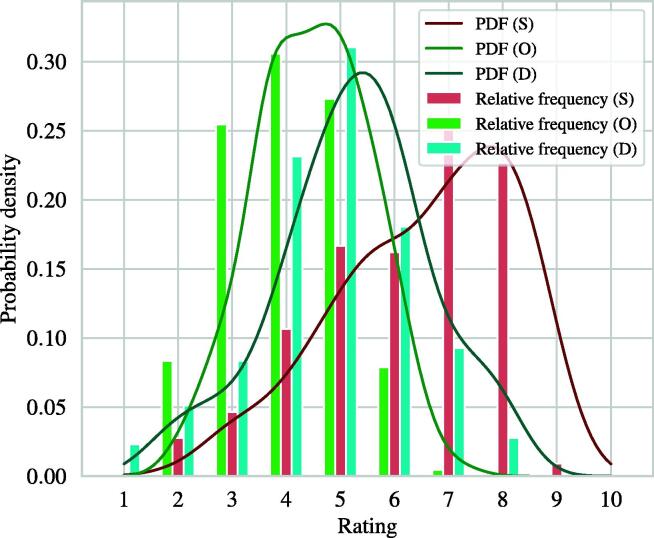
The AIAG PFMEA approach was employed in combination with an extensive literature survey to develop the EBRT-PFMEA template. Subsets of high-risk failure modes found through the literature survey were added to the template where applicable. Our modified AP for radiation oncology (RO AP) was defined using a weighted sum of severity, occurrence, and detectability. Then, Monte Carlo simulations were conducted to compare the original AIAG AP, the RO AP, and the risk priority number (RPN). The results of the simulations were used to determine the number of additional corrective actions per failure mode and to parametrize the RO AP to our department's rating system.
An EBRT-PFMEA template comprising 75 high-risk failure modes could be compiled. The AIAG AP required 1.7 additional corrective actions per failure mode, while the RO AP ranged from 1.3 to 3.5, and the RPN required 3.6. The RO AP could be parametrized so that it suited our rating system and evaluated severity, occurrence, and detection ratings equally to the AIAG AP.
An adjustable EBRT-PFMEA template is provided which can be used as a practical starting point for creating institution-specific templates. Moreover, the RO AP introduces transparent action levels that can be adapted to any rating system.
本研究的首要目的是利用失效模式与影响分析(PFMEA)创建一个用于分析外照射放射治疗(EBRT)中潜在失效的通用模板。第二个目的是修改优先级(AP),这是汽车工业行动小组(AIAG)最初引入的一种新颖的优先级排序方法,使其适用于放射肿瘤学中使用的不同严重程度、发生频率和检测率系统。
采用 AIAG PFMEA 方法并结合广泛的文献调查来开发 EBRT-PFMEA 模板。通过文献调查发现的高风险失效模式子集在适用的情况下添加到模板中。我们为放射肿瘤学(RO)定义的修改后的 AP(RO AP)是使用严重程度、发生频率和可检测性的加权和来定义的。然后,进行蒙特卡罗模拟,以比较原始 AIAG AP、RO AP 和风险优先数(RPN)。模拟的结果用于确定每个失效模式的额外纠正措施的数量,并对 RO AP 进行参数化以适应我们部门的评级系统。
可以编制一个包含 75 个高风险失效模式的 EBRT-PFMEA 模板。AIAG AP 每个失效模式需要 1.7 个额外的纠正措施,而 RO AP 范围为 1.3 至 3.5,RPN 需要 3.6。RO AP 可以进行参数化,使其适合我们的评级系统,并与 AIAG AP 一样平等地评估严重程度、发生频率和检测评级。
提供了一个可调节的 EBRT-PFMEA 模板,可作为创建机构特定模板的实用起点。此外,RO AP 引入了透明的行动水平,可以适应任何评级系统。