Department of Biochemistry, Jacobs School of Medicine and Biomedical Sciences, State University of New York at Buffalo, Buffalo, NY, 14203, USA.
Epigenetics Chromatin. 2024 Mar 1;17(1):5. doi: 10.1186/s13072-024-00530-0.
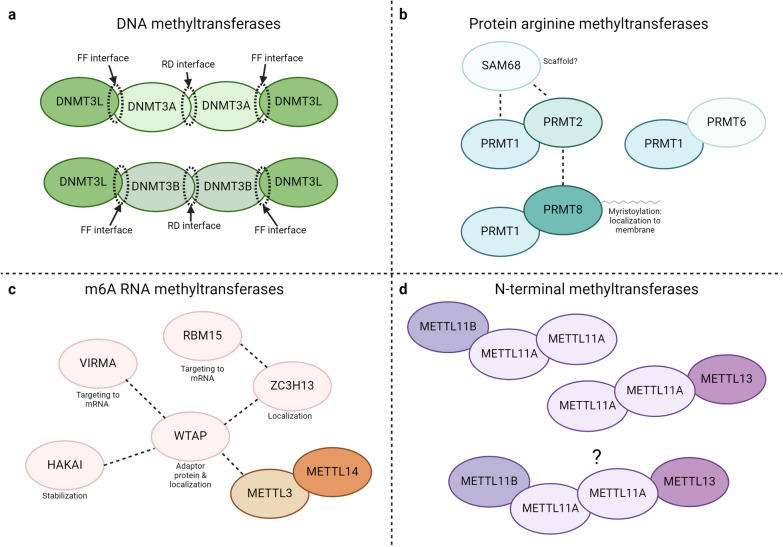
Protein and nucleic acid methylation are important biochemical modifications. In addition to their well-established roles in gene regulation, they also regulate cell signaling, metabolism, and translation. Despite this high biological relevance, little is known about the general regulation of methyltransferase function. Methyltransferases are divided into superfamilies based on structural similarities and further classified into smaller families based on sequence/domain/target similarity. While members within superfamilies differ in substrate specificity, their structurally similar active sites indicate a potential for shared modes of regulation. Growing evidence from one superfamily suggests a common regulatory mode may be through heterooligomerization with other family members. Here, we describe examples of methyltransferase regulation through intrafamily heterooligomerization and discuss how this can be exploited for therapeutic use.
蛋白质和核酸的甲基化是重要的生化修饰。除了在基因调控中已有明确的作用外,它们还调节细胞信号转导、代谢和翻译。尽管具有如此高的生物学相关性,但对于甲基转移酶功能的一般调节知之甚少。甲基转移酶根据结构相似性分为超家族,并根据序列/结构域/靶标相似性进一步分为较小的家族。虽然超家族内的成员在底物特异性上有所不同,但它们结构相似的活性部位表明存在共享调节模式的可能性。来自一个超家族的越来越多的证据表明,一种常见的调节模式可能是通过与其他家族成员的异源寡聚化。在这里,我们描述了通过家族内异源寡聚化调节甲基转移酶的例子,并讨论了如何将其用于治疗用途。