Curry Mary A, Cruz Rosángel E, Belter Lisa T, Schroth Mary K, Jarecki Jill
Cure SMA, 925 Busse Road, Elk Grove Village, IL, 60007, USA.
Neurol Ther. 2024 Jun;13(3):583-598. doi: 10.1007/s40120-024-00587-9. Epub 2024 Mar 2.
Spinal muscular atrophy (SMA) is an autosomal recessive neuromuscular disease characterized by progressive muscle weakness and atrophy. Clinical trial data suggest early diagnosis and treatment are critical. The purpose of this study was to evaluate neurology appointment wait times for newborn screening identified infants, pediatric cases mirroring SMA symptomatology, and cases in which SMA is suspected by the referring physician. Approaches for triaging and expediting referrals in the US were also explored.
Cure SMA surveyed healthcare professionals from two cohorts: (1) providers affiliated with SMA care centers and (2) other neurologists, pediatric neurologists, and neuromuscular specialists. Surveys were distributed directly and via Medscape Education, respectively, between July 9, 2020, and August 31, 2020.
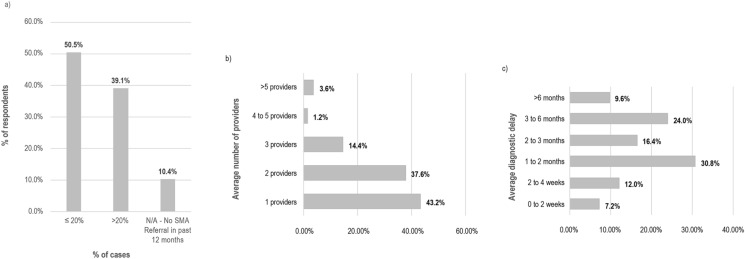
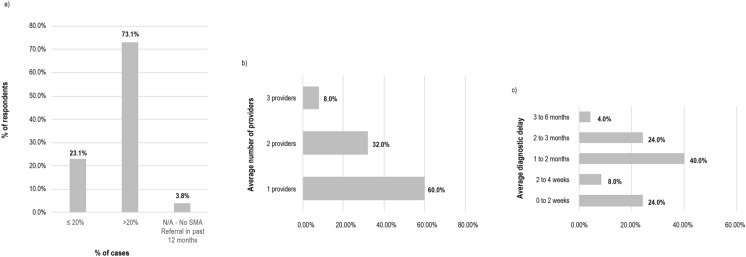
Three hundred five total responses were obtained (9% from SMA care centers and 91% from the general recruitment sample). Diagnostic journeys were shorter for infants eventually diagnosed with SMA Type 1 if they were referred to SMA care centers versus general sample practices. Appointment wait times for infants exhibiting "hypotonia and motor delays" were significantly shorter at SMA care centers compared to general recruitment practices (p = 0.004). Furthermore, infants with SMA identified through newborn screening were also more likely to be seen sooner if referred to a SMA care center versus a general recruitment site. Lastly, the majority of both cohorts triaged incoming referrals. The average wait time for infants presenting at SMA care centers with "hypotonia and motor delay" was significantly shorter when initial referrals were triaged using a set of "key emergency words" (p = 0.036).
Infants directly referred to a SMA care center versus a general sample practice were more likely to experience shorter SMA diagnostic journeys and appointment wait times. Triage guidelines for referrals specific to "hypotonia and motor delay" including use of "key emergency words" may shorten wait times and support early diagnosis and treatment of SMA.
脊髓性肌萎缩症(SMA)是一种常染色体隐性神经肌肉疾病,其特征为进行性肌肉无力和萎缩。临床试验数据表明早期诊断和治疗至关重要。本研究的目的是评估新生儿筛查确诊婴儿、出现SMA症状的儿科病例以及转诊医生怀疑为SMA的病例的神经科预约等待时间。同时还探讨了美国进行分诊和加快转诊的方法。
SMA治疗协会对两个队列的医疗保健专业人员进行了调查:(1)与SMA护理中心相关的医疗服务提供者;(2)其他神经科医生、儿科神经科医生和神经肌肉专家。分别于2020年7月9日至2020年8月31日直接和通过Medscape教育平台分发了调查问卷。
共获得305份回复(9%来自SMA护理中心,91%来自一般招募样本)。最终被诊断为1型SMA的婴儿,如果被转诊至SMA护理中心,其诊断过程比转诊至一般样本医疗机构的要短。与一般招募机构相比,SMA护理中心中表现出“肌张力减退和运动迟缓”的婴儿的预约等待时间显著更短(p = 0.004)。此外,通过新生儿筛查确诊为SMA的婴儿,如果被转诊至SMA护理中心,也比转诊至一般招募机构的更有可能更快得到诊治。最后,两个队列中的大多数都对 incoming referrals 进行了分诊。当使用一组“关键紧急词汇”对初始转诊进行分诊时,在SMA护理中心出现“肌张力减退和运动迟缓”的婴儿的平均等待时间显著更短(p = 0.036)。
与一般样本医疗机构相比,直接转诊至SMA护理中心的婴儿更有可能经历更短的SMA诊断过程和预约等待时间。针对“肌张力减退和运动迟缓”的转诊分诊指南,包括使用“关键紧急词汇”,可能会缩短等待时间,并支持SMA的早期诊断和治疗。