Zamorski Ryszard, Baba Kei'ichi, Noda Takahiro, Sawada Rimpei, Miyata Kana, Itoh Takao, Kaku Hanae, Shibuya Naoto
National Institute of Agrobiological Resources, Ministry of Agriculture, Forestry and Fisheries, Tsukuba, Ibaraki 305-8634, Japan.
National Food Research Institute, Ministry of Agriculture, Forestry and Fisheries, Tsukuba, Ibaraki 305-8642, Japan.
Plant Biotechnol (Tokyo). 2023 Dec 25;40(4):321-336. doi: 10.5511/plantbiotechnology.23.0809a.
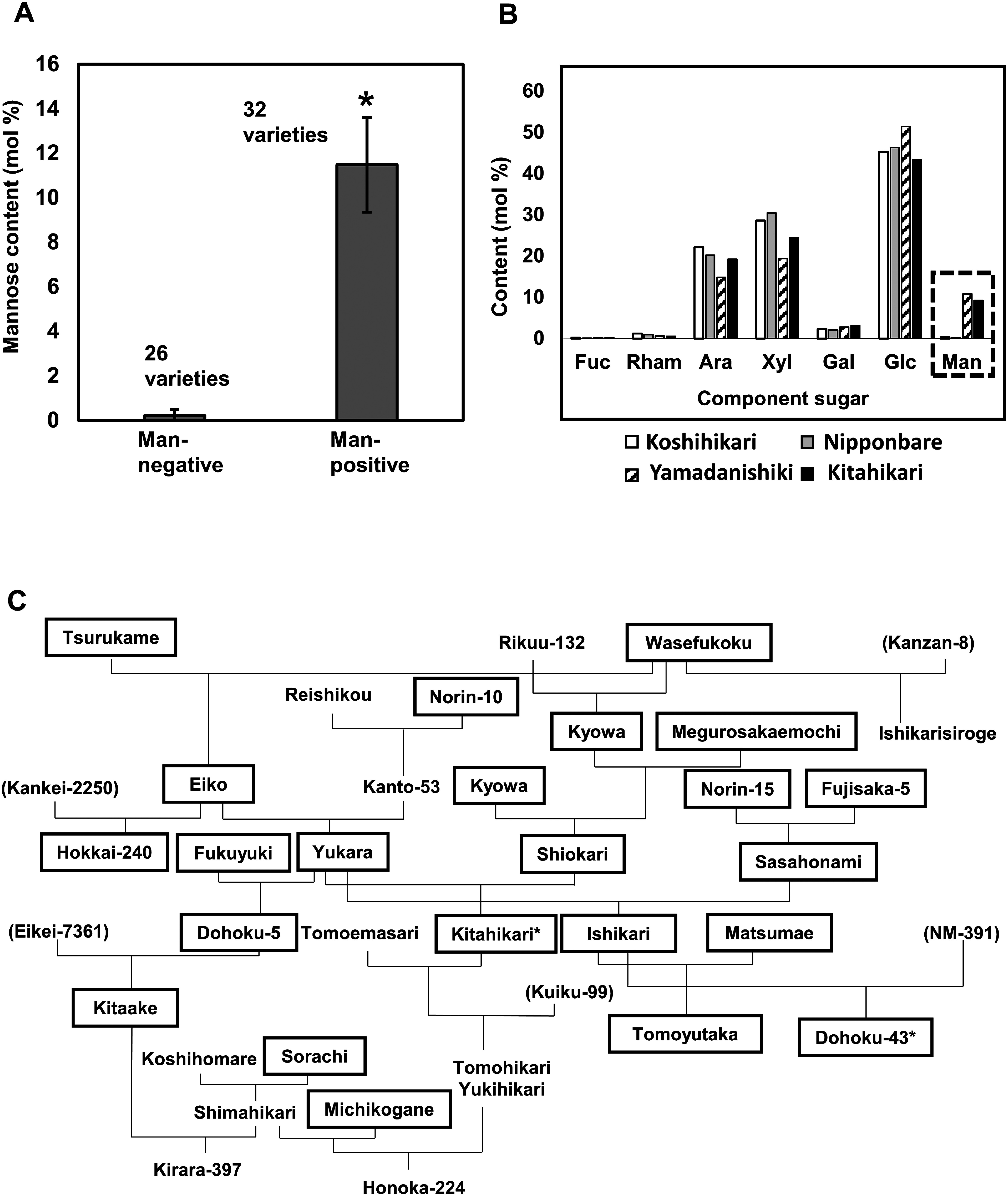
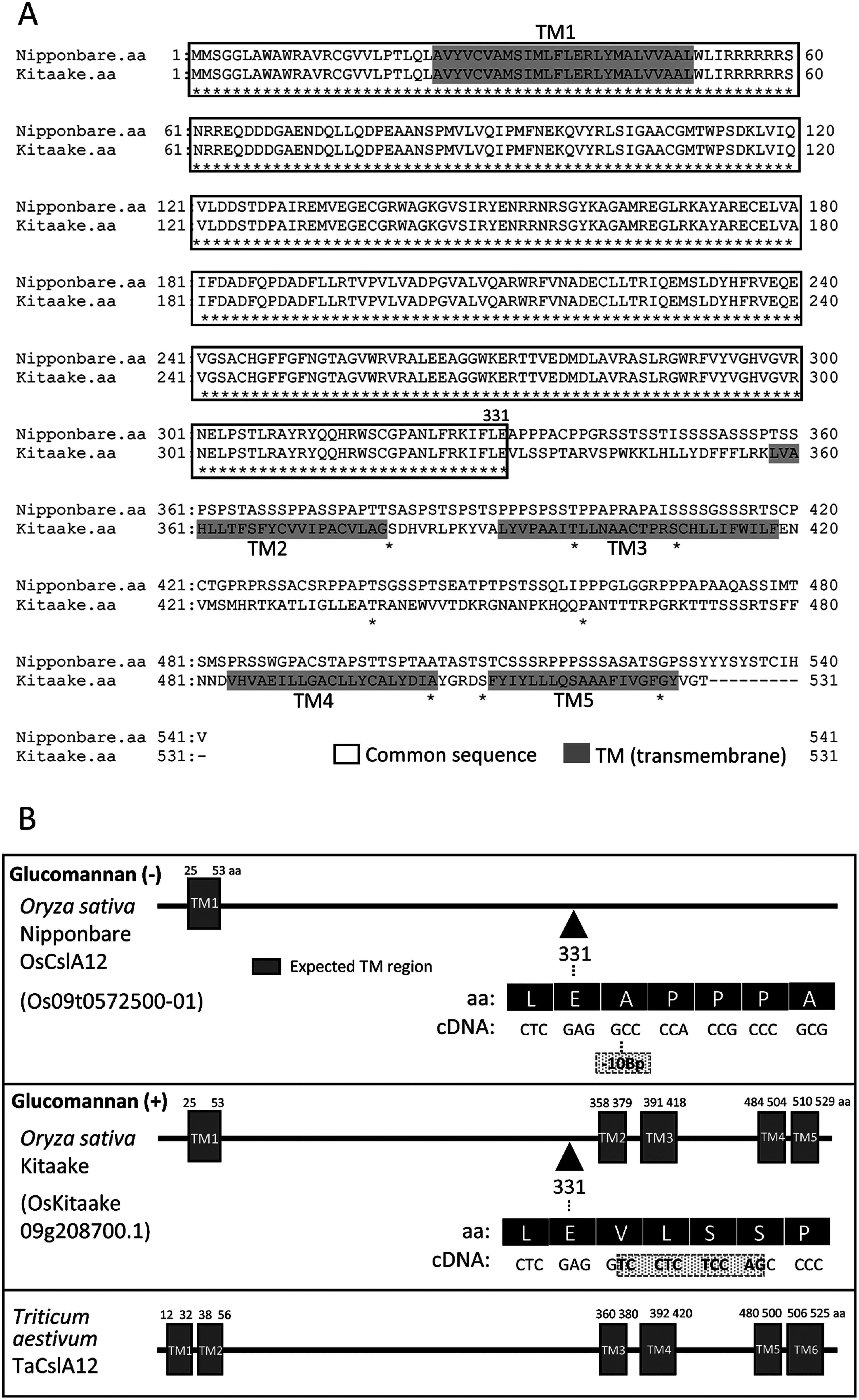
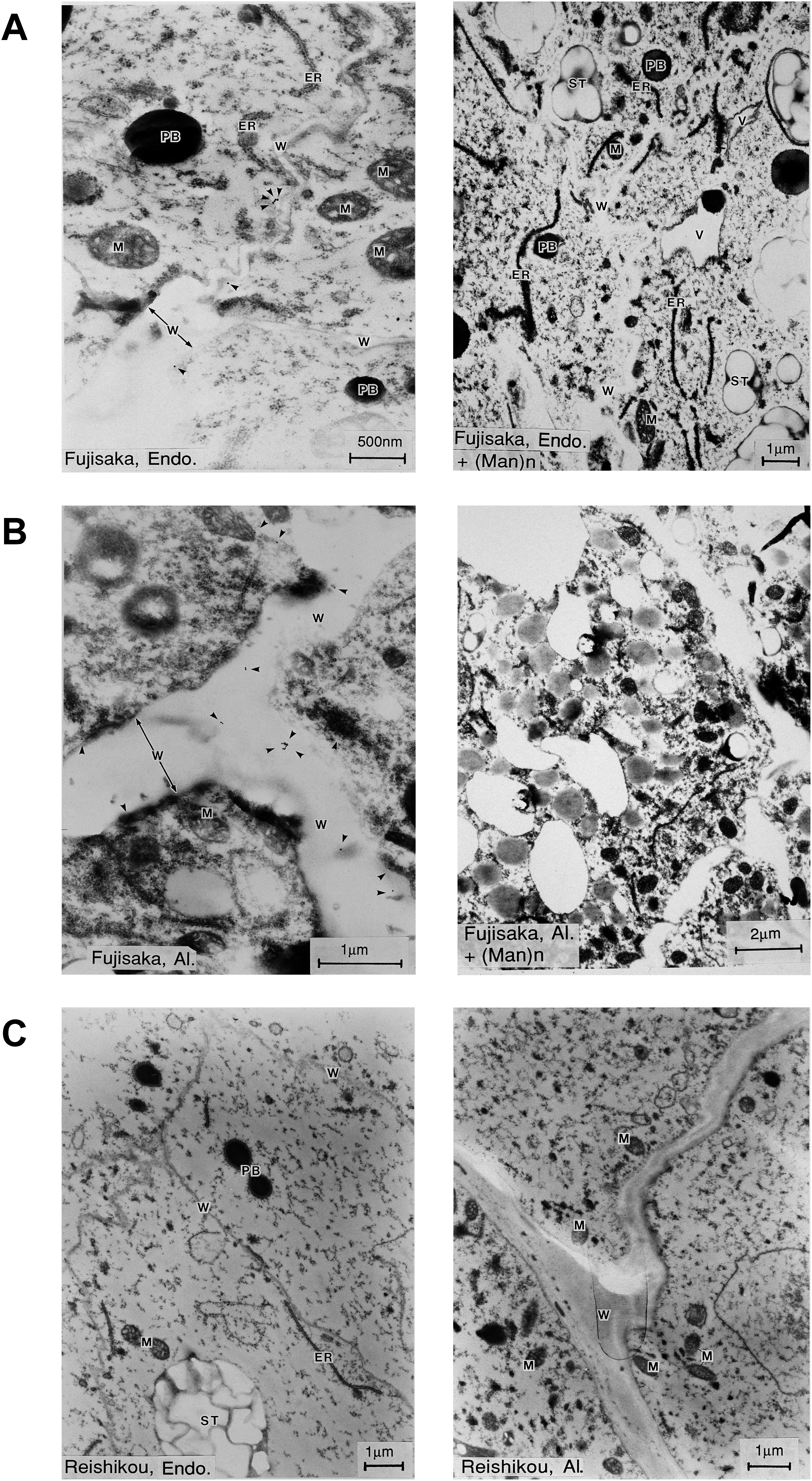
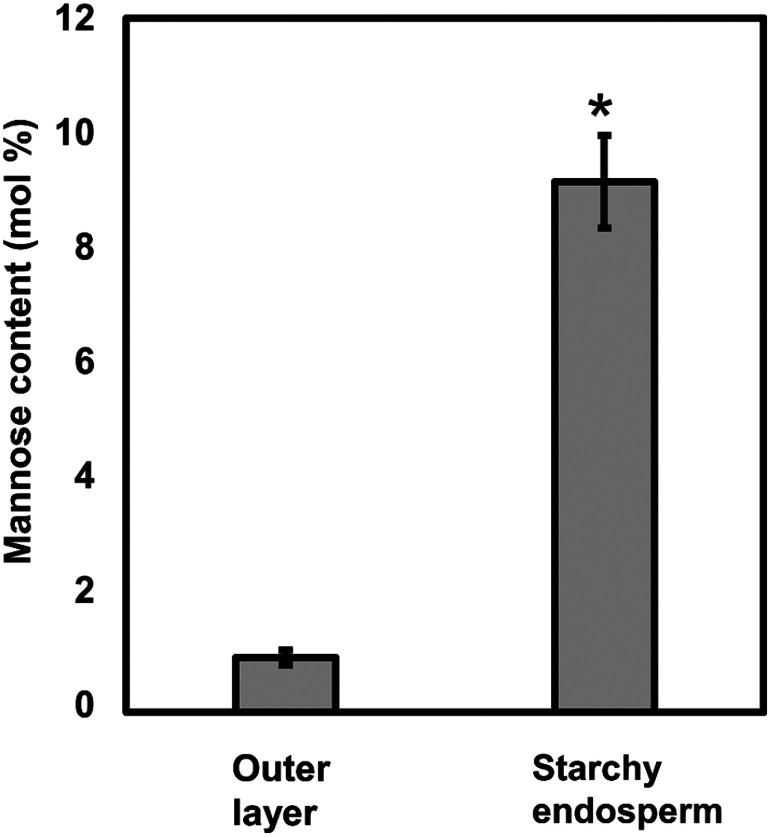
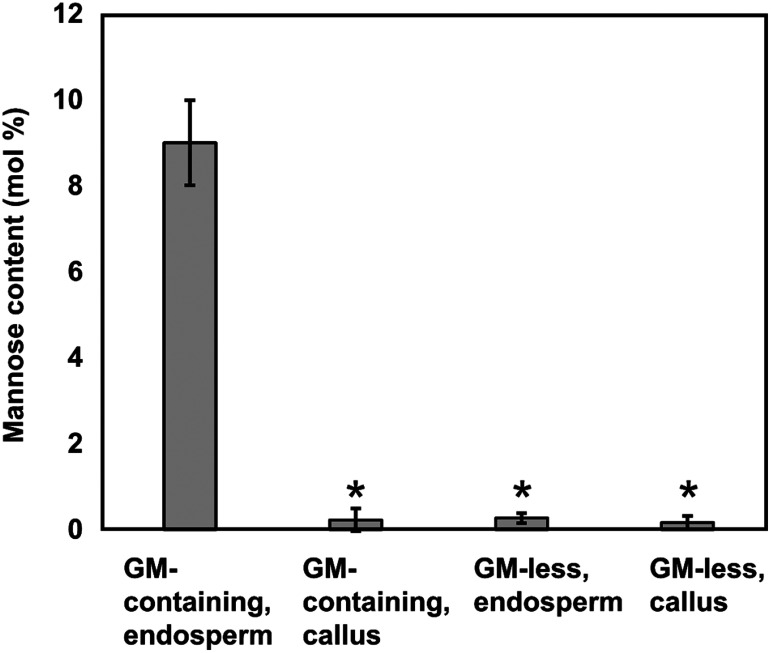
Plant cell wall plays important roles in the regulation of plant growth/development and affects the quality of plant-derived food and industrial materials. On the other hand, genetic variability of cell wall structure within a plant species has not been well understood. Here we show that the endosperm cell walls, including both starchy endosperm and aleurone layer, of rice grains with various genetic backgrounds are clearly classified into two groups depending on the presence/absence of β-1,4-linked glucomannan. All-or-none distribution of the glucomannan accumulation among rice varieties is very different from the varietal differences of arabinoxylan content in wheat and barley, which showed continuous distributions. Immunoelectron microscopic observation suggested that the glucomannan was synthesized in the early stage of endosperm development, but the synthesis was down-regulated during the secondary thickening process associated with the differentiation of aleurone layer. Significant amount of glucomannan in the cell walls of the glucomannan-positive varieties, i.e., 10% or more of the starchy endosperm cell walls, and its close association with the cellulose microfibril suggested possible effects on the physicochemical/biochemical properties of these cell walls. Comparative genomic analysis indicated the presence of striking differences between genes of glucomannan-positive and negative rice varieties, Kitaake and Nipponbare, which seems to explain the all-or-none glucomannan cell wall trait in the rice varieties. Identification of the gene responsible for the glucomannan accumulation could lead the way to clarify the effect of the accumulation of glucomannan on the agronomic traits of rice by using genetic approaches.
植物细胞壁在植物生长/发育调控中发挥着重要作用,并影响植物源食品和工业材料的质量。另一方面,植物物种内细胞壁结构的遗传变异性尚未得到充分了解。在此,我们表明,具有不同遗传背景的水稻籽粒的胚乳细胞壁,包括淀粉胚乳和糊粉层,根据β-1,4-连接的葡甘露聚糖的有无可明确分为两组。葡甘露聚糖在水稻品种间的全有或全无分布与小麦和大麦中阿拉伯木聚糖含量的品种差异非常不同,后者呈连续分布。免疫电子显微镜观察表明,葡甘露聚糖在胚乳发育早期合成,但在与糊粉层分化相关的次生加厚过程中合成下调。葡甘露聚糖阳性品种细胞壁中存在大量葡甘露聚糖,即占淀粉胚乳细胞壁的10%或更多,且其与纤维素微纤丝紧密相关,这表明其可能对这些细胞壁的物理化学/生物化学性质产生影响。比较基因组分析表明,葡甘露聚糖阳性和阴性水稻品种(Kitaake和日本晴)的基因存在显著差异,这似乎解释了水稻品种中葡甘露聚糖细胞壁性状的全有或全无现象。鉴定负责葡甘露聚糖积累的基因可能为通过遗传方法阐明葡甘露聚糖积累对水稻农艺性状的影响指明道路。