Hamadouche Salima, Merouani Hafida, May Abd Alghani, Ouddai Nadia, Alam Manawwer, Micoli Luca, Erto Alessandro, Benguerba Yacine
Laboratoire de Chimie des Matériaux et des Vivants: Activité & Réactivité (LCMVAR), Université Batna 1, 5000 Batna, Algeria.
Département de Socle Commun, Faculté de Technologie, Université Ben Boulaid Batna 2, 05078 Batna, Algeria.
ACS Omega. 2024 Feb 12;9(8):9076-9089. doi: 10.1021/acsomega.3c07885. eCollection 2024 Feb 27.
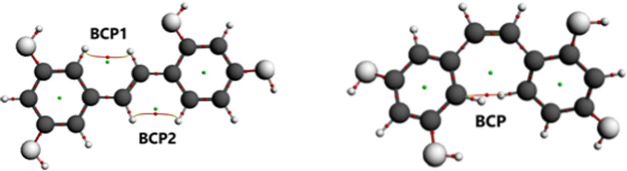
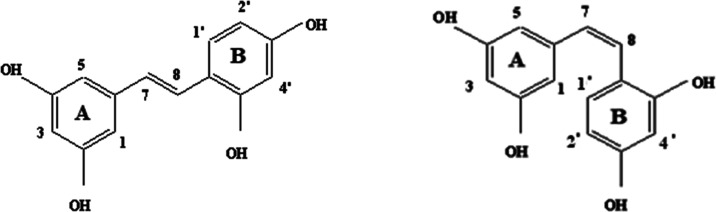
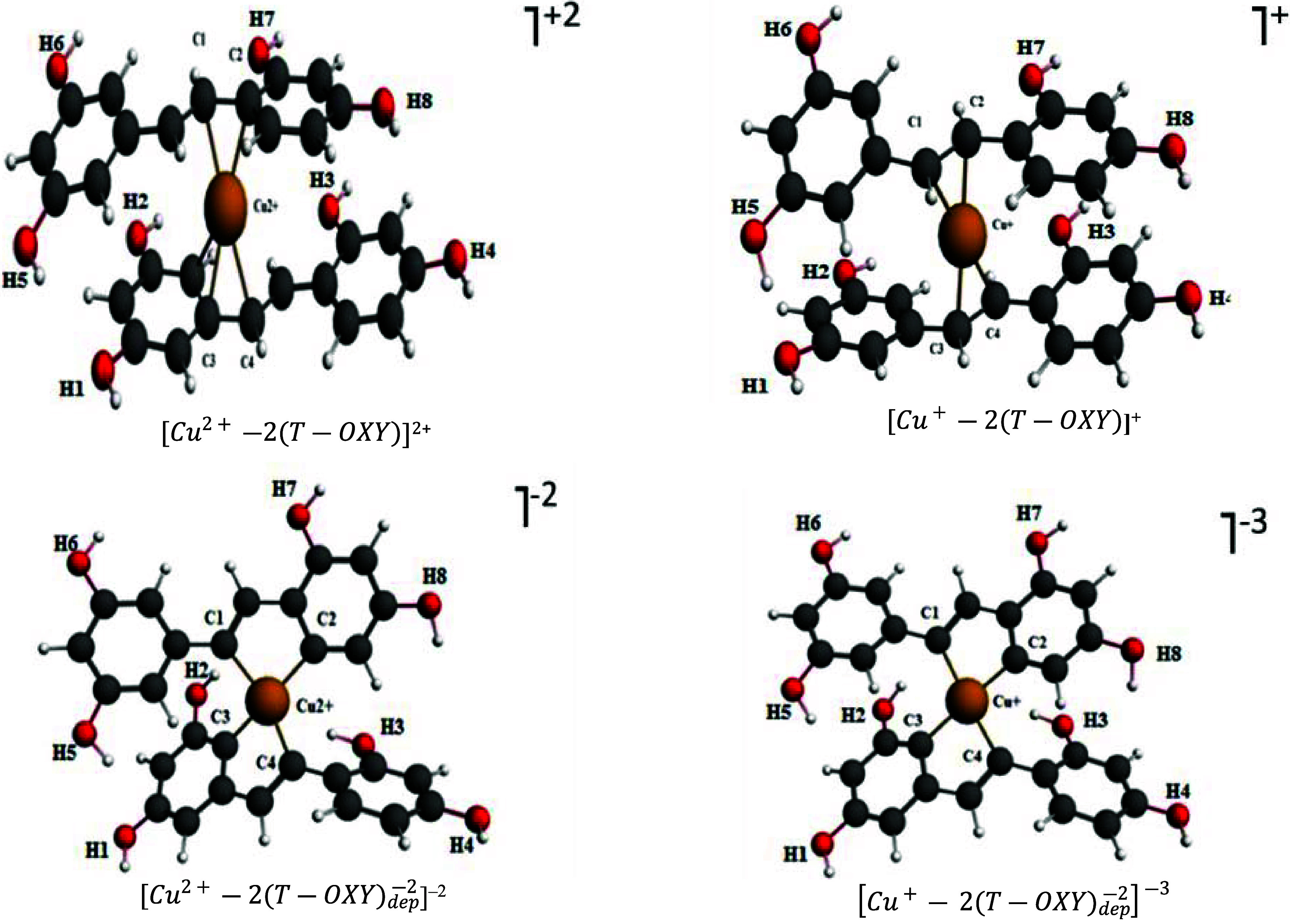
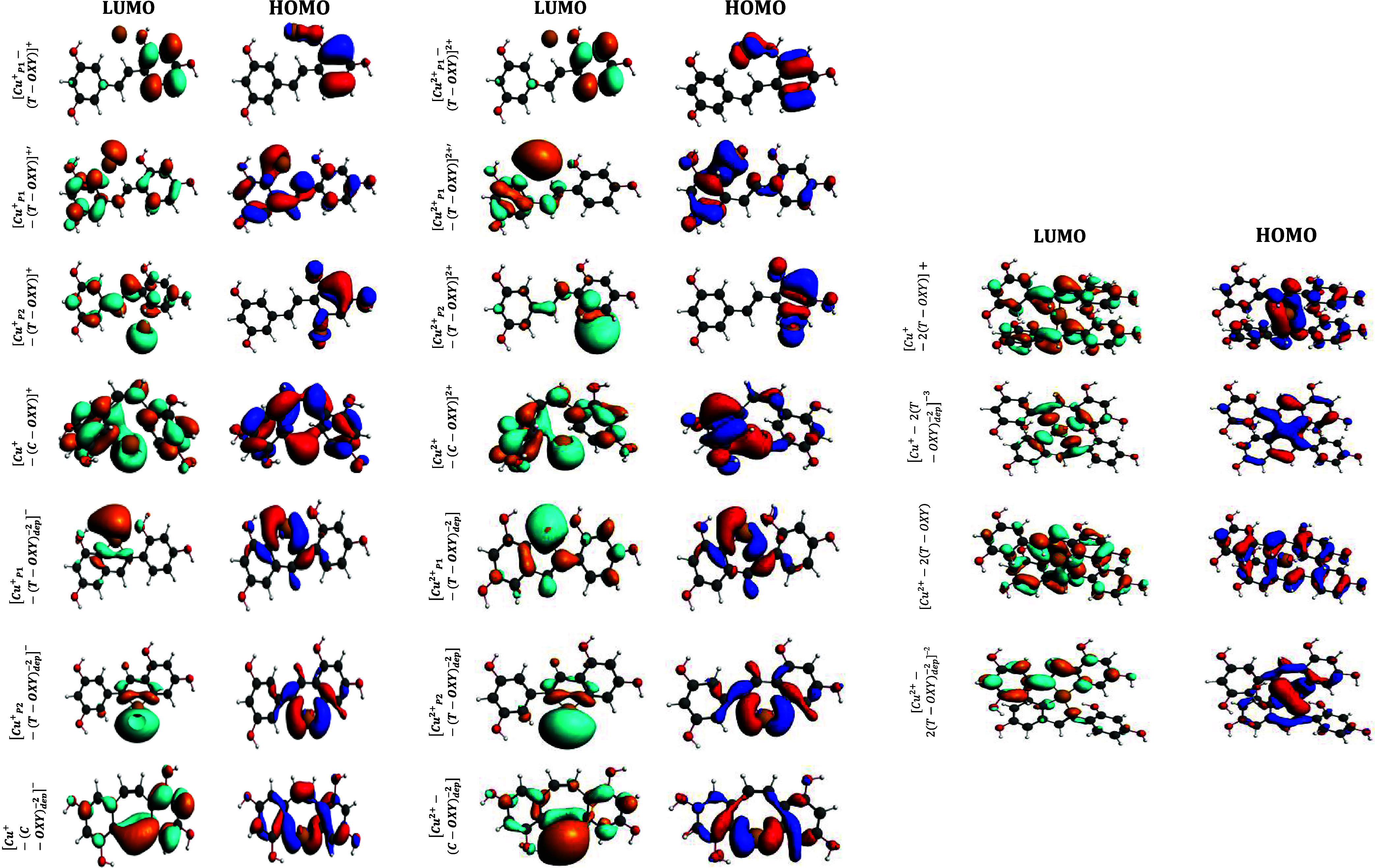
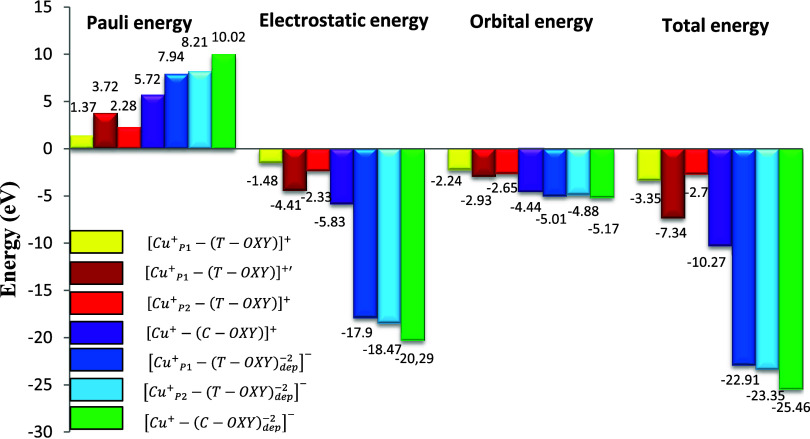
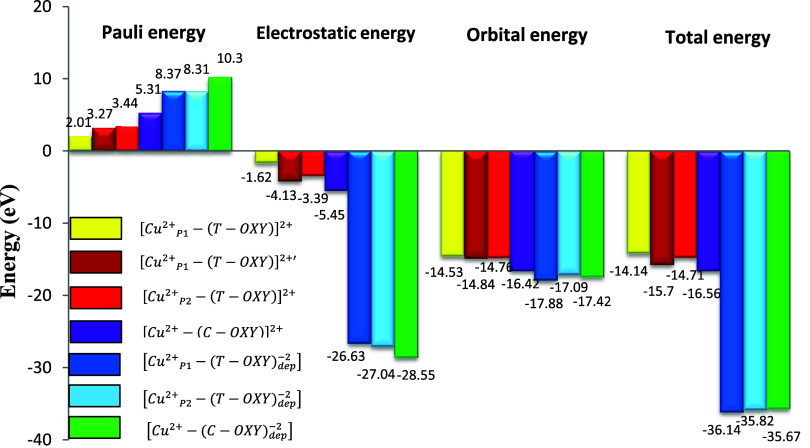
A theoretical investigation was conducted using DFT/PW91/TZP/DMSO calculations on a complete set of exhaustive lists of 18 compounds resulting from the complexation of -2,4,3',5'-tetrahydroxystilbene (T-OXY) and -2,4,1',3'-tetrahydroxystilbene (C-OXY) with copper metal cations (Cu and Cu). The ligand-binding sites are the critical points of Quantum Theory of Atoms in Molecules (QTAIM) analysis on neutral and deprotonated ligands. Various mechanisms, including hydrogen atom transfer (HAT), sequential proton loss electron transfer (SPLET), single electron transfer followed by proton transfer (SET-PT), and bond dissociation energy (BDE(E0)) calculations, were employed to quantify the antioxidant activity. The BDE(E0) mechanism emerged as the most suitable approach for such analyses to evaluate the departure of hydrogen atoms since the results show the HAT mechanism is the most likely occurring. Particularly intriguing were the anionic Cu complexes with ligands adopting trans configurations and deprotonated conformations, displaying superior antioxidant activity compared to their counterparts. Remarkably, a single ligand within the Cu complex exhibited exceptional antioxidant prowess, yielding a BDE(E0) value of 91.47 kcal/mol. Furthermore, a complex involving two deprotonated ligands demonstrated antioxidant activity of 31.12 kcal/mol, signifying its potential as a potent antiradical agent, surpassing T-OXY by a factor of 3.91 and even surpassing the antioxidant efficiency of Vitamin C.
使用DFT/PW91/TZP/DMSO计算方法,对由 -2,4,3',5'-四羟基芪(T-OXY)和 -2,4,1',3'-四羟基芪(C-OXY)与铜金属阳离子(Cu和Cu)络合产生的18种化合物的完整详尽列表进行了理论研究。配体结合位点是对中性和去质子化配体进行分子中原子量子理论(QTAIM)分析的关键点。采用了各种机制,包括氢原子转移(HAT)、顺序质子损失电子转移(SPLET)、单电子转移后质子转移(SET-PT)以及键解离能(BDE(E0))计算,以量化抗氧化活性。由于结果表明HAT机制是最可能发生的,BDE(E0)机制成为此类分析中评估氢原子离去的最合适方法。特别有趣的是,具有反式构型和去质子化构象的配体的阴离子铜络合物,其抗氧化活性优于同类物质。值得注意的是,铜络合物中的单个配体表现出卓越的抗氧化能力,产生的BDE(E0)值为91.47千卡/摩尔。此外,涉及两个去质子化配体的络合物表现出31.12千卡/摩尔的抗氧化活性,表明其作为强效抗自由基剂的潜力,比T-OXY高出3.91倍,甚至超过了维生素C的抗氧化效率。