Iqbal Muhammad Junaid, Hassan Muhammad Waqar, Sarwar Ghulam, Jamil Moazzam, Hussain Tanveer
Department of Entomology, Faculty of Agriculture and Environment, Islamia University of Bahawalpur, Bahawalpur, Punjab, Pakistan.
Department of Biology, Faculty of Chemical and Biological Sciences, Islamia University of Bahawalpur, Bahawalpur, Punjab, Pakistan.
PeerJ. 2024 Feb 29;12:e16782. doi: 10.7717/peerj.16782. eCollection 2024.
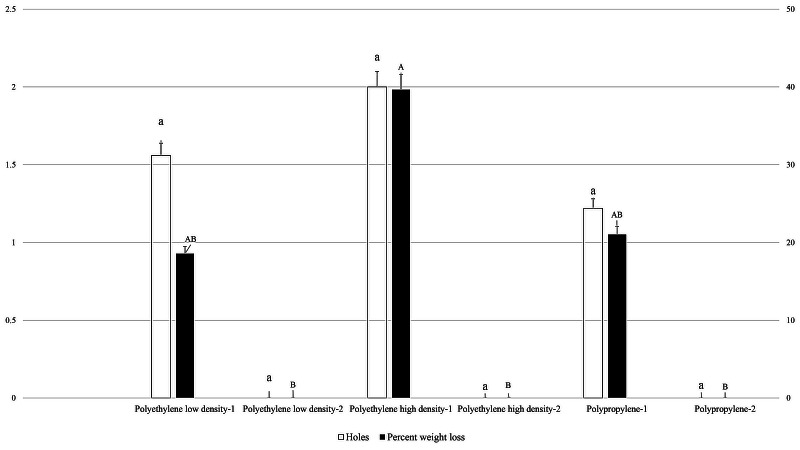
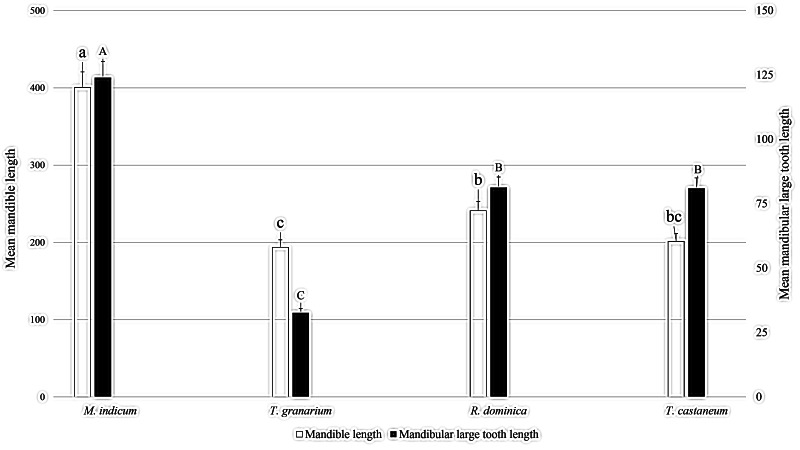
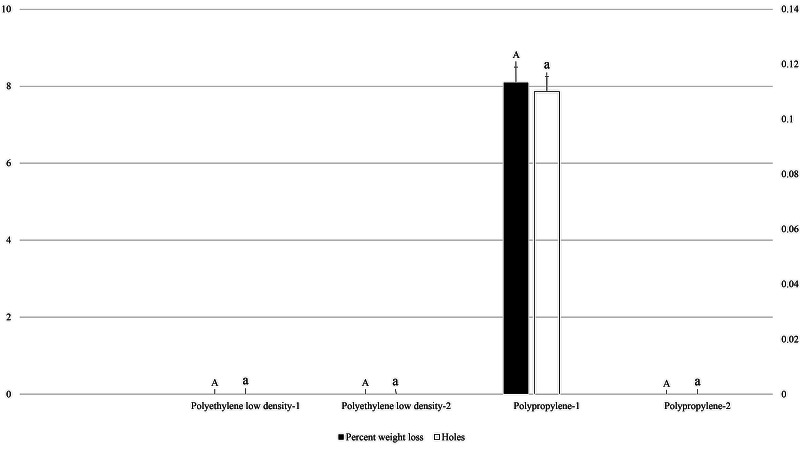
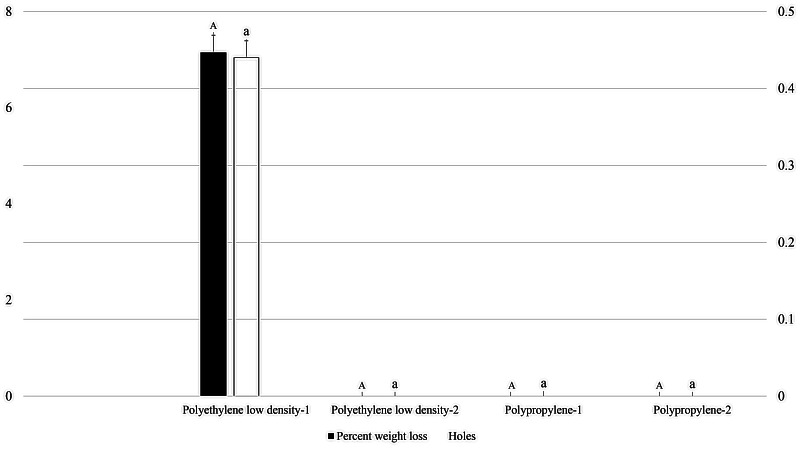
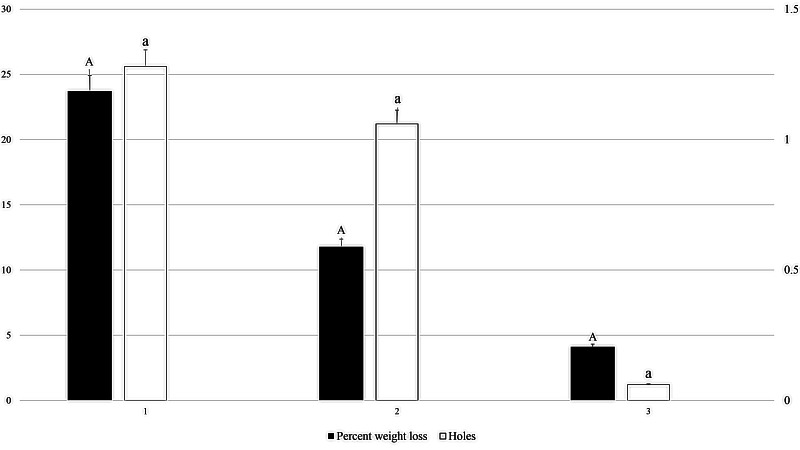
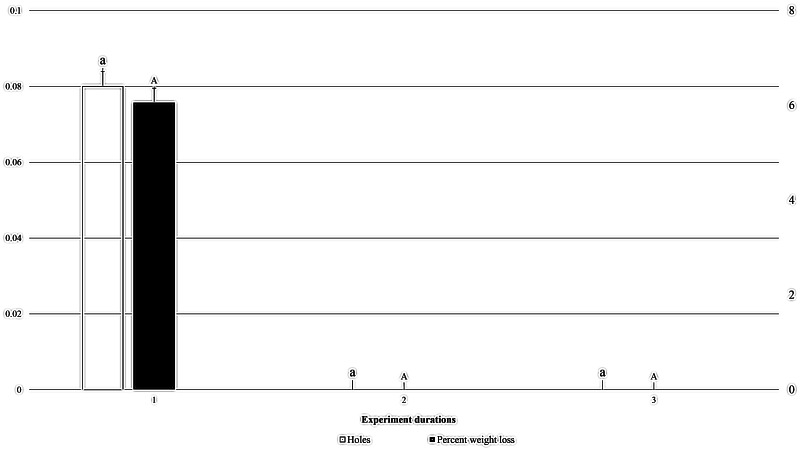
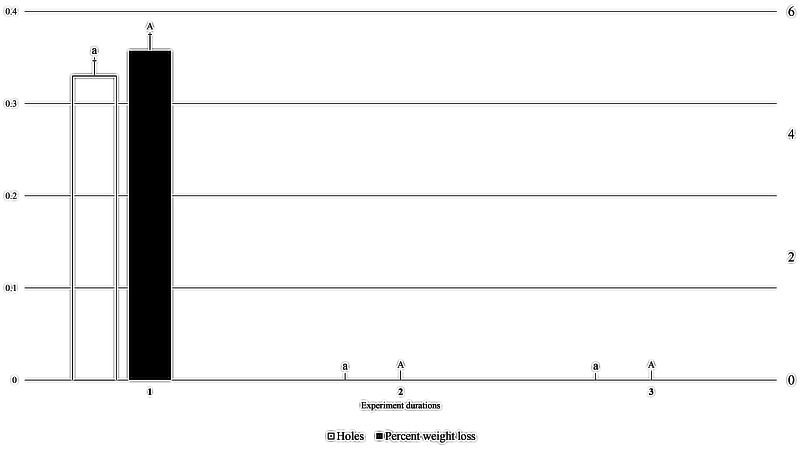
Ants belonging to the (Formicidae: Hymenoptera) species are ubiquitous insects that are commonly associated with household settings in Pakistan. Packaged foodstuffs are easily destroyed by household ants when packaging is made with materials that have a high susceptibility. This study evaluated the susceptibility of three common flexible plastic packaging materials namely: opaque polyethylene, transparent polyethylene and polypropylene, which were each tested at thicknesses of 0.02 mm for their susceptibility against . Except opaque polyethylene which is only available at 0.02 mm thickness, both transparent polyethylene and polypropylene were tested at higher thickness of 0.04 mm and 0.06 mm also against . In order to simulate household settings, experiments were conducted at the faculty building of the agriculture and environment department of The Islamia University of Bahawalpur, Pakistan during summer vacations when the building was quiet. Different corners were selected near water sources for maximum exposure to the largest number of ants. Experimental cages used for the experiment were built with wood and 2 mm iron gauze to allow only ants to enter the cages. Daily activity of ants was used as an infestation source in cages. Experiments were run over three time spans of fifteen days each from June 20th 2022 to August 15th 2022. Results showed all packaging materials were susceptible against at the 0.02 mm thickness level. Polypropylene was susceptible at 0.04 mm thickness but resistant to ants at 0.06 mm thickness, whereas polyethylene was still susceptible to ants at the higher thickness of 0.06 mm. Correlation of packaging damage with weather factors showed that temperature had a positive relationship, while relative humidity had a negative association with attack. Overall correlation of packaging damage with packaging thickness showed packaging thickness was negatively associated with packaging damage from the ants. Because major cutting role is performed by the mandibles, we studied mandibles of ants and three frequent pests of packaged foodstuff namely , and . The results showed that ants had the largest mandible and frontal mandibular tooth lengths compared with the mandibles and frontal teeth of the common stored product pests, indicating household ants have a higher pest status for packaged foodstuffs compared to common stored product pests. Although the thickness of the flexible plastic packaging was a major factor against household ants, the study results recommend the use of polypropylene with a thickness of at least 0.06 mm as foodstuff packaging against household ants compared with polyethylene packaging, which was found to be susceptible to ants even at 0.06 mm thickness.
蚁科(膜翅目:蚁科)的蚂蚁是无处不在的昆虫,在巴基斯坦,它们通常与家庭环境有关。当包装采用易受影响的材料制作时,包装食品很容易被家蚁破坏。本研究评估了三种常见的柔性塑料包装材料的易感性,即:不透明聚乙烯、透明聚乙烯和聚丙烯,每种材料均在0.02毫米的厚度下测试其对[未提及具体对象]的易感性。除了仅能买到0.02毫米厚度的不透明聚乙烯外,透明聚乙烯和聚丙烯还在0.04毫米和0.06毫米的更高厚度下进行了针对[未提及具体对象]的测试。为了模拟家庭环境,实验在巴基斯坦巴哈瓦尔布尔伊斯兰大学农业与环境系的教学楼在暑假期间进行,此时教学楼很安静。在靠近水源的不同角落进行选择,以便让最多数量的蚂蚁最大限度地接触到实验材料。用于实验的笼子是用木头和2毫米的铁纱网建造的,只允许蚂蚁进入笼子。蚂蚁的日常活动被用作笼子里的侵染源。实验从2022年6月20日至2022年8月15日,分三个为期十五天的时间段进行。结果表明,所有包装材料在0.02毫米厚度水平下都易受[未提及具体对象]影响。聚丙烯在0.04毫米厚度时易受影响,但在0.06毫米厚度时对蚂蚁有抗性,而聚乙烯在0.06毫米的更高厚度时仍易受蚂蚁影响。包装损坏与天气因素的相关性表明,温度呈正相关,而相对湿度与[未提及具体对象]攻击呈负相关。包装损坏与包装厚度的总体相关性表明,包装厚度与蚂蚁造成的包装损坏呈负相关。由于主要的切割作用是由上颚完成的,我们研究了蚂蚁以及包装食品的三种常见害虫即[未提及具体害虫名称]、[未提及具体害虫名称]和[未提及具体害虫名称]的上颚。结果表明,与常见仓储害虫的上颚和额前齿相比,蚂蚁的上颚和额前齿最长,这表明与常见仓储害虫相比,家蚁对包装食品具有更高的害虫地位。尽管柔性塑料包装的厚度是抵抗家蚁的一个主要因素,但研究结果建议,与聚乙烯包装相比,使用厚度至少为0.06毫米的聚丙烯作为食品包装来抵抗家蚁,因为即使在0.06毫米厚度时,聚乙烯包装也被发现易受蚂蚁影响。