Liu Kaijing, Wehling Lilija, Wan Shan, Weiler Sofia M E, Tóth Marcell, Ibberson David, Marhenke Silke, Ali Adnan, Lam Macrina, Guo Te, Pinna Federico, Pedrini Fabiola, Damle-Vartak Amruta, Dropmann Anne, Rose Fabian, Colucci Silvia, Cheng Wenxiang, Bissinger Michaela, Schmitt Jennifer, Birner Patrizia, Poth Tanja, Angel Peter, Dooley Steven, Muckenthaler Martina U, Longerich Thomas, Vogel Arndt, Heikenwälder Mathias, Schirmacher Peter, Breuhahn Kai
Department of Medical Oncology, Sun Yat-Sen University Cancer Center, Guangdong, China.
Institute of Pathology, University Hospital Heidelberg, Im Neuenheimer Feld 224, 69120, Heidelberg, Germany.
Cell Mol Life Sci. 2024 Mar 4;81(1):115. doi: 10.1007/s00018-024-05126-1.
The Hippo pathway and its transcriptional effectors yes-associated protein (YAP) and transcriptional coactivator with PDZ-binding motif (TAZ) are targets for cancer therapy. It is important to determine if the activation of one factor compensates for the inhibition of the other. Moreover, it is unknown if YAP/TAZ-directed perturbation affects cell-cell communication of non-malignant liver cells.
To investigate liver-specific phenotypes caused by YAP and TAZ inactivation, we generated mice with hepatocyte (HC) and biliary epithelial cell (BEC)-specific deletions for both factors (YAPKO, TAZKO and double knock-out (DKO)). Immunohistochemistry, single-cell sequencing, and proteomics were used to analyze liver tissues and serum.
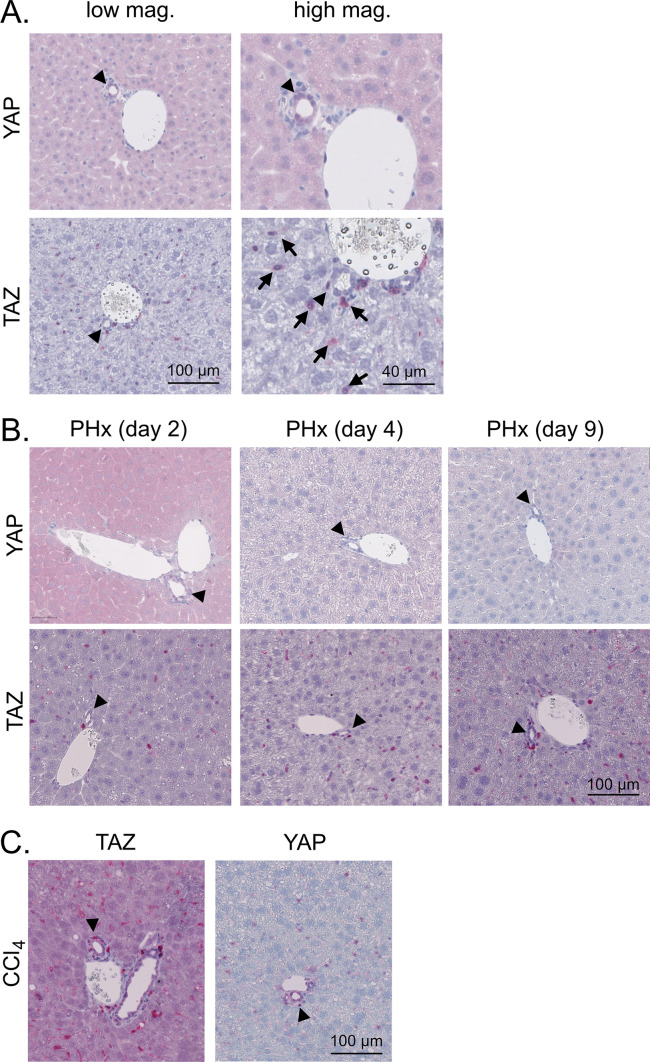
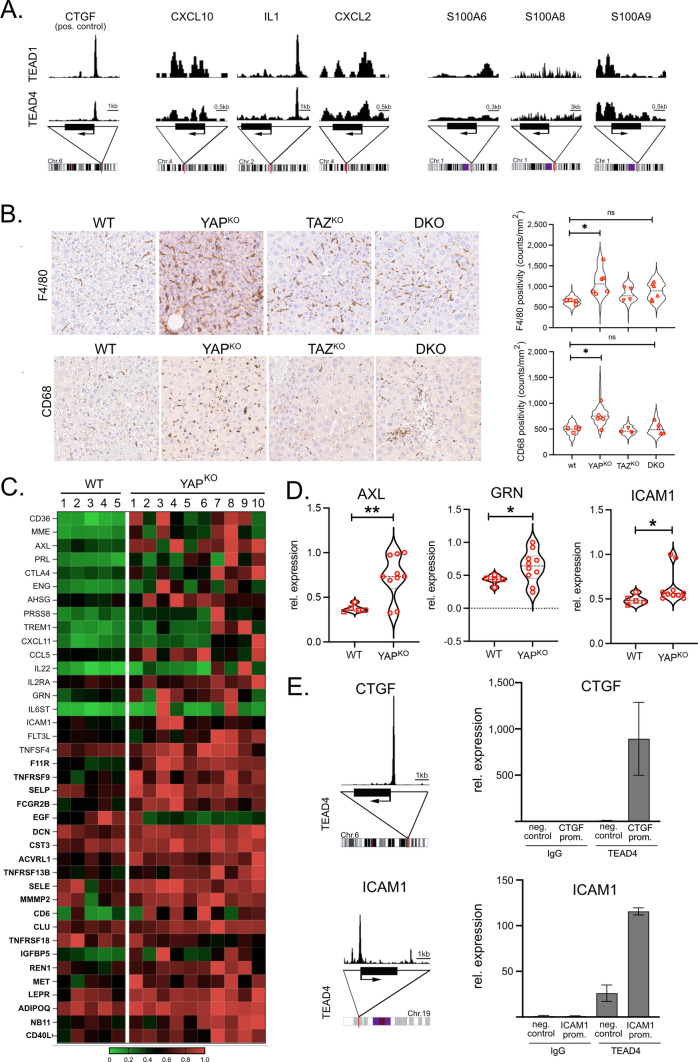
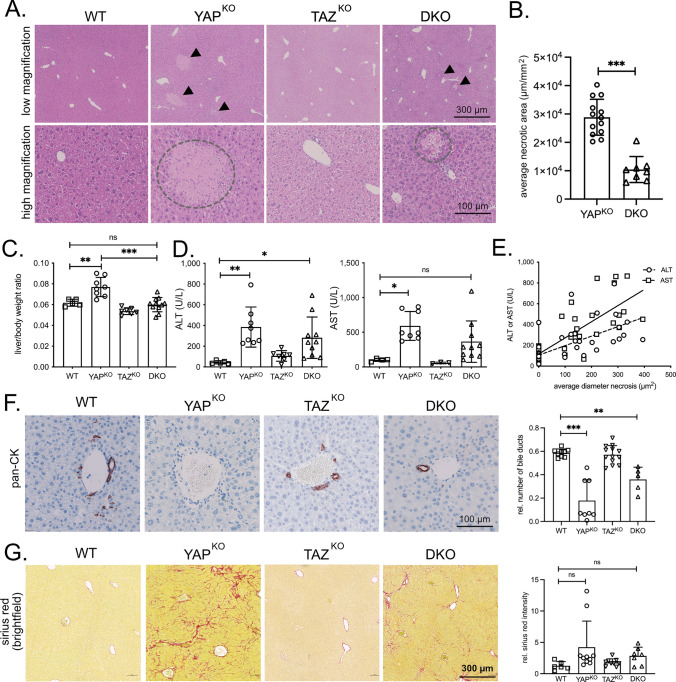
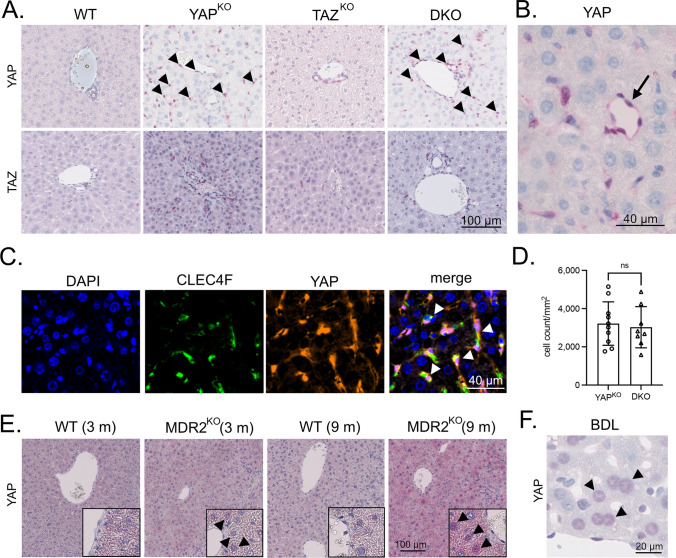
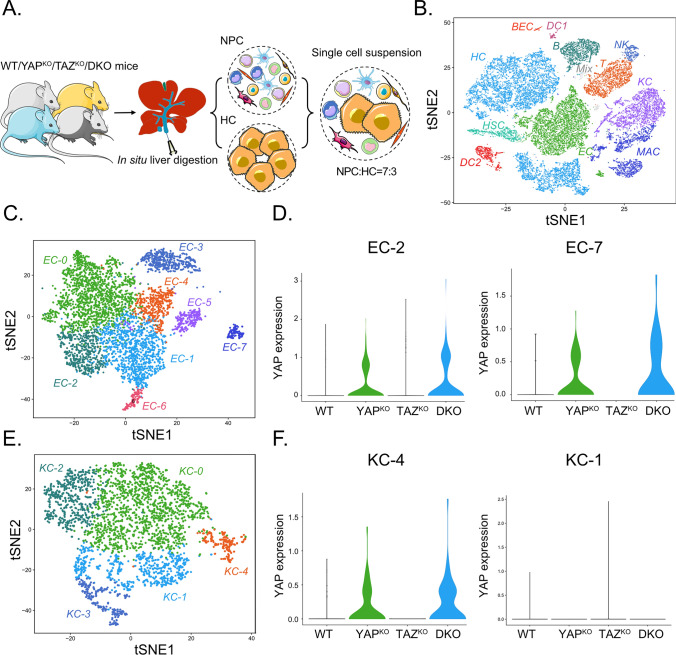
The loss of BECs, liver fibrosis, and necrosis characterized livers from YAPKO and DKO mice. This phenotype was weakened in DKO tissues compared to specimens from YAPKO animals. After depletion of YAP in HCs and BECs, YAP expression was induced in non-parenchymal cells (NPCs) in a cholestasis-independent manner. YAP positivity was detected in subgroups of Kupffer cells (KCs) and endothelial cells (ECs). The secretion of pro-inflammatory chemokines and cytokines such as C-X-C motif chemokine ligand 11 (CXCL11), fms-related receptor tyrosine kinase 3 ligand (FLT3L), and soluble intercellular adhesion molecule-1 (ICAM1) was increased in the serum of YAPKO animals. YAP activation in NPCs could contribute to inflammation via TEA domain transcription factor (TEAD)-dependent transcriptional regulation of secreted factors.
YAP inactivation in HCs and BECs causes liver damage, and concomitant TAZ deletion does not enhance but reduces this phenotype. Additionally, we present a new mechanism by which YAP contributes to cell-cell communication originating from NPCs.
河马通路及其转录效应因子Yes相关蛋白(YAP)和含PDZ结合基序的转录共激活因子(TAZ)是癌症治疗的靶点。确定一个因子的激活是否能补偿另一个因子的抑制作用很重要。此外,YAP/TAZ介导的扰动是否会影响非恶性肝细胞的细胞间通讯尚不清楚。
为了研究YAP和TAZ失活引起的肝脏特异性表型,我们构建了肝细胞(HC)和胆管上皮细胞(BEC)特异性缺失这两个因子的小鼠(YAPKO、TAZKO和双敲除(DKO))。采用免疫组织化学、单细胞测序和蛋白质组学分析肝脏组织和血清。
YAPKO和DKO小鼠的肝脏表现为BECs缺失、肝纤维化和坏死。与YAPKO动物的标本相比,DKO组织中的这种表型有所减弱。在HCs和BECs中YAP缺失后,非实质细胞(NPCs)中YAP表达以胆汁淤积无关的方式被诱导。在库普弗细胞(KCs)和内皮细胞(ECs)亚群中检测到YAP阳性。YAPKO动物血清中促炎趋化因子和细胞因子如C-X-C基序趋化因子配体11(CXCL11)、fms相关受体酪氨酸激酶3配体(FLT3L)和可溶性细胞间黏附分子1(ICAM1)的分泌增加。NPCs中YAP的激活可能通过分泌因子的TEA结构域转录因子(TEAD)依赖性转录调控导致炎症。
HCs和BECs中YAP失活会导致肝损伤,同时TAZ缺失不会增强反而会减轻这种表型。此外,我们提出了一种YAP促进源自NPCs的细胞间通讯的新机制。