Clinic of Neurology and Neurosurgery, Faculty of Medicine, Institute of Clinical Medicine, Vilnius University, Vilnius, Lithuania.
Department of Neurology, Vilnius University Hospital Santaros Klinikos, Santariskiu str. 2, 08661, Vilnius, Lithuania.
Sci Rep. 2024 Mar 4;14(1):5352. doi: 10.1038/s41598-024-55995-6.
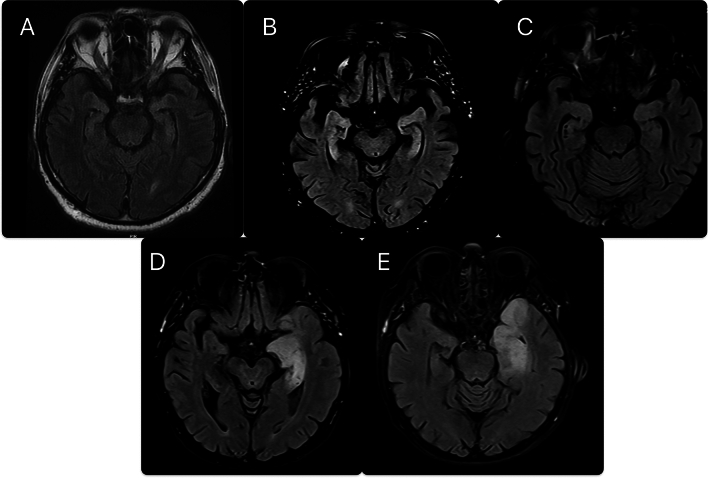
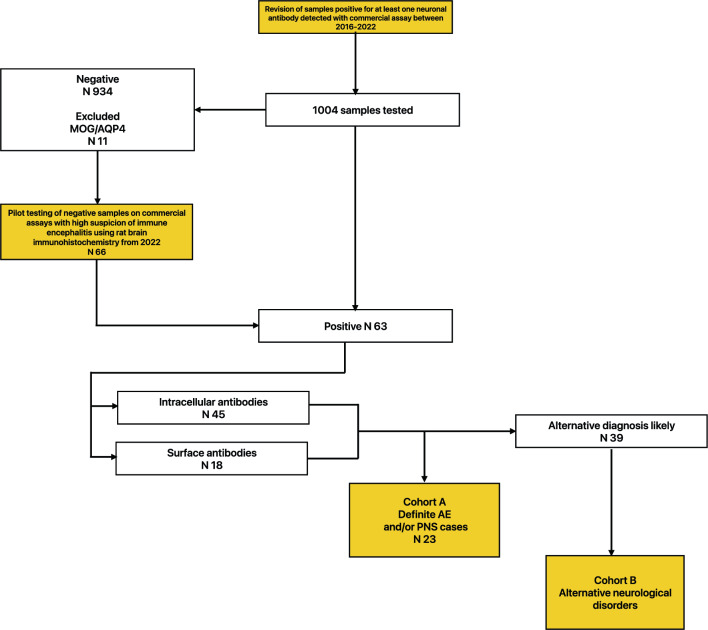
Detection of neuronal antibodies for autoimmune encephalitis and paraneoplastic neurological syndromes relies on commercially available cell-based assays and lineblots. However, lineblots may reveal the presence of neuronal antibodies in patients with various non-autoimmune etiologies. Herein we describe patients with non-autoimmune etiologies (cohort B) and detectable neuronal antibodies and compare them to definite cases of autoimmune encephalitis (cohort A) for differences in clinical data. All patients positive for at least one neuronal antibody were retrospectively evaluated for autoimmune encephalitis and/or paraneoplastic neurological syndrome between 2016 and 2022. 39 cases in cohort B and 23 in cohort A were identified. In cohort B, most common diagnoses were neurodegenerative disorders in 9/39 (23.1%), brain tumors in 6/39 (15.4%) while most common detected antibodies were anti-titin (N10), anti-recoverin (N11), anti-Yo (N8) and all were detected in serum only. Differential aspects between cohort A and B were CSF pleocytosis (14/23 (60.8%) vs 11/35 (31.4%), p = 0.042, respectively), MRI features suggestive of encephalitis (6/23 (26.1%) vs 0 (0%), p = 0.002, respectively) and epilepsy restricted to temporal lobes (14/23 (60.9%) vs 2/30 (6.7%), p = 0.0003, respectively). A large proportion of lineblot results were non-specific when only serum was tested and were frequently found in non-autoimmune neurological conditions.
自身免疫性脑炎和副肿瘤性神经综合征的神经元抗体检测依赖于商业上可用的基于细胞的检测和印迹法。然而,印迹法可能会在具有各种非自身免疫病因的患者中显示神经元抗体的存在。在此,我们描述了具有非自身免疫病因的患者(队列 B)和可检测到的神经元抗体,并将其与明确的自身免疫性脑炎病例(队列 A)进行比较,以比较临床数据的差异。在 2016 年至 2022 年期间,所有至少有一种神经元抗体阳性的患者均回顾性评估自身免疫性脑炎和/或副肿瘤性神经综合征。在队列 B 中发现了 39 例,在队列 A 中发现了 23 例。在队列 B 中,最常见的诊断是神经退行性疾病 9/39(23.1%),脑肿瘤 6/39(15.4%),而最常见的检测抗体是抗肌联蛋白(N10)、抗恢复蛋白(N11)、抗 Yo(N8),所有这些抗体仅在血清中检测到。队列 A 和 B 之间的差异方面是 CSF 细胞增多症(14/23(60.8%)与 11/35(31.4%),p=0.042)、提示脑炎的 MRI 特征(6/23(26.1%)与 0(0%),p=0.002)和局限于颞叶的癫痫(14/23(60.9%)与 2/30(6.7%),p=0.0003)。当仅检测血清时,印迹法的结果很大一部分是非特异性的,并且经常在非自身免疫性神经疾病中发现。