Department of Neurodegenerative Science, Van Andel Institute, 333 Bostwick Ave NE, Grand Rapids, MI, 49503, USA.
Aligning Science Across Parkinson's (ASAP) Collaborative Research Network, Chevy Chase, MD, 20815, USA.
Transl Neurodegener. 2024 Mar 4;13(1):13. doi: 10.1186/s40035-024-00403-2.
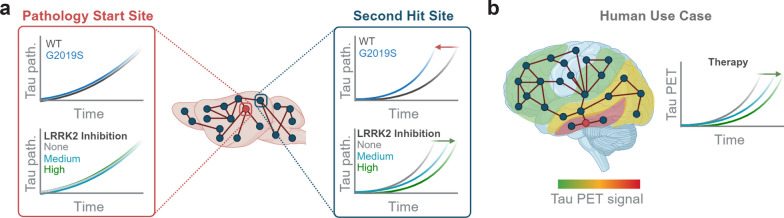
Mutations in leucine-rich repeat kinase 2 (LRRK2) are the most common cause of familial Parkinson's disease (PD). These mutations elevate the LRRK2 kinase activity, making LRRK2 kinase inhibitors an attractive therapeutic. LRRK2 kinase activity has been consistently linked to specific cell signaling pathways, mostly related to organelle trafficking and homeostasis, but its relationship to PD pathogenesis has been more difficult to define. LRRK2-PD patients consistently present with loss of dopaminergic neurons in the substantia nigra but show variable development of Lewy body or tau tangle pathology. Animal models carrying LRRK2 mutations do not develop robust PD-related phenotypes spontaneously, hampering the assessment of the efficacy of LRRK2 inhibitors against disease processes. We hypothesized that mutations in LRRK2 may not be directly related to a single disease pathway, but instead may elevate the susceptibility to multiple disease processes, depending on the disease trigger. To test this hypothesis, we have previously evaluated progression of α-synuclein and tau pathologies following injection of proteopathic seeds. We demonstrated that transgenic mice overexpressing mutant LRRK2 show alterations in the brain-wide progression of pathology, especially at older ages.
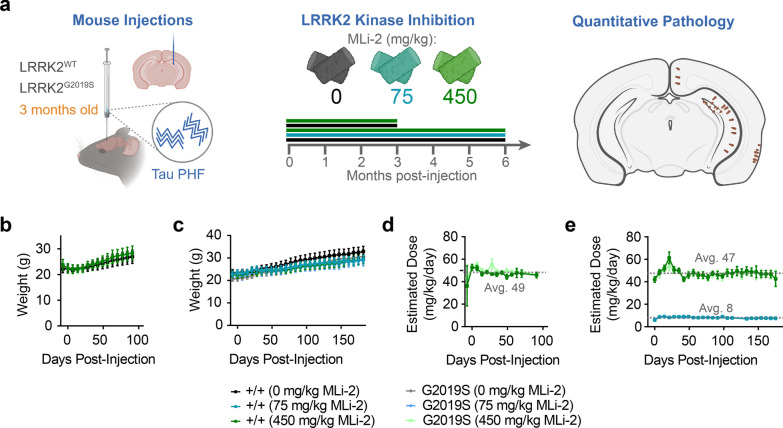
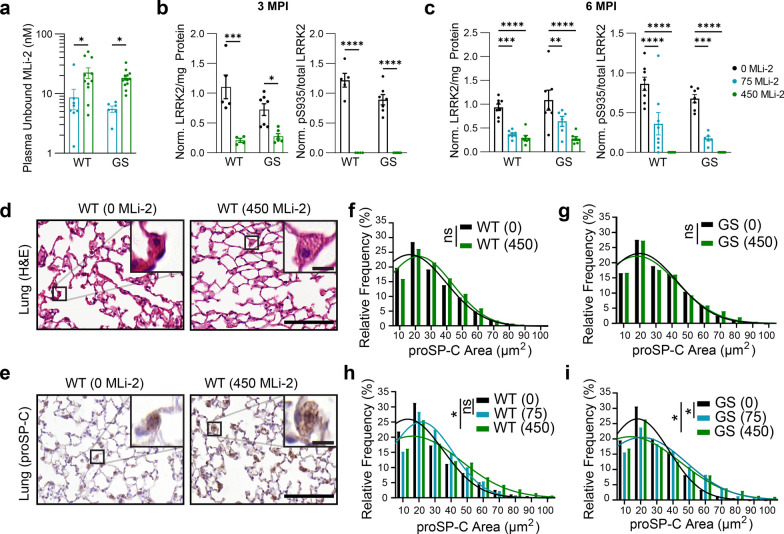
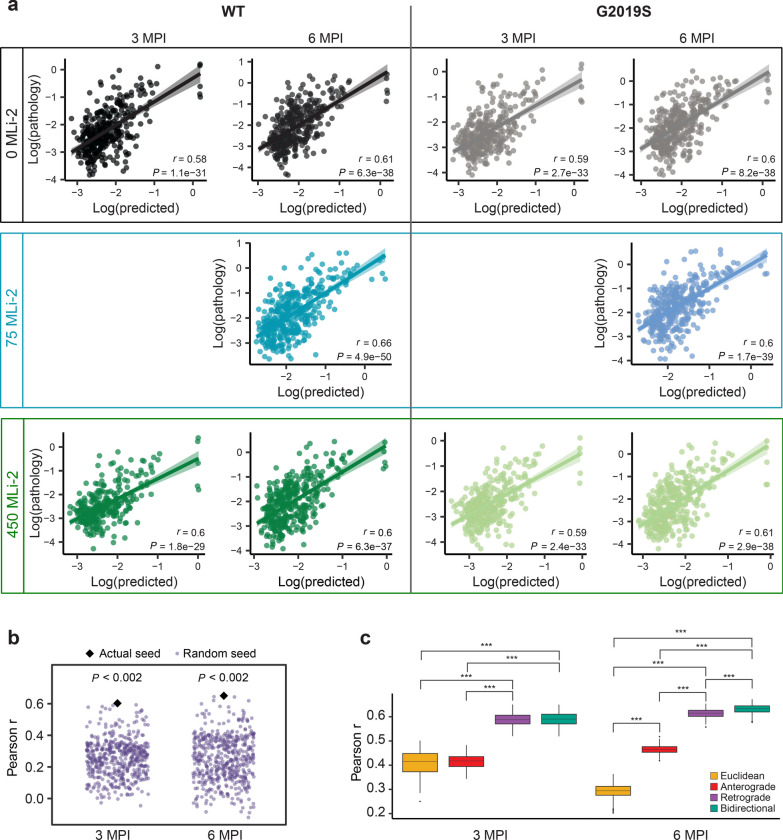
Here, we assess tau pathology progression in relation to long-term LRRK2 kinase inhibition. Wild-type or LRRK2 knock-in mice were injected with tau fibrils and treated with control diet or diet containing LRRK2 kinase inhibitor MLi-2 targeting the IC50 or IC90 of LRRK2 for 3-6 months. Mice were evaluated for tau pathology by brain-wide quantitative pathology in 844 brain regions and subsequent linear diffusion modeling of progression.
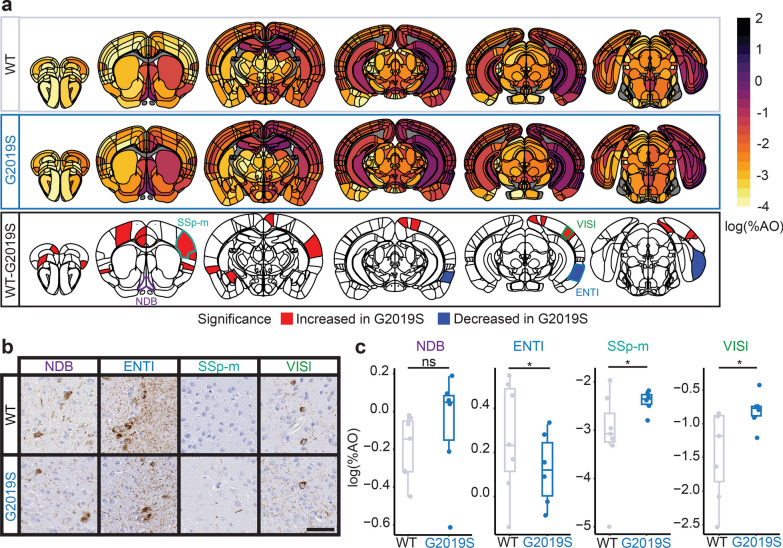
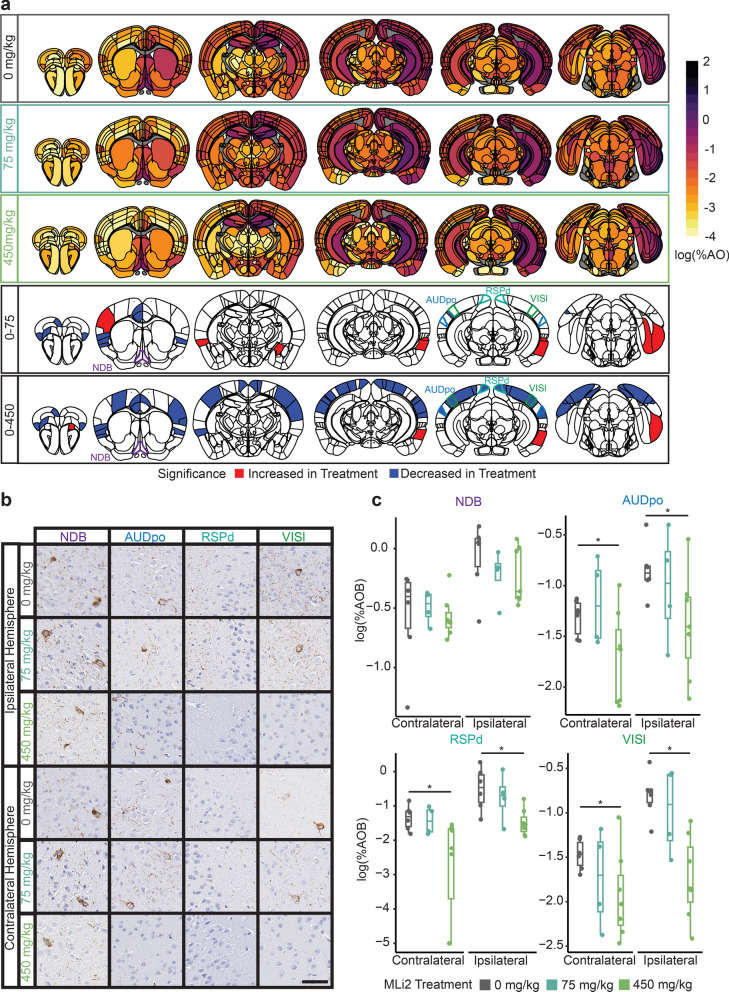
Consistent with our previous work, we found systemic alterations in the progression of tau pathology in LRRK2 mice, which were most pronounced at 6 months. Importantly, LRRK2 kinase inhibition reversed these effects in LRRK2 mice, but had minimal effect in wild-type mice, suggesting that LRRK2 kinase inhibition is likely to reverse specific disease processes in G2019S mutation carriers. Additional work may be necessary to determine the potential effect in non-carriers.
This work supports a protective role of LRRK2 kinase inhibition in G2019S carriers and provides a rational workflow for systematic evaluation of brain-wide phenotypes in therapeutic development.
富含亮氨酸重复激酶 2(LRRK2)中的突变是家族性帕金森病(PD)的最常见原因。这些突变会提高 LRRK2 激酶的活性,使得 LRRK2 激酶抑制剂成为一种有吸引力的治疗方法。LRRK2 激酶的活性一直与特定的细胞信号通路相关联,这些通路主要与细胞器运输和平衡有关,但它与 PD 发病机制的关系更难确定。携带 LRRK2 突变的 PD 患者始终表现出黑质中多巴胺能神经元的丧失,但Lewy 体或 tau 缠结病理的发展情况各不相同。携带 LRRK2 突变的动物模型不会自发地产生强大的与 PD 相关的表型,这阻碍了对 LRRK2 抑制剂针对疾病过程的疗效的评估。我们假设 LRRK2 中的突变可能与单一疾病途径没有直接关系,而是可能根据疾病触发因素,提高对多种疾病过程的易感性。为了验证这一假设,我们之前评估了在过表达突变型 LRRK2 的转基因小鼠中,注射蛋白病种子后 α-突触核蛋白和 tau 病理的进展情况。我们证明,过表达突变 LRRK2 的转基因小鼠表现出脑内病理学进展的改变,尤其是在老年时。
在这里,我们评估了长期 LRRK2 激酶抑制与 tau 病理进展的关系。野生型或 LRRK2 基因敲入小鼠注射 tau 原纤维,并用对照饮食或含有靶向 LRRK2 的 IC50 或 IC90 的 LRRK2 激酶抑制剂 MLi-2 的饮食治疗 3-6 个月。通过在 844 个脑区进行全脑定量病理学评估和随后的进展线性扩散建模,评估 tau 病理学。
与我们之前的工作一致,我们发现 LRRK2 小鼠 tau 病理的进展发生了系统性改变,在 6 个月时最为明显。重要的是,LRRK2 激酶抑制逆转了 LRRK2 小鼠的这些影响,但对野生型小鼠的影响很小,这表明 LRRK2 激酶抑制可能逆转 G2019S 突变携带者的特定疾病过程。可能需要进一步的工作来确定在非携带者中的潜在效果。
这项工作支持 LRRK2 激酶抑制在 G2019S 携带者中的保护作用,并为治疗开发中系统评估全脑表型提供了合理的工作流程。