Department of Neurology, Hope Center for Neurological Disorders, Knight Alzheimer's Disease Research Center, Washington University School of Medicine, St Louis, MO, USA.
Almazov National Medical Research Centre, St Petersburg, Russia.
Nature. 2023 Mar;615(7953):668-677. doi: 10.1038/s41586-023-05788-0. Epub 2023 Mar 8.
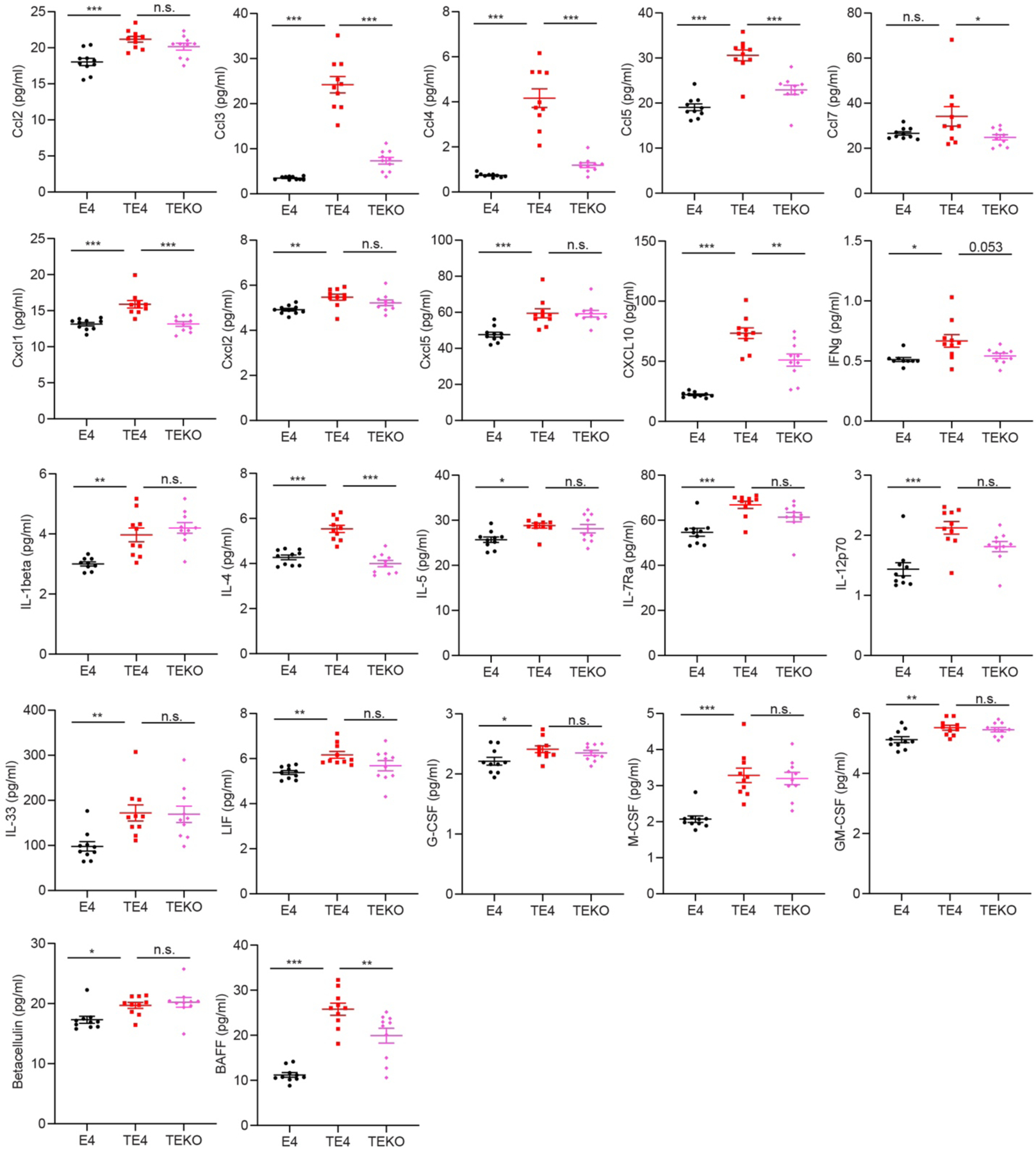
Extracellular deposition of amyloid-β as neuritic plaques and intracellular accumulation of hyperphosphorylated, aggregated tau as neurofibrillary tangles are two of the characteristic hallmarks of Alzheimer's disease. The regional progression of brain atrophy in Alzheimer's disease highly correlates with tau accumulation but not amyloid deposition, and the mechanisms of tau-mediated neurodegeneration remain elusive. Innate immune responses represent a common pathway for the initiation and progression of some neurodegenerative diseases. So far, little is known about the extent or role of the adaptive immune response and its interaction with the innate immune response in the presence of amyloid-β or tau pathology. Here we systematically compared the immunological milieux in the brain of mice with amyloid deposition or tau aggregation and neurodegeneration. We found that mice with tauopathy but not those with amyloid deposition developed a unique innate and adaptive immune response and that depletion of microglia or T cells blocked tau-mediated neurodegeneration. Numbers of T cells, especially those of cytotoxic T cells, were markedly increased in areas with tau pathology in mice with tauopathy and in the Alzheimer's disease brain. T cell numbers correlated with the extent of neuronal loss, and the cells dynamically transformed their cellular characteristics from activated to exhausted states along with unique TCR clonal expansion. Inhibition of interferon-γ and PDCD1 signalling both significantly ameliorated brain atrophy. Our results thus reveal a tauopathy- and neurodegeneration-related immune hub involving activated microglia and T cell responses, which could serve as therapeutic targets for preventing neurodegeneration in Alzheimer's disease and primary tauopathies.
细胞外沉积的淀粉样蛋白-β作为神经纤维缠结,以及细胞内过度磷酸化和聚集的 tau 作为神经原纤维缠结,是阿尔茨海默病的两个特征性标志。阿尔茨海默病大脑萎缩的区域进展与 tau 积累高度相关,而与淀粉样蛋白沉积无关,tau 介导的神经退行性变的机制仍不清楚。先天免疫反应是一些神经退行性疾病发生和进展的共同途径。到目前为止,人们对适应性免疫反应的程度或作用以及它与淀粉样蛋白-β或 tau 病理存在时的先天免疫反应的相互作用知之甚少。在这里,我们系统地比较了具有淀粉样蛋白沉积或 tau 聚集和神经退行性变的小鼠大脑中的免疫环境。我们发现,具有 tau 病的小鼠而非具有淀粉样蛋白沉积的小鼠会产生独特的先天和适应性免疫反应,而耗尽小胶质细胞或 T 细胞会阻止 tau 介导的神经退行性变。具有 tau 病的小鼠和阿尔茨海默病大脑中,tau 病变区域的 T 细胞数量,尤其是细胞毒性 T 细胞数量明显增加。T 细胞数量与神经元丢失的程度相关,并且这些细胞会随着独特的 TCR 克隆扩增,从激活状态动态转变为耗竭状态,改变其细胞特征。抑制干扰素-γ和 PDCD1 信号都显著改善了脑萎缩。因此,我们的研究结果揭示了一种与 tau 病和神经退行性变相关的免疫枢纽,涉及激活的小胶质细胞和 T 细胞反应,这可能成为预防阿尔茨海默病和原发性 tau 病神经退行性变的治疗靶点。