Department of Biological Sciences, Eck Institute for Global Health, University of Notre Dame, Notre Dame, Indiana, USA.
Department of Molecular Genetics and Microbiology, Duke University School of Medicine, Durham, North Carolina, USA.
mBio. 2024 Apr 10;15(4):e0335723. doi: 10.1128/mbio.03357-23. Epub 2024 Mar 6.
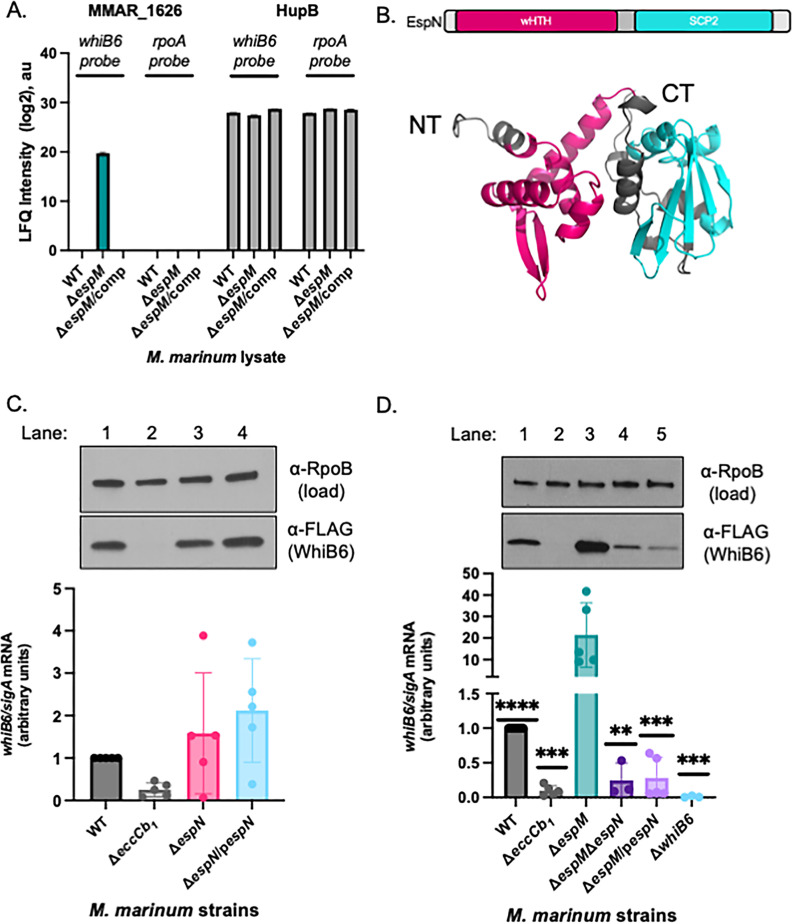
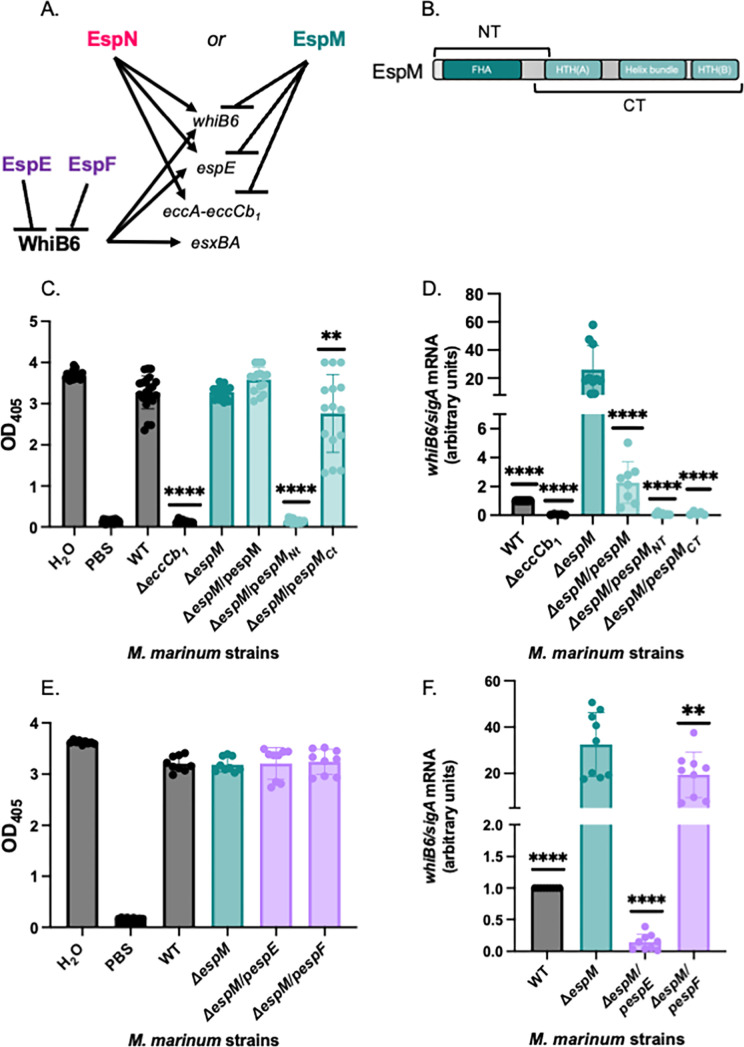
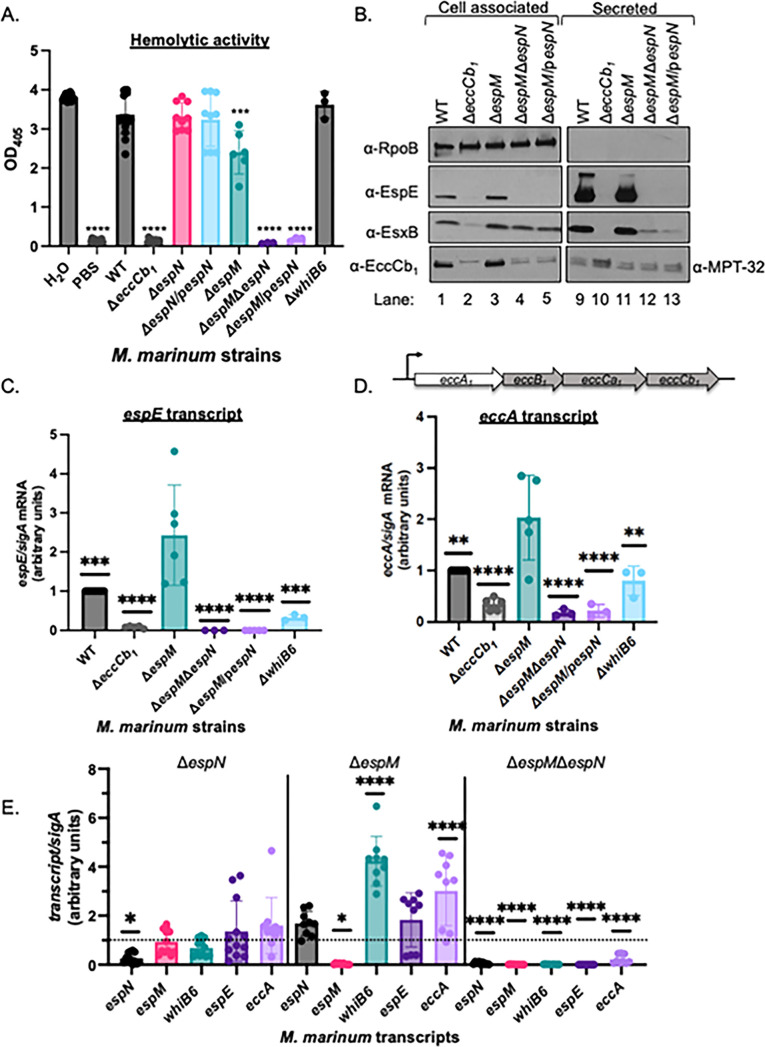
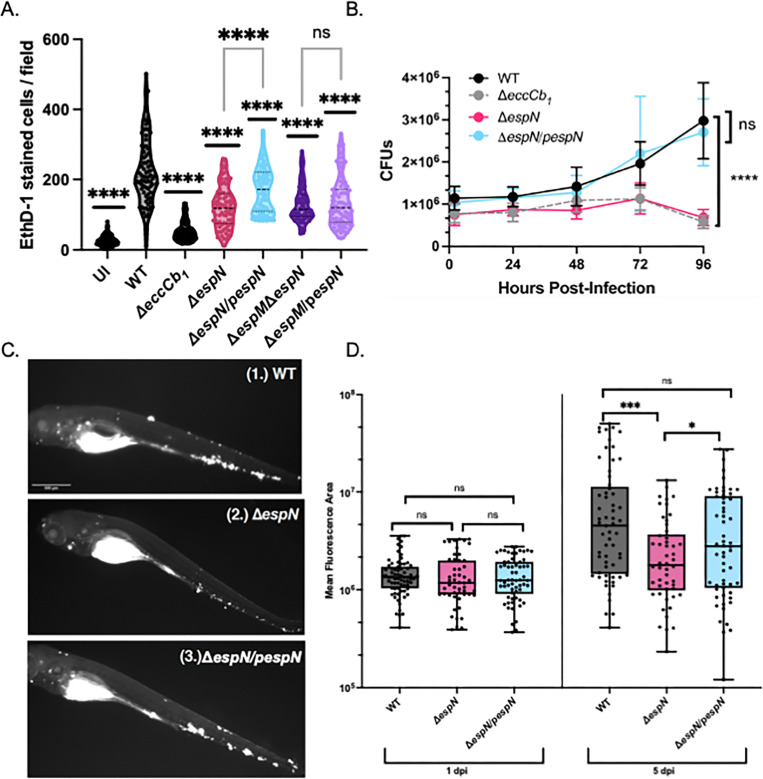
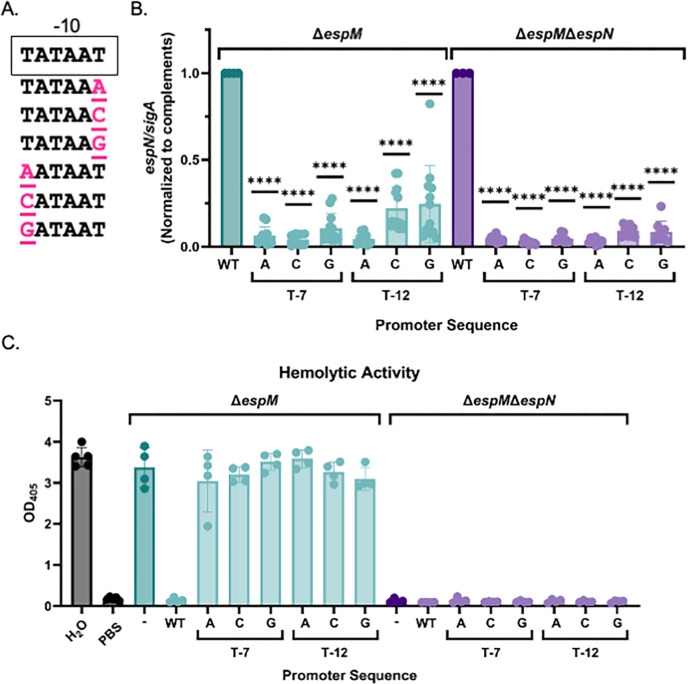
Bacterial pathogens use protein secretion systems to transport virulence factors and regulate gene expression. Among pathogenic mycobacteria, including and , the ESAT-6 system 1 (ESX-1) secretion is crucial for host interaction. Secretion of protein substrates by the ESX-1 secretion system disrupts phagosomes, allowing mycobacteria cytoplasmic access during macrophage infections. Deletion or mutation of the ESX-1 system attenuates mycobacterial pathogens. Pathogenic mycobacteria respond to the presence or absence of the ESX-1 system in the cytoplasmic membrane by altering transcription. Under laboratory conditions, the EspM repressor and WhiB6 activator control transcription of specific ESX-1-responsive genes, including the ESX-1 substrate genes. However, deleting the or gene does not phenocopy the deletion of the ESX-1 substrate genes during macrophage infection by . In this study, we identified EspN, a critical transcription factor whose activity is masked by the EspM repressor under laboratory conditions. In the absence of EspM, EspN activates transcription of and ESX-1 genes during both laboratory growth and macrophage infection. EspN is also independently required for growth within and cytolysis of macrophages, similar to the ESX-1 genes, and for disease burden in a zebrafish larval model of infection. These findings suggest that EspN and EspM coordinate to counterbalance the regulation of the ESX-1 system and support mycobacterial pathogenesis.IMPORTANCEPathogenic mycobacteria, which are responsible for tuberculosis and other long-term diseases, use the ESX-1 system to transport proteins that control the host response to infection and promote bacterial survival. In this study, we identify an undescribed transcription factor that controls the expression of ESX-1 genes and is required for both macrophage and animal infection. However, this transcription factor is not the primary regulator of ESX-1 genes under standard laboratory conditions. These findings identify a critical transcription factor that likely controls expression of a major virulence pathway during infection, but whose effect is not detectable with standard laboratory strains and growth conditions.
细菌病原体利用蛋白分泌系统来输送毒力因子并调控基因表达。在致病性分枝杆菌中,包括 和 ,ESAT-6 系统 1(ESX-1)的分泌对于宿主相互作用至关重要。ESX-1 分泌系统将蛋白底物分泌出来,破坏吞噬体,使分枝杆菌细胞质在巨噬细胞感染期间得以进入。ESX-1 系统的缺失或突变会减弱分枝杆菌病原体的毒力。致病性分枝杆菌通过改变转录来响应细胞质膜中 ESX-1 系统的存在或缺失。在实验室条件下,EspM 阻遏物和 WhiB6 激活物控制特定 ESX-1 反应基因的转录,包括 ESX-1 底物基因。然而,在巨噬细胞感染 时,缺失 或 基因并不表现出与 ESX-1 底物基因缺失相同的表型。在这项研究中,我们鉴定了 EspN,这是一种关键的转录因子,其活性在实验室条件下被 EspM 阻遏物掩盖。在没有 EspM 的情况下,EspN 在实验室生长和巨噬细胞感染期间激活 和 ESX-1 基因的转录。EspN 也独立地需要在巨噬细胞内的 和细胞溶解中促进 的生长,这与 ESX-1 基因相似,并在感染的斑马鱼幼虫模型中支持疾病负担。这些发现表明,EspN 和 EspM 协调以平衡 ESX-1 系统的调控并支持分枝杆菌的发病机制。
引起结核病和其他长期疾病的致病性分枝杆菌利用 ESX-1 系统来输送控制宿主对感染反应并促进细菌存活的蛋白。在这项研究中,我们鉴定了一种未被描述的转录因子,它控制 ESX-1 基因的表达,并且是巨噬细胞和动物感染所必需的。然而,在标准实验室条件下,这种转录因子不是 ESX-1 基因的主要调控因子。这些发现确定了一种关键的转录因子,它可能在感染期间控制主要毒力途径的表达,但在使用标准实验室菌株和生长条件时,其作用无法检测到。