Department of Biological Sciences, University of Notre Dame, Notre Dame, Indiana, USA.
Department of Microbiology and Molecular Genetics, Michigan State University, East Lansing, Michigan, USA.
mBio. 2020 Feb 4;11(1):e02807-19. doi: 10.1128/mBio.02807-19.
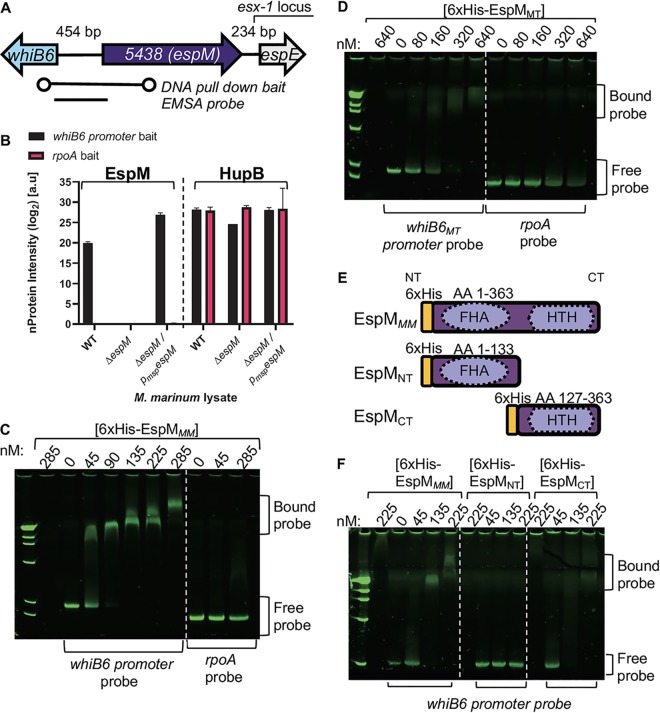
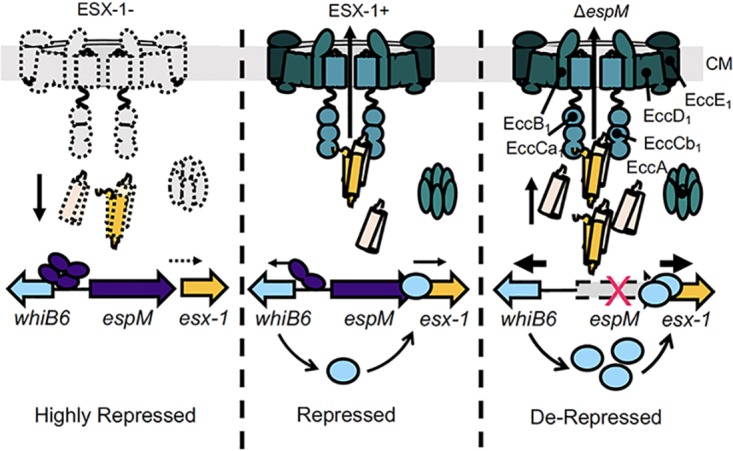
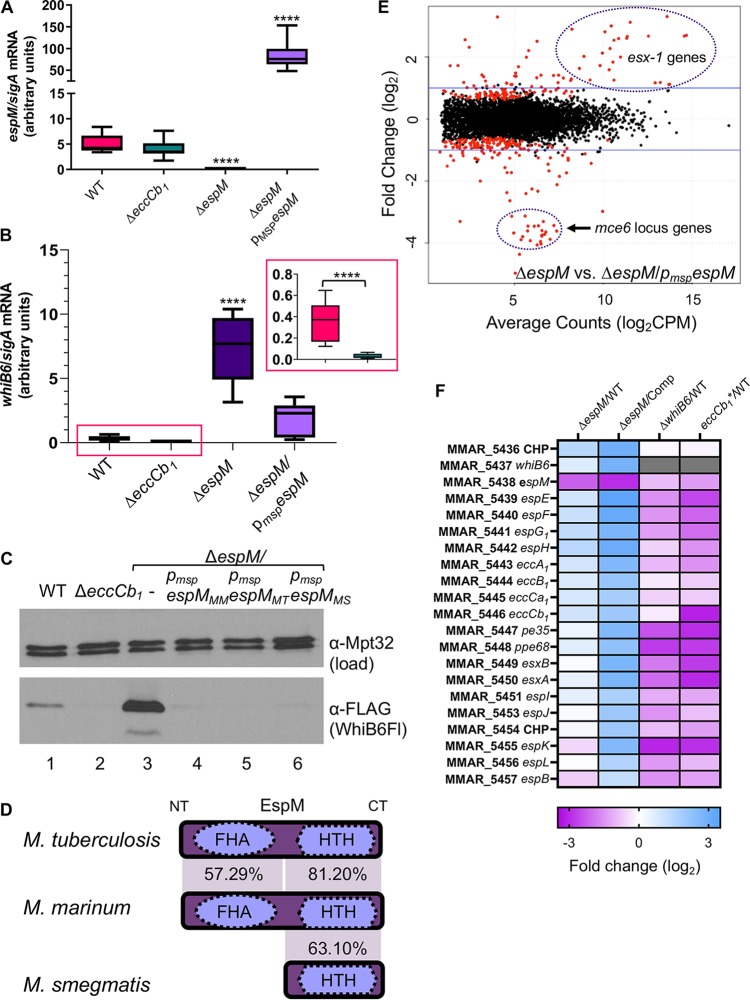
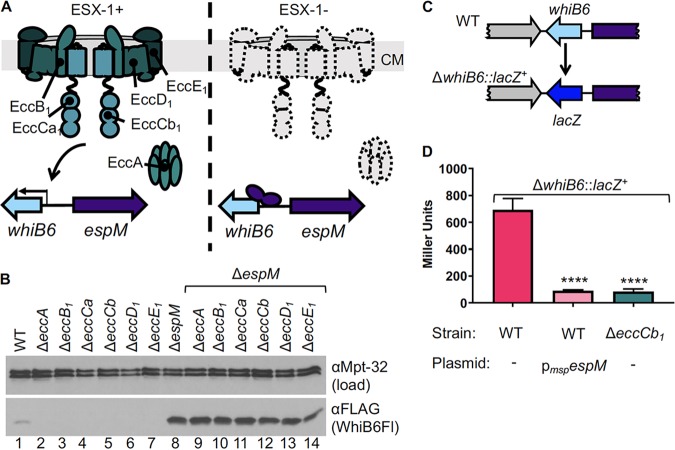
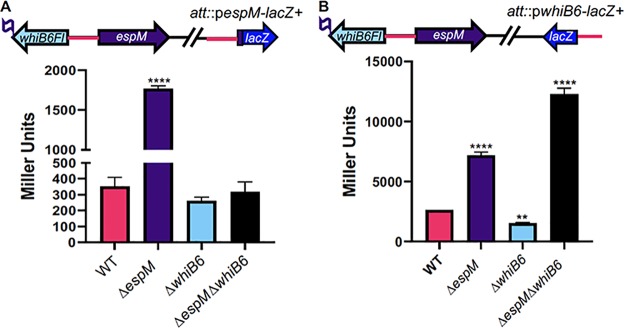
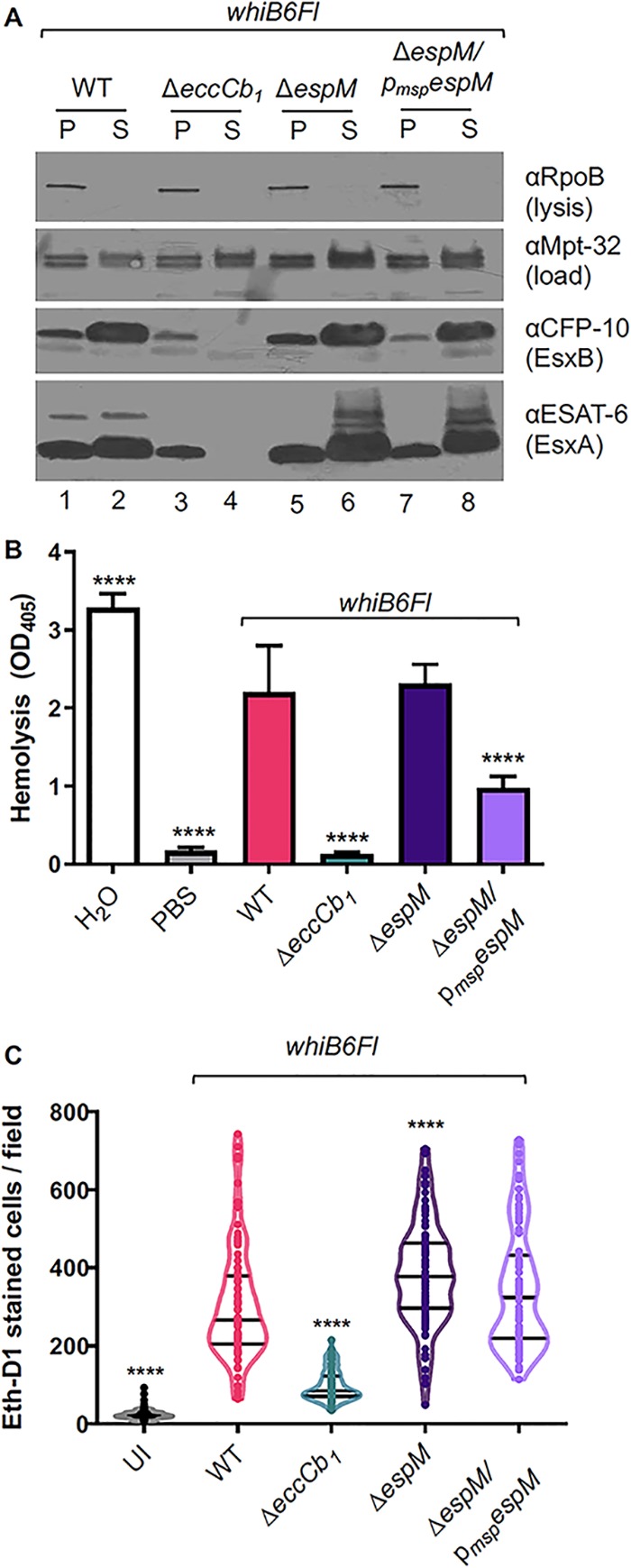
Pathogenic mycobacteria encounter multiple environments during macrophage infection. Temporally, the bacteria are engulfed into the phagosome, lyse the phagosomal membrane, and interact with the cytosol before spreading to another cell. Virulence factors secreted by the mycobacterial ESX-1 (ESAT-6-system-1) secretion system mediate the essential transition from the phagosome to the cytosol. It was recently discovered that the ESX-1 system also regulates mycobacterial gene expression in (R. E. Bosserman, T. T. Nguyen, K. G. Sanchez, A. E. Chirakos, et al., Proc Natl Acad Sci U S A 114:E10772-E10781, 2017, https://doi.org/10.1073/pnas.1710167114), a nontuberculous mycobacterial pathogen, and in the human-pathogenic species (A. M. Abdallah, E. M. Weerdenburg, Q. Guan, R. Ummels, et al., PLoS One 14:e0211003, 2019, https://doi.org/10.1371/journal.pone.0211003). It is not known how the ESX-1 system regulates gene expression. Here, we identify the first transcription factor required for the ESX-1-dependent transcriptional response in pathogenic mycobacteria. We demonstrate that the gene divergently transcribed from the gene and adjacent to the ESX-1 locus in mycobacterial pathogens encodes a conserved transcription factor (, , now ). We prove that EspM from both and directly and specifically binds the intergenic region. We show that EspM is required for ESX-1-dependent repression of expression and for the regulation of -associated gene expression. Finally, we demonstrate that EspM functions to fine-tune ESX-1 activity in Taking the data together, this report extends the locus, defines a conserved regulator of the ESX-1 virulence pathway, and begins to elucidate how the ESX-1 system regulates gene expression. Mycobacterial pathogens use the ESX-1 system to transport protein substrates that mediate essential interactions with the host during infection. We previously demonstrated that in addition to transporting proteins, the ESX-1 secretion system regulates gene expression. Here, we identify a conserved transcription factor that regulates gene expression in response to the ESX-1 system. We demonstrate that this transcription factor is functionally conserved in , a pathogen of ectothermic animals; , the human-pathogenic species that causes tuberculosis; and , a nonpathogenic mycobacterial species. These findings provide the first mechanistic insight into how the ESX-1 system elicits a transcriptional response, a function of this protein transport system that was previously unknown.
致病分枝杆菌在感染巨噬细胞时会遇到多种环境。从时间上看,细菌被吞噬进入吞噬体,吞噬体膜破裂,并与细胞质相互作用,然后再扩散到另一个细胞。分枝杆菌 ESX-1(ESAT-6-系统-1)分泌系统分泌的毒力因子介导了从吞噬体到细胞质的必需转变。最近发现,ESX-1 系统还调节非结核分枝杆菌病原体和人类致病种的分枝杆菌基因表达(R. E. Bosserman、T. T. Nguyen、K. G. Sanchez、A. E. Chirakos 等人,Proc Natl Acad Sci U S A 114:E10772-E10781,2017,https://doi.org/10.1073/pnas.1710167114)。(A. M. Abdallah、E. M. Weerdenburg、Q. Guan、R. Ummels 等人,PLoS One 14:e0211003,2019,https://doi.org/10.1371/journal.pone.0211003)。目前尚不清楚 ESX-1 系统如何调节基因表达。在这里,我们鉴定了致病分枝杆菌中 ESX-1 依赖性转录反应所需的第一个转录因子。我们证明,与分枝杆菌病原体中基因 基因 divergently 转录并与 ESX-1 基因座相邻的基因编码一个保守的转录因子(EspM)。我们证明来自 和 的 EspM 可直接且特异性地结合 ESX-1 基因座。我们表明 EspM 是 ESX-1 依赖性抑制 表达和调节 相关基因表达所必需的。最后,我们证明 EspM 可精细调节 在 中的 ESX-1 活性。综合这些数据,本报告扩展了 基因座,定义了 ESX-1 毒力途径的保守调控因子,并开始阐明 ESX-1 系统如何调节基因表达。分枝杆菌病原体利用 ESX-1 系统运输蛋白底物,这些蛋白底物在感染过程中与宿主进行必要的相互作用。我们之前证明,除了运输蛋白外,ESX-1 分泌系统还调节基因表达。在这里,我们鉴定了一种保守的转录因子,它可响应 ESX-1 系统调节基因表达。我们证明该转录因子在 、人类致病种结核分枝杆菌和非致病性分枝杆菌种中具有功能保守性。这些发现为 ESX-1 系统引发转录反应的机制提供了第一个见解,这是该蛋白运输系统以前未知的功能。