Department of Critical Care Medicine, the First Affiliated Hospital of China Medical University, Shenyang, Liaoning Province, China.
Clin Appl Thromb Hemost. 2024 Jan-Dec;30:10760296241238010. doi: 10.1177/10760296241238010.
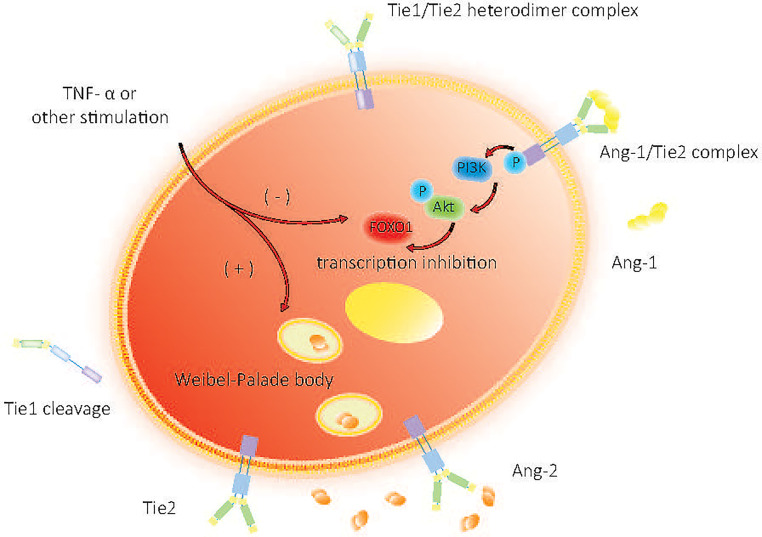
Sepsis is a disorder of host response caused by severe infection that can lead to life-threatening organ dysfunction. There is no specific treatment for sepsis. Although there are many different pathogens that can cause sepsis, endothelial dysfunction is a frequent mechanism resulting in vascular leakage and coagulation problem. Recent studies on the regulatory pathways of vascular endothelium have shown that the disturbance of angiopoietin (Ang) /Tie2 axis can induce endothelial cell activation, which is the core pathogenesis of sepsis. In this review, we aim to discuss the regulation of Ang/Tie2 axis and the biomarkers involved in the context of sepsis. Also, we attempt to explore the prospective and feasibility of Ang/Tie2 axis as a potential target for sepsis intervention to improve clinical outcomes.
脓毒症是一种由严重感染引起的宿主反应失调,可导致危及生命的器官功能障碍。目前尚无针对脓毒症的特效治疗方法。尽管有许多不同的病原体可导致脓毒症,但内皮功能障碍是导致血管渗漏和凝血问题的常见机制。最近对血管内皮调节途径的研究表明,血管生成素(Ang)/Tie2 轴的紊乱可诱导内皮细胞激活,这是脓毒症的核心发病机制。本综述旨在讨论 Ang/Tie2 轴的调节及其在脓毒症中的相关生物标志物,并探讨 Ang/Tie2 轴作为脓毒症干预的潜在靶点以改善临床结局的前景和可行性。