Division of Cardiology, Department of Medicine, Emory University, 101 Woodruff Circle, Atlanta, GA 30322, USA.
Cardiovasc Res. 2021 Jan 1;117(1):60-73. doi: 10.1093/cvr/cvaa070.
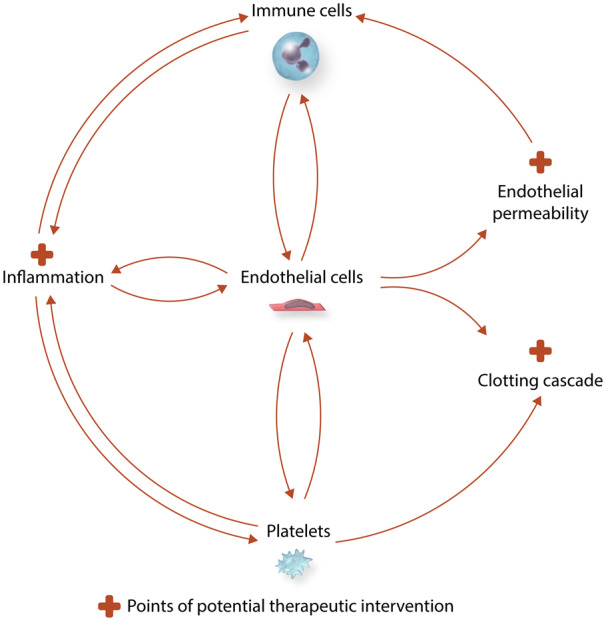
Sepsis accounts for nearly 700 000 deaths in Europe annually and is caused by an overwhelming host response to infection resulting in organ failure. The endothelium is an active contributor to sepsis and as such represents a major target for therapy. During sepsis, endothelial cells amplify the immune response and activate the coagulation system. They are both a target and source of inflammation and serve as a link between local and systemic immune responses. In response to cytokines produced by immune cells, the endothelium expresses adhesion molecules and produces vasoactive compounds, inflammatory cytokines, and chemoattractants, thus switching from an anticoagulant to procoagulant state. These responses contribute to local control of infection, but systemic activation can lead to microvascular thrombosis, capillary permeability, hypotension, tissue hypoxia, and ultimately tissue damage. This review focuses on the role of the endothelium in leucocyte adhesion and transmigration as well as production of reactive oxygen and nitrogen species, microRNAs and cytokines, formation of signalling microparticles, and disseminated intravascular coagulation. We also discuss alterations in endothelial permeability and apoptosis. Finally, we review the diagnostic potential of endothelial markers and endothelial pathways as therapeutic targets for this devastating disease.
败血症每年导致欧洲近 70 万人死亡,是由感染引起的宿主过度反应导致器官衰竭引起的。内皮细胞是败血症的一个重要贡献者,因此是治疗的主要靶点。在败血症中,内皮细胞放大免疫反应并激活凝血系统。它们既是炎症的靶点,也是炎症的来源,是局部和全身免疫反应之间的联系。内皮细胞对免疫细胞产生的细胞因子作出反应,表达粘附分子并产生血管活性化合物、炎性细胞因子和趋化因子,从而从抗凝状态转变为促凝状态。这些反应有助于控制局部感染,但全身激活可导致微血管血栓形成、毛细血管通透性增加、低血压、组织缺氧,最终导致组织损伤。这篇综述重点介绍了内皮细胞在白细胞黏附和迁移以及活性氧和氮物种、微小 RNA 和细胞因子的产生、信号微颗粒的形成和弥散性血管内凝血中的作用。我们还讨论了内皮通透性和细胞凋亡的改变。最后,我们回顾了内皮标志物和内皮通路作为这种破坏性疾病的治疗靶点的诊断潜力。