Cell Therapy Center, The University of Jordan, Amman, Jordan.
Department of Physical Therapy, School of Rehabilitation Sciences, The University of Jordan, Amman, Jordan.
Cell Transplant. 2024 Jan-Dec;33:9636897241233045. doi: 10.1177/09636897241233045.
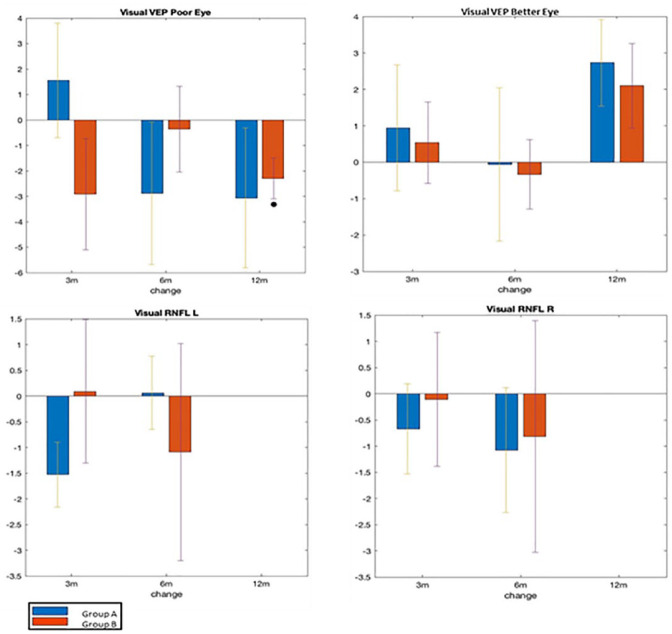
Multiple sclerosis (MS) is a chronic neuro-inflammatory disease resulting in disabilities that negatively impact patients' life quality. While current treatment options do not reverse the course of the disease, treatment using mesenchymal stromal/stem cells (MSC) is promising. There has yet to be a consensus on the type and dose of MSC to be used in MS. This work aims to study the safety and efficacy of two treatment protocols of MSCs derived from the umbilical cord (UC-MSCs) and their secretome. The study included two groups of MS patients; Group A received two intrathecal doses of UC-MSCs, and Group B received a single dose. Both groups received UC-MSCs conditioned media 3 months post-treatment. Adverse events in the form of a clinical checklist and extensive laboratory tests were performed. Whole transcriptome analysis was performed on patients' cells at baseline and post-treatment. Results showed that all patients tolerated the cellular therapy without serious adverse events. The general disability scale improved significantly in both groups at 6 months post-treatment. Examining specific aspects of the disease revealed more parameters that improved in Group A compared to Group B patients, including a significant increase in the (CD3CD4) expressing lymphocytes at 12 months post-treatment. In addition, better outcomes were noted regarding lesion load, cortical thickness, manual dexterity, and information processing speed. Both protocols impacted the transcriptome of treated participants with genes, transcription factors, and microRNAs (miRNAs) differentially expressed compared to baseline. Inflammation-related and antigen-presenting (HLA-B) genes were downregulated in both groups. In contrast, TNF-alpha, TAP-1, and miR142 were downregulated only in Group A. The data presented indicate that both protocols are safe. Furthermore, it suggests that administering two doses of stem cells can be more beneficial to MS patients. Larger multisite studies should be initiated to further examine similar or higher doses of MSCs.
多发性硬化症(MS)是一种慢性神经炎症性疾病,导致残疾,对患者的生活质量产生负面影响。虽然目前的治疗方法不能逆转疾病进程,但间充质基质/干细胞(MSC)的治疗是有希望的。目前还没有关于用于 MS 的 MSC 类型和剂量的共识。这项工作旨在研究来自脐带(UC-MSC)的两种 MSC 治疗方案及其分泌组的安全性和有效性。该研究包括两组 MS 患者;A 组接受两次鞘内 UC-MSC 剂量,B 组接受单次剂量。两组均在治疗后 3 个月接受 UC-MSC 条件培养基。以临床检查表和广泛的实验室测试的形式记录不良事件。对患者治疗前后的细胞进行全转录组分析。结果表明,所有患者均耐受细胞治疗,无严重不良事件。两组患者在治疗后 6 个月时总体残疾评分均显著改善。检查疾病的具体方面发现,A 组患者的改善参数比 B 组更多,包括治疗后 12 个月时(CD3CD4)表达的淋巴细胞显著增加。此外,在病灶负荷、皮质厚度、手灵巧度和信息处理速度方面也有更好的结果。两种方案均影响了治疗参与者的转录组,与基线相比,基因、转录因子和 microRNA(miRNA)表达不同。两组均下调与炎症相关和抗原呈递(HLA-B)的基因。相比之下,只有 A 组下调 TNF-α、TAP-1 和 miR142。所呈现的数据表明两种方案均安全。此外,这表明给予两剂干细胞可能对 MS 患者更有益。应启动更大的多中心研究,以进一步检查类似或更高剂量的 MSC。